This is coral. It is spawning.
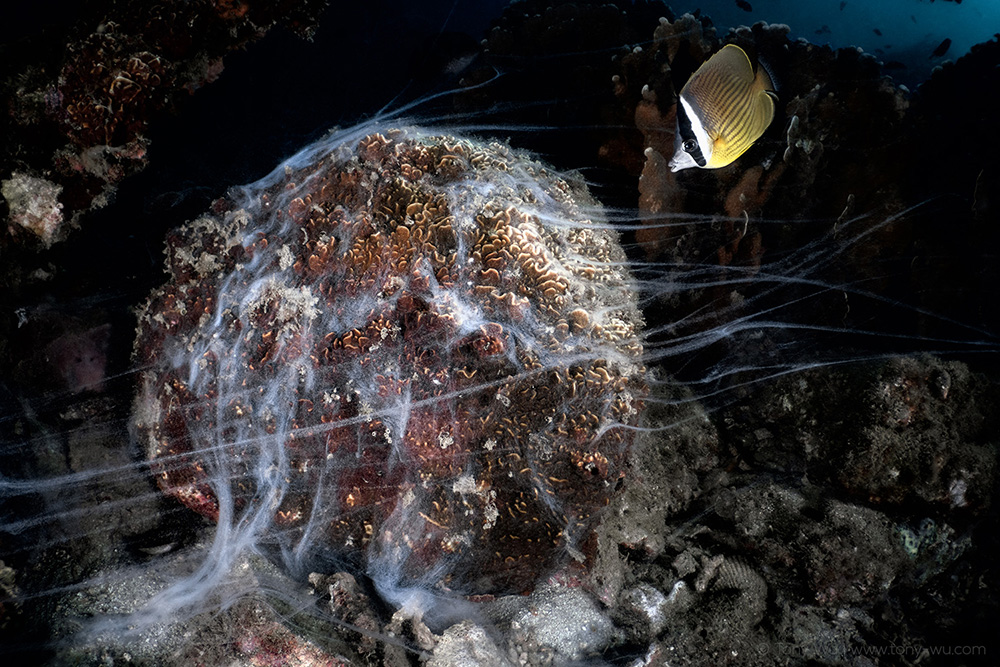
It happens to be a colony of females, so those long strings oozing out from the ball of corrugated coral (Pavona varians) comprise eggs, tens of thousands—hundreds of thousands perhaps. And that happy little fish with a huge smile is an oriental butterflyfish (Chaetodon auripes) eyeing the buffet line.
This is what it looks like when a butterflyfish partakes of a coral-egg Slurpee:
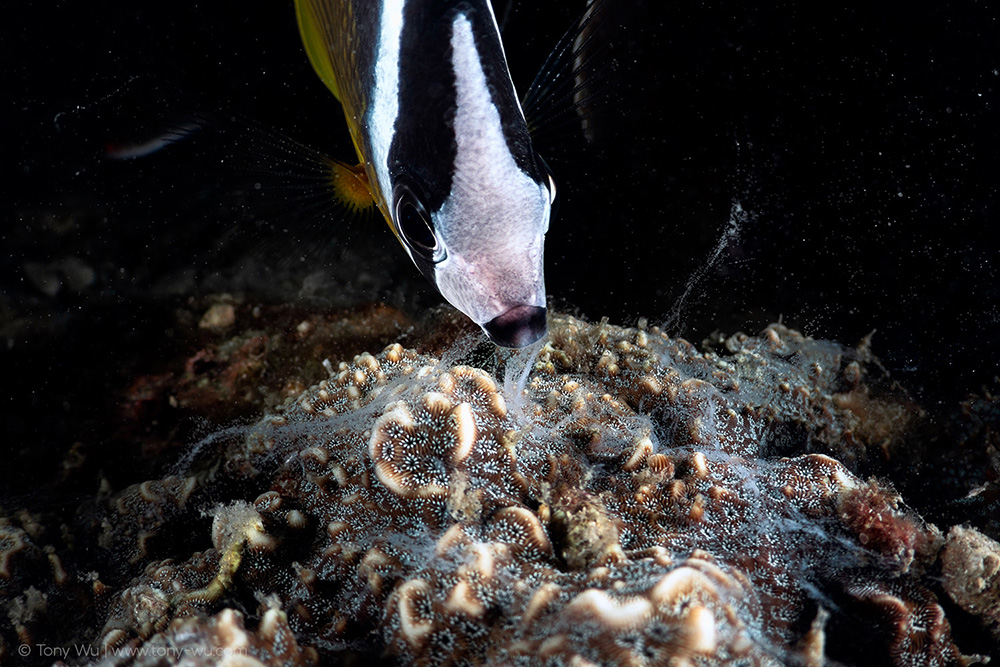
Corals in the genus Pavona live throughout the Indo-Pacific region.
The 20 or so species in this genus are not particulary eye-catching, They tend to take the form of leafy cabbages or encrusting rocks. As far I have seen, their colours are best described as yaaaaawn. They are often overlooked.
Spawning is when they shine, visually at least.
There is a catch though. Coordinated release of gametes across a reef can take the visibility from good to zero in minutes, the ocean turning an opaque milky-white. It is perhaps not so much the eggs that cause this, but sperm.
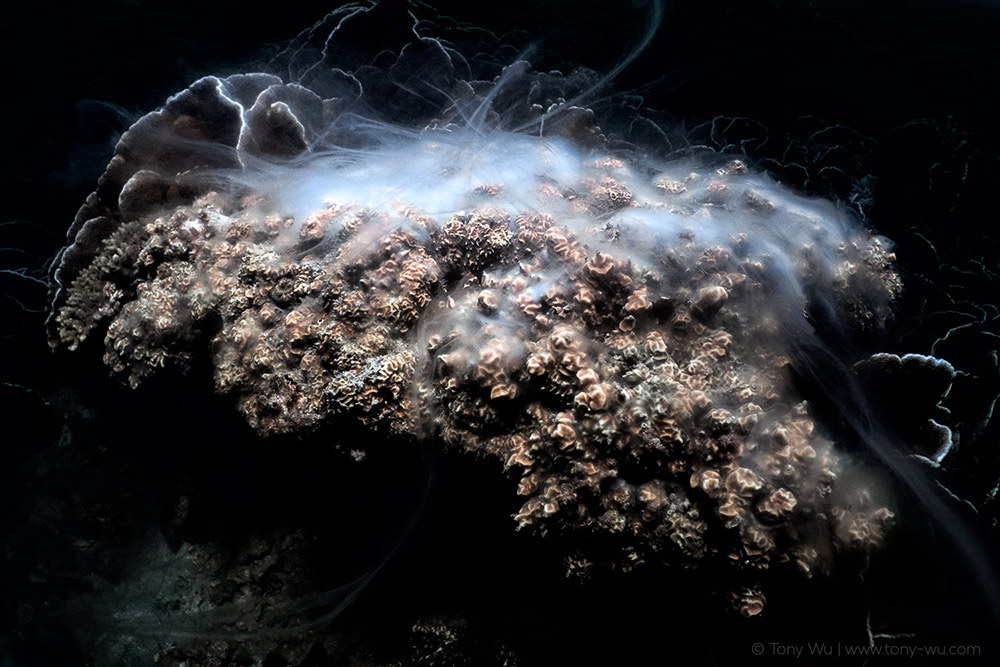
It is more difficult to photograph male corals than females. Male colonies tend to send out thin, wispy strings, barely discernable to the naked eye. Not what you'd describe as photogenic. The colony above was an exception.
It doesn't take much imagination to picture what happens when large aggregations of coral fill the sea with gametes like this. Each colony might send out what seems to be a small amount, but it adds up. Quickly.
In practical terms, time is not your friend if you're hoping to photograph this spectacle.
The following photo, from my first experience several years ago, is a good example:
Being unfamiliar with Pavona spawning at the time, I needed time to figure out what was happening. There is a slow release in the beginning, a few corals here and there. Some corals then go for it, sending out lots of gametes. Others prefer to chill. A bit here; a bit there. Then go back to sleep. Patches of coral seem to take turns. You can be among dozens of inactive coral heads, while those a few metres away—just beyond visual range—can be partying like its 1999.
I missed almost every opportunity. I was unable to judge which coral heads might be active vs. those that might peter out. I could not discern female vs. male. I got horribly lost the in murk of genetic fog.
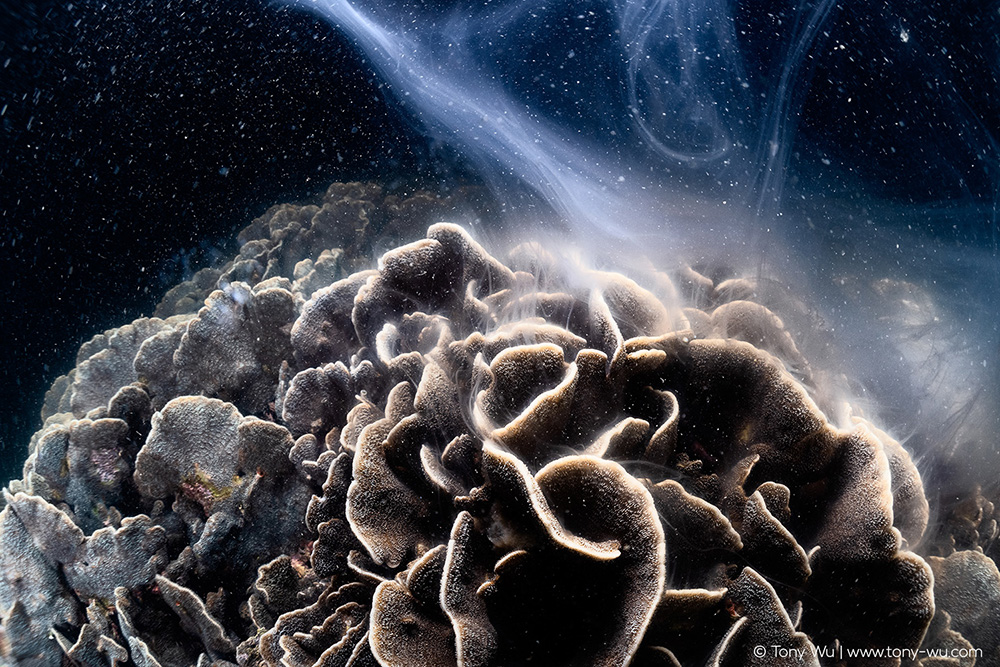
The only moment I managed to catch is the male colony in the photo above. Through sheer dumb luck. I happened to be in the right place when the corals decided "Go, Go, Go!"
Those are streams of sperm. You can see that visibility was already limited. It dropped to zero within minutes. I was fortunate to have come out of that virgin experience with one photo, but I knew I could better.
In the following years, high water temperatures led to bleaching. Twice.
I did manage to get a close-up of a male colony weak-spawning:
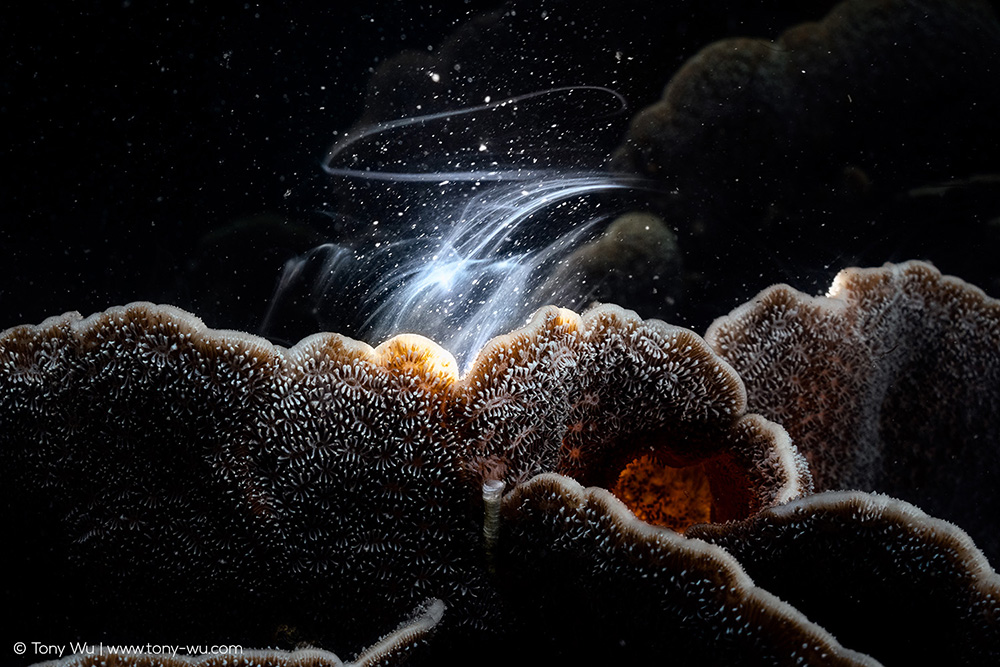
But in general, spawning either did not take place or was subdued. Corals are animals. They need time to recover from trauma.
And recover they did.
This is a large colony of female Pavona decussata sending out strands of eggs:
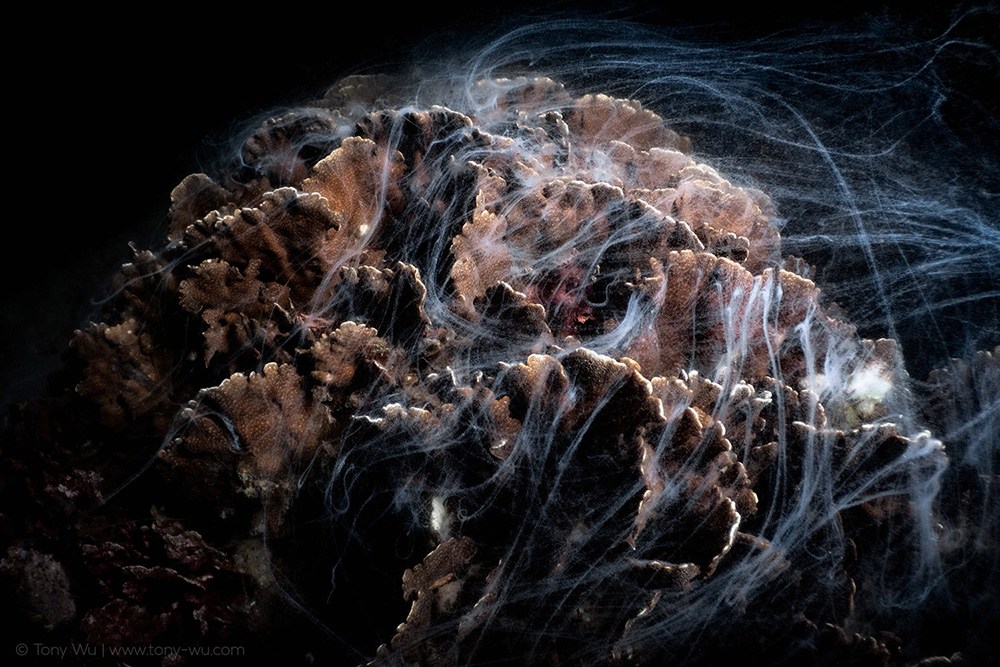
By "large", I mean bigger than me, lengthwise at least.
Here is a closer look at the spawning, same colony:
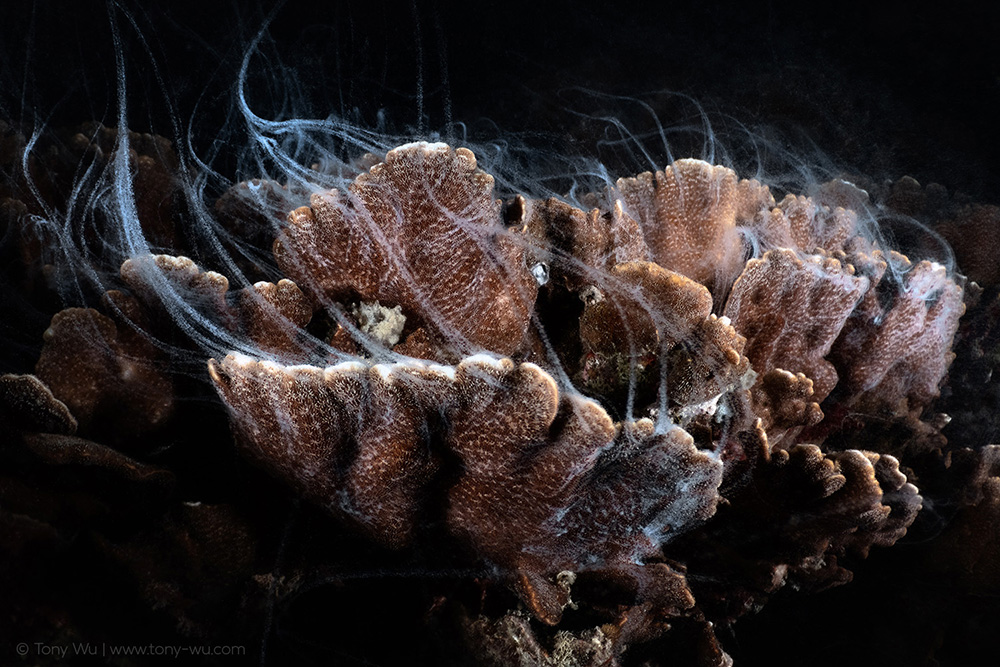
And closer still:
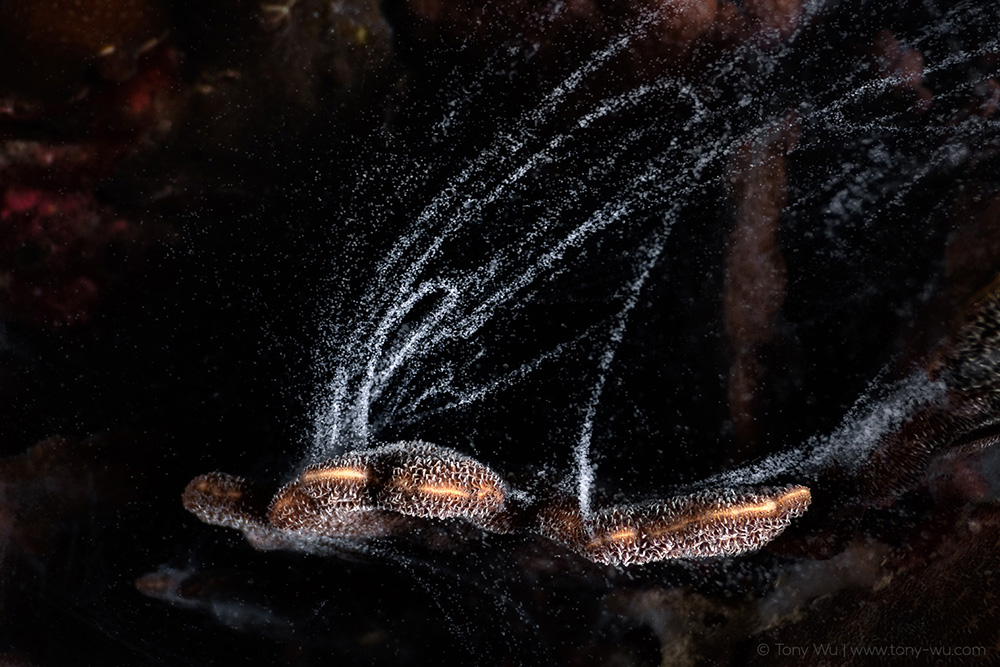
I was fortunate enough to witness spawning of a third Pavona species recently.
Pictured here is a colony of female Pavona cactus corals engaged in broadcast spawning:
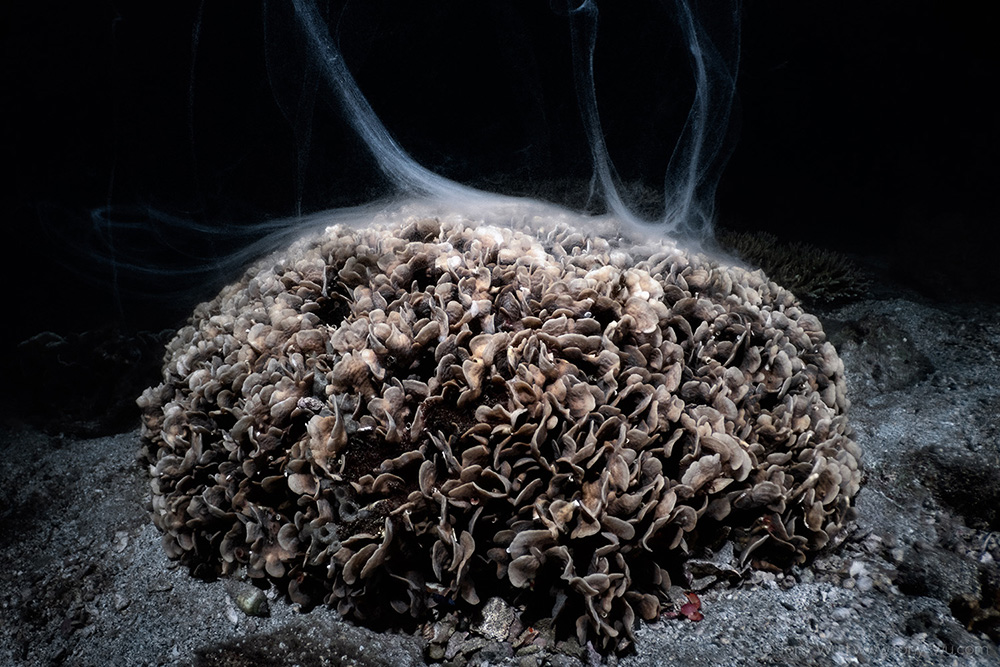
There were male colonies as well, but as I alluded to above, the release of gametes from the male colonies I came across were less than visually inspiring.
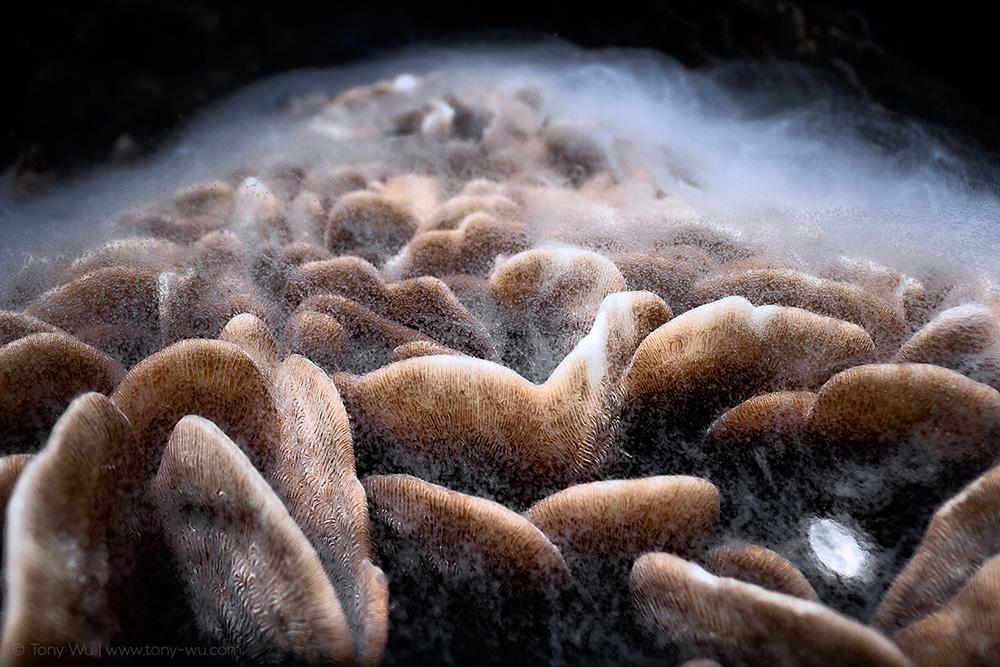
I'll leave you with this photo of another female P. cactus colony, close-up and intimate so you can see the eggs:
Even the most drab of animals have their moments of glory.