Posts Tagged Megaptera novaeangliae

Humpback Whales 2010: Part 8

I’m back home now. Sitting in quiet room, thousands of kilometres away from Tonga, facing a mountain of tasks to complete before heading out again. The usual.

When I close my eyes, I can still see Vava’u…a collection of islands spawned from tectonic collisions, now tranquil sentinels watching over a remote and magical corner of the planet. A place where the seas are the bluest of blues and the land a lush, verdant green. Where pure-white tropicbirds flit among the rocks, their elongated plumage trailing behind like feathery exclamation marks underscoring their beauty.

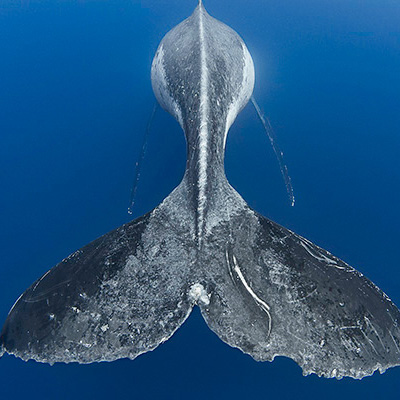
Most importantly for me, Vava’u is a place where majestic cetaceans, Megaptera novaeangliae, congregate once a year. They gather to socialise, to sing. To fight, to mate. To give birth, to raise their young. The humpback whales arrive, in short, to celebrate life.

It is in this context that I travel to Tonga each season to spend time with the whales. I watch, I wonder. I ponder, I conjecture. I do my best to learn, though I always find that the mysteries presented by these marine mammals far outweigh the things (I think) I’ve figured out about them.


Happiness is a cross-cultural language.

In recent years, I’ve been able to share these experiences with people who’ve chosen to travel with me, and in doing so, I’ve learned something unexpected about myself. I enjoy watching people’s reactions to their virgin encounters with humpbacks almost as much as I covet my own time with the whales.

I’ve watched people laugh, cry, shriek, giggle, babble…and best of all, re-examine perspective. There’s nothing quite like coming face-to-face with a 40-tonne sentient being to put your own existence into proper context.

On the flip side, I face a constant dilemma when I write about the whales. It’s impossible for me to convey the magnitude of such an experience in words. If you’ve never looked a whale in the eye, there’s nothing I can say or write that will communicate how powerful an experience it is.

If you are among the fortunate few who have experienced this however, there’s nothing more I need say. You know what I mean.


Some people react in odd ways after seeing whales. Others are just strange.

2010 Wrap Up
If you’ve read my previous posts from this season, you may have gathered that it’s been an oddball year, one characterised by events and trends that deviate from the norm. As such, it’s been a frustrating season, but paradoxically, perhaps also one of the most educational ones.

That might not make much sense, but if I set out a handful of summary observations, perhaps the reasons underlying my sentiment will become more clear.

Weather: The weather was definitely off this season, which I assume had something to do with the current El Niño/ La Niña cycle.

The weather was almost too good for much of August, with generally low winds and warm temperatures. August is winter in the southern hemisphere, so it should’ve been cooler and windier. In previous seasons, I had to wear fleece every day to keep warm, but this year, I only broke out my fleece jacket for a couple of days in September. Bad weather did hit at the beginning of September, but it wasn’t too bad, and the air temperature was still warmer than usual.

As an aside, the best indicators I’ve found for gauging ambient temperature in Vava’u are the kapok (Ceiba pentandra) trees. In most years, the seed pods of the trees remain green (i.e., unripe) for the entire duration of my stay.

In some seasons, like this year, the seed pods turn brown and drop before I depart, discharging the cottony stuff inside that protects the trees’ seeds. This is a sure sign of warmer-than-average conditions.


It was an oddball year.

Water Temperature: I don’t know if there’s any general correlation between warm air temperature and warm water temperature, but I’m certain that the water temperature this season was also higher than normal.

I normally get mild hypothermia every day I’m in the water. I use a thin suit, and I lose body heat quickly.

This season however…not once.

While the warmer-than-usual air and water temperatures were pleasant, the prevailing conditions may have had some effect on marine life, including the whales.


My friend Rika

Whale Numbers: It seemed that there were fewer whales than average. It’s impossible to be certain, since no one really knows how many whales are around Vava’u in an “average” year, but all the experienced people I spoke with concur with this view.

Interestingly, some of the other wintering grounds in the southern hemisphere (like Niue) also reported fewer whales than normal, while others reported seeing more whales than they’ve ever had (Tahiti, Cook Islands). Some places in Australia reported more whales and earlier-than-normal feeding, while others contradicted such reports.

So basically, most every place reported either more or fewer whales, but not a normal number of humpbacks. Hmmm.


Looking hard for those darn humpback whales

Whale Timing: Everyone pretty much agreed that what whales were present were about two weeks late arriving in Vava’u.

Whether the whales stay longer than normal (some are still there) is something that will be interesting to watch.

I can’t help but feeling that the warmer water and warmer air temperatures this season have something to do with the funky distribution of whale numbers and the delayed timing of their arrival to Vava’u. I can’t prove anything, but it sure feels like there’s some sort of link.


Oops, wrong type of whale

Whale Mood: The adjective most often used to describe the mood of the humpback whales around Vava’u this season was “unsettled”. With some limited exceptions, the whales just wouldn’t stop moving.

Many of the mother/ calf pairs we encountered for instance, were go-go-go-go, with little to no rest time. I also encountered lots of heat runs, which are by definition action-packed.

I wrote in earlier posts about my conjecture that this agitated mood might have been driven by a higher-than-normal horny male to available female ratio, based in large part on observing the early and constant harassment of mothers with baby whales by multiple escorts.

Again, it’s not something I can prove beyond the shadow of a doubt, but other experienced people noticed the same trend, and there was no change in the behaviour during the two months I was in Tonga.


Relaxed evening, bathed in warm light of the setting sun

Baby Whales: We ended the season with a count of 24 baby whales (subject to going through all our photos again and reconfirming the count), which is only two shy of the count of 26 calfs we had last year when we left Vava’u.

This was a bit of surprise, as there didn’t seem to be many babies (or whales in general) early in the season. I made a bet with a friend in Vava’u that there would be less than ten babies. She said 12, or something on that order of magnitude.

So we both lost the bet. It’s one of the few bets I’m delighted to lose!

We had a spurt of baby whale sightings and IDs toward the end of our stay, so it may be that the late arrival of the whales prejudiced our early observations.

In any event, I’m hoping that people who are in Vava’u now and later in the season will send me more IDs, so we can increase the calf count like we did last year, when the tally went from 26 to 31 thanks to help from other people.

One thing does confound me though. I’ve seen a lot of heat runs this year, and the baby count is also relatively high. In past seasons, the number of heat runs and relative abundance of calfs seems to have been inversely related, so this season kinda blows a hole right through that possible correlation. Sigh.

A friend did observe however that there seemed to be a high proportion of small/ young whales mixed in among the heat runs this year. This might be important. It might not. But it’s something I need to keep in mind for future seasons, to see if there’s any possible correlation to or effect on the calf count.


Kiri (24th ID-ed calf of the season, female)

Long-stay Baby Whales: We also documented a couple of mother and calf pairs that stuck around for a long time, at least 15 days in the case of Ikumi (5th ID-ed calf of the season).

As I noted before, it’s quite possible that mother/ calf pairs have stayed around for just as long in previous seasons and we didn’t notice, but with all the non-standard stuff going on this year, I’m inclined to think that the long stays are an exception.

During the two weeks when Ikumi and mom were around, we literally saw no other whales in proximity to the pair on many days. My conjecture is that there were few to no other whales around to exert pressure on the mother/ calf pair to move on (which would be consistent with the observation that there were fewer whales around than normal, as well as the fact that we didn’t encounter many other mother/ calf pairs during that two-week period).

If I can keep the calf count going, we’ll hopefully learn more in coming years to get additional insight as to whether long stays are the norm or the exception.


My friend Fita

All Blacks and White Hands: There were lots of all-black, or nearly all-black whales around. There are always some present in the population, but this season, the ratio was disproportionately large, and spread throughout males, females and babies.

Why this was the case and what it means is anyone’s guess.

On a related note, we ended the season with 1.5 white-pectoral whales (the 0.5 being a whale with a half-white dorsal surface on its pectoral fins), with a possible sighting of another white hand by a friend.

This is a fairly normal number of sightings, but contrasts with 2006, when we saw a great deal more (I haven’t plowed through my photos from that year to determine the exact number).

Both the sudden appearance of numerous All-Black whales this season and the White-Hand bloom in 2006 are things that stick in my mind, begging for an explanation.


Striking a pose

Inter-Male Interactions: This season, I watched two male humpback whales that behaved like a mother/ calf pair (Dancing Queen in Part 3), and three males at Toku Island (Social Interaction in Part 6) that acted like a mating pair would typically behave.

I have no clue what this means, or how common this type of male-male interaction is, but it’s intriguing to say the least.

Perhaps this type of inter-male interaction is quite common and I just never noticed, or perhaps such behaviour was driven by a relative dearth of females, as I posited earlier.

It’s one of the many odd things we observed this season to keep in mind and look for in the future.


Yup, it was definitely an oddball year.

Non-Song Song:
Early in the season, we came across and recorded a series of vocalising whales that helped to support my contention that not all humpback whales in the area sing the same song (see Part 1).

As it turns out, I’m probably partially correct. Based on the recordings and associated photographs, the most likely explanation for what I’ve noticed in the past is that juvenile males may “practice” singing, making song-like sounds in the process, which, to an untrained human ear, can sound like song but isn’t actually song.

Confusing, eh?

As soon as I’m able to do so, I’ll work with Dr. John Potter to sort out relevant snippets of our recordings and write more about this particular observation.


John demonstrating why he has a PhD

Tonga 2011
There was a lot more that happened during my stay in Vava’u, but the points above cover my main whale-related observations.

What’s clear is that the more I learn about the whales each season, the more there is to figure out. It’s frustrating, but fascinating at the same time. It’s a challenge, and it’s an addiction.

I’m just about finished planning my schedule for next season, but first I need to go through all my photos and reconfirm our calf IDs for this year, then pull all the data together into a PDF summary and Google Map. Even though I only have a few days before I head to Ogasawara, I’m determined to get this done and posted before I depart (gulp).

For next season, I’m planning to expand the acoustics work I started with John Potter this year. I’m really excited, as what I have planned will be the culmination of a few years of discussion and preparation, and I’m looking forward to working with and learning from an accomplished and knowledgeable person like John.


Sending off fellow adventurers at Vava’u airport

Moreover, like my calf count project, this new initiative will be a cooperative effort, with the help and participation of many people…all in the pursuit of the common goal of learning more about the humpbacks that visit Vava’u.

I’ll post details about this project soon.

In addition, I’ll carry on with the calf count. As we continue to ID baby whales each season, we’re documenting their movements, personalities, interactions with other whales, preferred locations, and a whole lot more.

With the help of other people, the calf count is becoming a communal project, which was my goal from the beginning. I’m hoping that more and more people will help each year, so our glimpse into the lives of humpback whale mother and calf pairs becomes increasingly detailed.

As an aside, I’m trying to figure out a way to aggregate the calf data into an online database that can be accessed and studied by anyone who’s interested, so more people can see the information, and perhaps even discern trends or clues relating to the whales’ behaviour. The more eyes and brains, the better!

If you’re a database expert and might be interested in helping, or know someone who fits the description, can you let me know?

Finally, I’d like to extend a huge “Thank You!” to everyone who travelled with me this season. You were all terrific company (despite what I may have said to some of you), and I’m looking forward (I think) to seeing many of you again next season.


This is how happy I was when certain people were leaving :)

That’s it for now.

If you want to get a heads-up before I make my Tonga 2011 schedule public, please sign up for my trip newsletter.

Oh…almost forgot (not really). Here’s a short video of Rachel doing her impression of a baby humpback whale.

She didn’t want me to post this, so I really had no choice. Absolutely none whatsoever.

Related Posts
Humpback Whales in Tonga 2010 | Part 1
Humpback Whales in Tonga 2010 | Part 2
Humpback Whales in Tonga 2010 | Part 3
Humpback Whales in Tonga 2010 | Part 4
Humpback Whales in Tonga 2010 | Part 5
Humpback Whales in Tonga 2010 | Part 6
Humpback Whales in Tonga 2010 | Part 7

Final Frame

My time in Tonga is up, and it’s time to head out.

I have about a gazillion hours of travel ahead of me, filled with taxi rides, check-in counters, disputes over excess baggage charges, X-ray machines, people in uniform brandishing miscellaneous chirping/ squawking devices, long immigration lines, and many, many hours of transit time. Whooppeee!

I’ll post a wrap-up write-up for the season as soon as I can, but in the mean time, here’s the last photograph I took this year, little Poto (19th ID-ed humpback whale calf this year) and mother…sharing a tender moment.


Little Poto (female calf) with mom

Sing Along

Many people have heard recordings of humpback whale song, but only a fortunate few have actually seen a whale in the water while it’s singing.

We were lucky yesterday, coming across a relatively large singer that wasn’t terribly fussed about having us around.


Large humpback whale singer at depth

There was a catch though. It was kinda deep, like 20+ metres at the fluke, and the visibility was horrible. Oh yeah…the seas were sloppy too, just to make it more interesting.

Locating a whale that’s so far down in bad viz isn’t easy, even when you know where the animal dived. Sound travels rapidly in all directions in the water, so it’s challenging (boy, what an understatement!) to zero-in on the source of a particular sound even in good conditions.


Singer surfacing for air

We had a bit of help though, as this singer had a prominent white patch right at the center of its fluke, so you could just barely make it out if you were directly overhead.

Swim a few metres left or right…and the whale would disappear…so even though we followed this individual for four-to-five cycles, we were only able to locate it on two of those occasions.


See the white patch in the center of the fluke?

Below is a short video clip of the singer, so you can experience what it’s like to pay a quick visit to a melodic Megaptera up close.

Feel free to sing along if the mood strikes you.

Animal Magnetism

This is what you see when a psychotic humpback whale stalks you:


Head-on view of a testosterone-crazed humpback whale

This is one of four escorts that was with Kowai (18th ID-ed calf of the season) and mother a few days ago.

Normally, escorts pursuing a female humpback would devote all of their attention to, well…getting the female. This silly cetacean, however, seems either to have lost the point, or was so worked up that anything (or anyone) would do.

Instead of swimming after the female (like any well-adjusted boy Megaptera would do), it swam directly at Takaji and me, dividing its attention between the two of us…making pinpoint turns in some instances (as pictured here) to alter heading when we changed directions in a futile attempt to ditch our misguided stalker.

The escort never really threatened us per se, but it was somewhat unnerving to be pursued by a full-grown, hormone-fueled (read: “horny”) male humpback whale in such a persistent manner, especially when it had a “Come hither daaarling!” look in its eyes.

In retrospect, it had to have been Takaji who was the object of the confused whale’s obsession. He does, after all, have a certain animal magnetism.

Humpback Whales 2010: Part 7

It’s been a relatively slow period since my last update. The weather has been somewhat unpleasant (mild understatement), with the wind hitting 20 knots on most days, and gusting upward of 30 knots on a regular basis. It hasn’t rained much, though there have been intermittent showers on some days.

Despite the relatively difficult conditions, we’ve managed to have some interesting encounters, the most memorable of which for me was a run-in with this escort:


Psychotic escort whale with Kowai (18th ID-ed calf)

It was another case of a mother and calf being assaulted by four males. As I noted in earlier posts, the instances of multiple male humpback whales fighting over females with babies this season started early, and the trend seems to have continued unabated.

In this instance, the mother and calf were originally with two relatively calm escorts. Once a separate pair of males in the vicinity joined them however, all heck broke loose, with the mom and calf running as fast as they could to stay away from the testosterone-crazed boys.

The escort pictured above was the craziest of the lot, choosing on one occasion to stay behind and swim circles around Takaji and me instead of following the other whales. It had a deranged, almost psychotic look in its eye. If I didn’t know better, I would’ve said the whale was high on crack.

We named the calf involved in this encounter “Kowai”, which means “scary” in Japanese, a reference to how scared the baby must’ve been with four big boys pounding and thrashing in the water while chasing the mom and calf. Kowai is the 18th calf we’ve ID-ed so far this season.

Given the relatively slow start to the season and generally uncooperative mood of the whales, I didn’t expect to reach a count of 18 this year. If I have to be wrong, it’s certainly nice to be wrong in a good way. I’m confident now that we’ll cross the 20-calf mark by the time we’re all said and done.


Kowai (18th ID-ed calf of the season) and mother

One Quick Note
I want to devote most of this update to a discussion about ID-ing baby whales, but before diving into that, I’d like to make one quick point.

In the past few days, I’ve received separate and corroborating reports of more whales than usual in Tahiti and the Cook Islands, with Niue reporting fewer whales than normal. I received a short message from Australia early in the season saying there were fewer whales than normal; and I also received another note today saying that humpback whale feeding in Australia has started early this season. I just got a note yesterday from Ha’apai letting me know that they have had about the same number of whales as usual. The general concensus in Vava’u among people who’ve been here for a while is that there are fewer whales overall, and they’re less cooperative than usual.

The point I’d like to make is that given how little we know about the overall social structure, migration patterns and and interactions among humpback whales, it’s dangerous and irresponsible to draw conclusions from a single season of observation.

For example, each year, the conditions in Vava’u change. And each year, people who are in Vava’u and have little to zero experience with whales make broad, sweeping statements about the plight of humpback whales based upon a couple of casual sightings and hearsay.

Inevitably, such statements tend to proclaim doom and gloom, with boats and people in the water being responsible for the downfall of the whale population. The really zealous and self-righteous usually throw in a jab at the Japanese people, even if they don’t actually know any Japanese people, much less have any facts about the whaling situation (which is mostly about money, power and corruption…not whales).

My point is that the whales are doing what they want and need to do. They are incredibly intelligent animals with highly evolved, complex social structures.

Meanwhile, humanity knows next to nothing about these animals, so instead of trying to invent new and different ways to condemn other people, we should be investing our energy in sharing information to try to understand what the whales are doing.


One of the escorts that was with Kowai (18th ID-ed calf) and mom

Baby Whales
I wrote about Ikumi (calf #5), the undisputed star of the season, in Part 5 of my notes from Tonga this year. Between our first sighting of this female calf on 17 August through our final encounter on 31 August, we swam with Ikumi and mom on ten occasions…a record-breaking streak for us.

When I spent a night on Mounu Island last week, Allan and Liz there reported seeing Ikumi on multiple occasions as well, so I know that we’re not the only ones that the sociable little calf has befriended and impressed.

We recently discovered another calf that has been in the area for an extended period, one that we first marked as an unknown calf, and later confirmed with in-water photographs as Lele, the 8th ID-ed calf this season.

I first photographed the dorsal fins of this calf and its mother on 22 August and labelled the pair as Unknown 08. The pair was in water with terrible visibility, and they were highly unsettled. It wasn’t possible to get in-water photos of them at the time, though I did get a reasonably good look at the mom. I noted in my records: “Mom has unusually shaped dorsal fin, with white on trailing edge. The ends of her pectoral fins are quite white.”

On 25 August, I photographed a mother and calf that was again quite skittish, in the area outside Hunga. Just as the pair seemed to be growing accustomed to me and were about to settle down, they took off at high speed into the blue…probably because the pilot whales, oceanic whitetip sharks and striped marlin showed up (See Part 5).

I immediately recognised the pair, and later confirmed that the calf was the one I marked as Unknown 08 a few days earlier.

And finally, Takaji ID-ed Lele again on 1 September, this time with two escorts, in an area that was close to where I first spotted Lele and mom on 22 August.

So that means Lele was around for at least 11 days, not quite as long as Ikumi, but a close second, and far longer than we’ve recorded for other baby whales in previous seasons.

I’m not sure if there’s any meaning in these long-term sightings (we haven’t confirmed any other long-term stayers this season, and we haven’t re-sighted Ikumi or Lele for a while), but I’m inclined to think that with fewer whales than normal in the area to compete for territory, both Ikumi’s and Lele’s moms were able to relax for a longer period than normal before being beset upon by other whales.

One contributing factor to the long-term sightings might be that I’m keeping better records of calf encounters I label as “Unknown” this season than in previous seasons. Lele was initially marked as an Unknown, but I was later able to match the topside photos I took on that first sighting with photos I took in the water later, when I was able to make a firm ID of the mother and calf.

Keeping records of “Unknown” sightings adds a lot of work to my daily routine (and also to the final process of reviewing and reconciling all the photos when I get to that point), but it’s underscored a point that I’ve believed for a long time…fluke images are not necessarily the best way to ID humpback whales in the southern hemisphere.

To Fluke or Not to Fluke
Most cetcean ID programs rely on photographs of flukes, because the patterns on the ventral surface of cetacean flukes (and sometimes the shape of the flukes themselves) are unique to each individual.

I’m not disputing the utility of fluke shots, nor the fact that fluke patterns are unique. My belief, however, is that…at least in the case of southern hemisphere humpback whales in Vava’u…flukes are not the optimal method for ID-ing individuals.

Here’s my line of thinking:

1. Whales don’t always fluke. In fact, they fluke on a very small minority of dives. I’d peg it at less than 10% of the time (being extremely generous).

2. Even when they fluke, the whales don’t always show the ventral surface of their flukes. In other words, they don’t always lift their hind-ends sufficiently high out of the water, and they aren’t always facing the right way so you can see the ventral surface of their flukes.

3. It’s not that easy to get a fluke shot even if a whale flukes and you’re on the correct side. Complications such as boat motion, distance to subject, difficulty in using long lenses, getting correct exposures, having the sun on the wrong side (i.e., backlighting), having bits of the boat and people’s heads get in the way, etc. often screw up photo opportunities.

4. Flukes may be unique, but many look alike. It sometimes takes a lot of squinting to tell the difference, if you can actually tell the difference. There are a lot of all-white flukes that show up here, for instance.

5. Flukes tell you zip about sex, size, shape, health, behaviour or social interaction.

These are the primary reasons I rely mostly on a combination of full body shots and dorsal fin images to ID whales:

1. Whales show their dorsal fins 99.999999999% of the time, so there’s a much greater chance of getting dorsal fin images than fluke shots. Dorsals are not necessarily as unique as flukes, but they often have sufficiently unique markings and/ or shapes to facilitate ID. This is especially true in the case of mother/ calf pairs, where I can work with a pair of dorsal fins. The chances of having two separate mother/ calf pairs with two nearly identical dorsal fins in one season in Vava’u is remote, especially when other body markings are taken into consideration.

2. When it’s possible to get in-water, full-body photographs, it’s almost too easy to ID southern hemisphere humpback whales. They often have unique markings all over their bodies. The patterns created by the white areas on their bodies are much easier to see/ recognise than fluke markings.

3. For mother/ calf pairs, I can often more readily ID a mother than the calf. But if I can ID the mother, I can ID the calf (at least within a single season). I’m making the assumption that mothers don’t switch babies mid-season, but I think that’s a safe bet. Calfs often don’t have readily recognisable markings, or what markings they do have might be subtle, or even change within a single season.

4. By getting into the water, I see behaviour, social interaction, injuries if any, and even…dare I say?…personality. All of these observations are useful in recognising whales when we see them again. Yes…whales often have consistent personalities (for lack of a better term). Sometimes, personalities make it really easy to ID a specific whale, and I only need the physical markers for confirmation (Ikumi being case in point).

None of this means I ignore flukes. It just means that flukes are not the end-all and be-all for ID-ing whales, at least not here for my purpose.

There seems to be a general belief that flukes and only flukes can and should be used for ID. I understand the need for standardisation in order to compare across regions, but as is often the case with human endeavour, it seems that in this instance, we are collectively placing artificial limits on our own efforts, and then wondering why we’re not getting very far.

By limiting ourselves to just flukes, we haven’t, for instance, been able to ID mother/ calf pairs beyond a shadow of doubt easily to date. In contrast, It’s a piece of cake for me to make IDs when I can work with in-water full-body images.

So here are a couple of real-life examples from this season to underscore my point.

Case Study 1: Lele
On 22 August, I photographed this dorsal fin of a calf I marked as Unknown 08:


Dorsal fin of calf marked as Unknown 08. Note the white scars.

And I also photographed this dorsal fin of the calf’s mother:


Dorsal fin of mother Unknown 08

On 25 August, I photographed and ID-ed Lele (8th ID-ed calf of the season) in the water:


Lele, photographed on 25 August. Note the white scars.


Lele, 8th ID-ed calf of the season, with mother

The photos aren’t works of art, but they’re good enough to see that the calf from the photos on 22 August and 25 August have the same dorsal fin shape and two white scars posterior to the dorsal fin.

Here’s the mom’s dorsal fin at high magnification:


Dorsal fin of Lele’s mother

Again, no prize-winner here, but it’s clear that the dorsal shape is the same as in the photo of the dorsal fin of the mother of Unknown 08.

These photos (and more images of course), coupled with my memory and note from 22 August: “Mom has unusually shaped dorsal fin, with white on trailing edge. The ends of her pectoral fins are quite white.” confirmed the ID for me. Lele and Unknown 08 are one in the same.

Finally, on 1 September, Takaji took a series of photographs during an encounter with a mother and calf, one of which was this:


Lele and mom again. Note the white tip of the pectoral fin.

You can see that the white area on the tip of the mother’s pectoral fin is the same in this image as it is in the in-water photo I took on 25 August.

So there you have it. 22 August, Unknown 08. 25 August, Lele and mom. Later that night, I realised Lele and Unknown 08 are the same. 1 September, second encounter with Lele.

All three IDs made without any fluke photos. In fact, we were unable to get any fluke images in all three encounters…so had we relied solely on fluke images, we’d have nothing.

Case Study 2: Blacktail
Let’s take a look at another example.

Here’s a shot of the backs of Unknown 12 and mom, taken on 31 August:


Unknown 12 on 31 August. Note bump on mom’s dorsal fin.

Note the bump on the dorsal fin, as well as the small white scar visible just above the surface of the water on the mother’s back.

And here’s a photo taken on 3 September from a similar angle:


Blacktail’s mom on 3 September. Note bump on dorsal fin and white scar on back.

See the bump and white scar?

These photos (and more images), coupled with Takaji’s original comments on the Unknown 12 sighting on 31 August: “Mother’s fluke is almost entirely black on ventral side. Baby is largely black. Mom seems to be mostly black as well. Mom’s dorsal has a small bump on the right side. Found far east, near the foul grounds. Saw the calf once underwater, but unable to take underwater photos.” allowed us to match these two sightings.

We named this calf Blacktail (14th ID-ed calf of the season), because the underside of its mom’s fluke is mostly black:


Blacktail’s mom’s fluke

In this instance, the adult whale’s fluke was a valuable reference for the ID.

In summary, if we step outside the framework of “flukes and flukes only” thinking, we can learn a lot more about humpback whales than we can by sticking with convention.

Related Posts
Humpback Whales in Tonga 2010 | Part 1
Humpback Whales in Tonga 2010 | Part 2
Humpback Whales in Tonga 2010 | Part 3
Humpback Whales in Tonga 2010 | Part 4
Humpback Whales in Tonga 2010 | Part 5
Humpback Whales in Tonga 2010 | Part 6
Humpback Whales in Tonga 2010 | Part 8

Just Perfect

Sometimes, photographing whales can be incredibly frustrating.

Here I am in the perfect position, with the perfect instincts, looking in the right direction, at just the right time, with beautiful light, blue water, clear skies and a cooperative whale breaching in the perfect place…but instead of a long lens, I was holding a 15mm fisheye lens inside a wet housing. Just perfect.


Right place, right time…wrong lens. Aiyah.

Coming Through!

In case you’ve ever wondered what a humpback whale charging at high speed looks like head-on, now you know:


Humpback whale charging past at eight knots

This whale was one of two stragglers in a six-whale heat run, swimming as fast as possible to catch up with the others.

Before I dropped in, we clocked the whales travelling at about eight knots, so watching the whales go by was like standing next to the train track as the Shinkansen whips past. Pretty %*&*^# awesome!

Wall of Whales

Here’s another photo from one of the heat runs earlier this week. It’s a veritable wall of humpback whales…some diving, some swimming up, some probably not sure which way to go.


A wall of humpback whales

There was another whale below the six you can see in the image. He’s the source of the stray bubbles percolating up from the deep.

Humpback Whales 2010: Part 6

(Note: Continued from Part 5)

White Hands
One thing that’s fascinated me about the humpback whales that visit Vava’u is the occasional presence of what I call “white hands”…whales that have all, or mostly, white pectoral fins on their dorsal surfaces as well as ventral (i.e., both sides of their pecs).

This is more common among northern hemisphere humpbacks than southern ones. This trait certainly makes it easier to see the whales while they’re swimming, and also to recognise individuals in repeat sightings.

Now, here’s the thing…in most years, we’ve seen none of these whales. In a couple of years, there were lots of sightings…on the order of seven or eight individuals. (From memory 2007 was a big white hand year, though I have to double check images to be 100% sure.)

What are these whales? Where are they from? Why do they only appear from time to time? Is there any possibility that some whales have crossed over from the north and brought the genetic trait, or has it evolved by chance down here?

Anyway, this is shaping up to be another year with zero or near zero sightings. The closest we have is this whale, which was one of three males that essentially dive-bombed a mother and calf (Yoshi, calf number 9 this season) in a contest to be her escort.


Almost a white hand

It’s almost a white hand, thought the dorsal surface of the pectoral fin isn’t completely white.

I’m going to start GPS-marking white hand sightings. If you photograph a white hand in Vava’u, please let me know.

Social Interaction
On 30 August, we went to Toku Island, which is about 70km away from Neiafu. The weather window was clear, and the seas were calm.

It was my first trip to Toku, and it didn’t disappoint.

We spotted a group of three whales before we even arrived, got in the water, and didn’t stop swimming until it was time to go home.


This is what we saw as soon as we dropped in.

The three whales were clearly socialising with one another. There were two large whales with mostly white bellies, and a smaller one that had lots of scratches on its dorsal surface.

They were behaving like a lovey-dovey couple…all touchy-feely, weaving their bodies together, executing pirouette-like moves, and making lots of sounds.

Given that there were three, not two, whales, their behaviour puzzled me. After our first drop, I casually commented that it might be a ménage à trois, with the small one being the female (The other two showed me their “maleness”.).


A cyclone of whales

Even though the two larger whales showed their bellies on multiple occasions (making it easy to sex them), the smallest whale didn’t. To complicate matters, its underside was mottled with dark blotches, making it even more difficult to ID the sex of the whale in the water.

It wasn’t until later that evening that I was able to see enough of the little whale’s underside to be certain that it was also a male.

So…following on the Dancing Queen social interaction I described in Part 4, this is another example of highly intimate social interaction among male humpback whales.

I haven’t really taken note of such interactions before, but it’s possible that I simply overlooked them, or assumed that there was a female involved when there wasn’t.


Three male whales socialising at Toku Island

Given that we know that many other cetacean species exhibit intimate social behaviour among males, it might be that this type of behaviour among humpbacks is also relatively common.

In any case, it was quite a spectacle, and the whales let us swim among them for nearly four hours before the group broke up. One whale left the group and a different one joined, completely changing the mood…resulting in rapid swimming which we couldn’t follow.

Heat Runs
Heat runs, of course, are among the most energetic and interesting forms of humpback social interaction. There have been quite a few in the past ten days or so, two of which we’ve been able to see in the water.


Six-whale heat run passing through the shallows

The first (on 29 August) was a six-whale heat run that we only managed one good drop with, before they decided to take most of the action down deep. We had the good fortune of doing that drop in a shallow area. Watching six adult whales swim over a shallow reef is a powerful and moving experience (such an understatement).

(Note: One of the six whales in this group was singing as it swam in the heat run. We’ve come across this behaviour several times, twice this season.)

On 31 August, we stumbled upon another heat run, this one comprising seven whales.


Seven-whale heat run!

I think we came across them just as they were coming together for the heat run, as they clumped together sufficiently to fit into one frame, a rare occurrence, and they also approached us with some measure of curiosity (possibly meaning that they might not have been too engrossed/ preoccupied yet?).

This was the final day on the water for the six people with me on the boat, so it was quite a way to end the trip.

Besides seeing the seven whales mixing it up in the water, everyone saw several full breaches. Of note was one time when I was in the water and saw one of the lead whales take off at high speed ahead of the others.


Female whale in the heat run breaching

Knowing from experience that this probably meant an impending breach, I lifted my head out of the water and shouted “BREACH!!!” loudly enough to give the people on the boat a few seconds of advance warning before the whale came flying out of the water about 30 metres ahead of me.

That wasn’t the best part though.

Immediately afterward, all of the other whales executed forward face-flop breaches in rapid succession…so, Kaboom! followed by Boom!, Boom!, Boom!, Boom!, Boom!, and Boom!

I watched from the water’s surface in absolute awe (and also frustration since I couldn’t take photos).

Whales in heat runs often breach, but I’ve never seen every whale breach in rapid succession like that. It was like having a 21-gun salute with several hundred tonnes of blubber.

What a sight!


The sexy-hot female driving the boys mad

At one point, we watched as a sudden change in mood overtook the whales. Within milliseconds, the whales went from milling around at a relatively leisurely pace to what seemed like a frantic panic. Several whales blew bubbles simultaneously, and then whisked off at super-duper-tremendous high speed.

Back on the boat, we saw that they rendezvoused with three other whales, engaging in what can best be described as a “fracas”, until eventually, only six to seven whales were left (out of a total of ten).

We heard from another of my boats that later in the afternoon, a pod of dolphins joined the whales (actually, they zipped in like jet fighters to harass the bigger animals)…making for quite an entertaining spectacle.


Heat run whales charging off to intercept other whales

Deep Waters: Speculation Update
All these experiences are interesting, but trying to extract meaning from them is a challenge. Spending hundreds of hours in the water with whales over many years and talking with friends who’ve done the same helps, but the fact remains that we collectively know next to nothing about what these whales do and why they do it.

This season, I’ve pushed myself to try to pull together experiences and observations (both my own and those of other experienced people here) to try to make some sense of what’s going on.

I know it’s speculation, but there aren’t that many people in the world who’ve spent so much time in the water observing humpback whales, so I guess I’m as well placed to speculate as anyone else.


Diving humpback whale

To update what I’ve written in previous posts, I basically still think that a relative abundance of horny males to breeding females is driving much of what we’re seeing.

Notably, it seems like there have been a lot of heat runs, with four to seven males to a given female, and we’ve seen multiple instances of multiple males descending upon a mother and calf, starting very early in the season.

Much of the hormone-driven action seems to be taking place offshore, drawing many whales away from the shallower waters closer to the islands, and hence away from where many whale watch boats are crusing.

This may also help support my notion about Ikumi and her mom…that the scarcity of whales in the waters closer to the islands has resulted in lots of space and freedom from harassment by other whales. Hence, their record 14-day (and counting) stay so far.

In Part 2, I wrote:

“I’ve also sensed in the past that high-baby years seem to run somewhat countercyclical with seasons with a relatively high number of heat runs and mating pairs. This seems to makes sense, since females with babies are relativley less likely to be engaging in courtship/ mating (though it does happen), while females without babies are relatively more likely to do so.

So…one of the things that will be of interest to me as the season progresses is to see how the baby count goes versus the relative frequency of heat runs and mating pair encounters.”

What the final baby count for this year will be still has many weeks to play out, so it’s premature to proclaim this a high- or low-baby year, but we have definitely seen a lot of heat runs and apparent mated pairs.

I do have one amendment to make to my speculation though (See Part 4).

I had been conjecturing that there were relatively few breeding females around, in substantial part because of the high number of humpback whale babies over the past several years.

But given the plethora of heat runs we’ve seen and heard about over the past couple of weeks or so, I’m adjusting a bit, and thinking that perhaps the number of females that “recycled” rapidly and are ready to mate again might actually be relatively high.


Four of seven whales in a heat run

This might seem contradictory to what I wrote in earlier posts, but it’s not. I still think the baby boom last year underlies much of what’s going on, but instead of positing that having most or all of those females out of breeding circulation this year would mean lower breeding-related activity through the season, I’m starting to think that the females that were recent mothers might be “recycling” faster than I expected, and getting back into the mix to reproduce again.

If this were the case, we’d still see relatively fewer babies this year (at least in comparison to last year), but there would be more breeding-ready females in circulation.

The early sightings of mated pairs and relatively early sightings of mothers and calfs with one or more escorts could still mean that there is high competition for females. But if a substantial number of young females joined the breeding-ready population and already mature ones recycled rapidly to reproduce again, that might contribute to the frequency of heat runs we’ve encountered.

If something along these lines is taking place, we might, then, see another uptick in the baby count next season.

And again, the possibility that I’m completely wrong is always out there.

People
What can I say? I’ve been incredibly fortunate people-wise.

Whenever I put together a group of people for an extended trip, my biggest concern is incompatibility. Sometimes people just don’t see eye-to-eye. That’s part-and-parcel of being human.

Fortunately, all my groups have been fantastic. This latest one, comprising four people from Singapore, one from the US and one from Sweden, was an absolute pleasure to have here.


Front: Rachel, Serene, May; Back: Maria, David, Patrik

Just having nice people who get along well isn’t enough for a trip like this. Even though it’s a holiday for everyone, there’s a lot of hard work involved too.

Our daily schedules are always demanding, sometimes reaching the point of qualifying as grueling, and I take my time with the whales very seriously, so I’m highly appreciative when my fellow travellers do so as well.

Of course, this doesn’t mean we didn’t have fun. We had loads of it…thanks to everyone’s terrific attitude, well-developed sense of humour, and ability to put up with my (nonstop) nonsense.

Just so you don’t get the mis-impression that I was the only one being silly, here’s a short video that pretty much encapsulates what the past ten days was like (video courtesy of David):

Thank you Serene, May, Rachel, Maria, David and Patrik for being such fabulous companions!

Related Posts
Humpback Whales in Tonga 2010 | Part 1
Humpback Whales in Tonga 2010 | Part 2
Humpback Whales in Tonga 2010 | Part 3
Humpback Whales in Tonga 2010 | Part 4
Humpback Whales in Tonga 2010 | Part 5
Humpback Whales in Tonga 2010 | Part 7
Humpback Whales in Tonga 2010 | Part 8

Humpback Whales 2010: Part 5

Serene, Rachel, May, Maria, David and Patrik have just left Vava’u after an amazing ten days on the water with humpback whales.

As I’ve mentioned in previous posts, it’s been a relatively difficult season, with seemingly fewer whales around than normal (at least, fewer whales willing to stick around and play for a bit), and what whales are here seem to be unsettled, mostly on the go.

Despite this challenging backdrop, we’ve had some mind-blowing encounters over the past week and a half, including: a few new baby whales; multiple repeat encounters with Ikumi (the 5th ID-ed humpback whale calf of this season); a totally crazy day in the water with pilot whales, oceanic whitetip sharks, and a striped marlin (not to mention humpback whales); an interesting four-hour swim with three socialising adult male humpbacks; and to wrap up…an all-day encounter with a seven-whale heat run that involved bubble-blowing, tail-slapping, grunting, snorting, lunging, and breaching.

In short…wow.


Toku (11th ID-ed humpback calf) with mother

Baby Humpback Whales
Since my last update, our humpback whale calf ID count has increased to 11 baby whales. We’ve named the new ones:

- Geri
- Lele
- Yoshi
- Kurosuke
- Toku

We’re slightly behind the count as of the same dates in the past two years (14 and 12 at the same time in 2009 and 2008, respectively), but so far, the build-up in calf sightings seems to be following a similar pattern.

The big calf story, however, is Ikumi, calf number 5 this season.

We’ve now photographed her on ten separate occasions over the past 14 days. That’s blown away our previous sighting record for any previous calf, which was four times.

Since we first saw her on 17 August, Ikumi has blossomed from teeny baby to large, extroverted humpback whale.

She plays a lot, both alone and with swimmers in the water. Her mom has grown accustomed to people in the water, and doesn’t seem to mind having (reasonable) people and boats around. Basically…Ikumi enjoys being the centre of attention.


Ikumi (5th ID-ed humpback calf) playing during our 7th encounter

To convey a sense of the change over time, here is an excerpt from my notes from our first encounter: “It was difficult to get near them in the water”; and our second: “Mom was very cautious”.

Now, both mom and baby seem just as happy as can be when people are around.

With the adult and baby whale both so comfortable with our presence, I tried something different on 26 August, which was our sixth encounter with the pair.

When humpback whale babies surface to breathe, they sometimes play for a bit before swimming down to rest next to mommy. Typical play comprises swimming in big circle, splashing a bit, hanging head-down in the water, and turning upside down with belly at the surface and head arching back.

On one occasion when Ikumi came up, I did my best impression of a baby whale, flipping upside down with belly to the surface and head arched back, as well as hanging head-down, fins-up and twirling.

Ikumi looked befuddled, giving me the “Huh?” expression (that I so often get, irrespective of species), and went back down to the sanity of her mother’s side.

So much for bright ideas, right?

Well…on the next day, during our seventh encounter, I did the same, and boy did she react. I don’t know if she remembered what I did the day before, or if perhaps she was in a different mood, but as soon as she saw my baby whale impression, she went nuts!

Soon, we were both hanging upside down, watching each other twist, twirl and flop (me doing much of the flopping; she doing more twisting and twirling). As I did my best to act like a baby humpback, Ikumi seemed to delight in saying: “No, no, no. Let me show you how it’s done”, and then…well, showing me how it’s done.


Hanging upside down together with Ikumi

I know it sounds far-fetched, but I have witnesses who were in the water and on the boat, all watching Ikumi struggle to educate me.

Of course, we were making a huge racket at the surface, so I kept an eye on mommy, who…just sat there, about 12 metres directly underneath us.

At times, I could hear the baby making sounds, so whatever sounds she was making must’ve been happy ones, perhaps akin to “wheeeeee!!!!!” or “whoooppeeeee!!!!!”, because mom didn’t budge.

As a result of my antics, Ikumi stayed at the surface the entire time her mom was resting. This may not sound like much, but to me…it’s a really big deal.

As I mentioned earlier, normally babies go to the surface, breathe, play a bit and go back down. Typically, they’ll do this several times before mommy comes up for a breath, and then they repeat the cycle.

For a baby to come up and stay up implies several things.

First, Ikumi was having fun. There’s no other way to put it. Forget the dictum not to ascribe human traits to animals. Ikumi was having fun. Period. And she felt secure enough not to go back to mommy’s side.

Second, mom was completely comfortable. Each play session (we had three extended play sessions that day), lasted well over 15 minutes, probably closer to 20+ minutes. Mommy never budged, even without the periodic tactile feedback/ communication mother and baby engage in when the infant returns to its mother’s side.

Third, and most important, I speak baby whale.


Ikumi saying “Whooppeeeee!!!”

In all seriousness, I’ve never seen a baby stay at the surface for the entire duration of its mother’s breath cycle, and certainly not repeatedly. (It happened twice again the next day.)

Besides being special in a magical-Disney-moment sort of way, Ikumi and mom are intriguing in another respect.

Since I started recording calf encounters in a methodical manner in 2008, the most encounters we’ve had with any single calf was four times (Val, calf 13/ 2008 and Stitches, calf 4/ 2009).

Most calfs we see between one and three times, and then never again.

I had assumed that this was indicative of the fact that humpback whale mothers and their babies use Vava’u as a stopover to/ from other places, not necessarily spending a lot of time here.

I still think this is probably the case, and that Ikumi and mom may be outliers.

It’s certainly possible, though, that moms and babies are spending more time around Vava’u in general, and we’ve somehow missed having more repeat sightings in the past. I ascribe a lower possibility to this scenario though, given the number of boats on the water.

Outliers are always interesting, because exceptions to the rule often illuminate otherwise obscure aspects of the general rule.

So I’ve been asking myself repeatedly…what is the difference between Ikumi and all the other calfs? Or perhaps, what is the difference in the circumstances in which Ikumi finds herself, as compared to other calfs?

The “Aha!” moment came when I considered the relative dearth of whales this year.

There just aren’t as many whales around as we’d normally expect.

I’m speculating that perhaps one of the primary factors underlying the apparent mobility of mothers and calfs in more “normal” years is pressure from other whales.

With a given quantity of baby-friendly real estate, the more whales there are, the more crowded it’ll be on average…meaning the greater the pressure there is to find someplace more peaceful.

We’ve sighted Ikumi and mom in areas that are generally popular with mothers and babies…but importantly…we haven’t seen many other mothers and babies in these areas over the past two weeks. Or any other whales for that matter.

In a more typical year, there might be more mothers and calfs, as well as other whales (such as potential escorts), that might exert pressure on a given mother and calf…leaving them with little elbow room, so to speak, and forcing them to move on.

Again, this is speculation on my part, but 14 days (and counting) versus four days is a significant difference, so there must be some underlying reason.

Other moms and babies we’ve sighted this season have not stuck around for so long (as far as we’re aware), so another possibility could also be that Ikumi’s mom is spectacularly lazy.

Everything but the Whale Shark
There are some days in your life that you’ll never forget. The 25th of August was one of those days for me.


Pilot whale swimming at depth

The day started off well, with a new mother and calf, which I named Lele…the Tongan word that means “to run”, as the pair moved constantly, and it was a challenge keeping up with them.

After several drops in the water, mom was growing comfortable with me, and it looked like the pair would settle in nice, clear blue water to give us an excellent encounter.

At that moment, mother and baby inexplicably took off at high speed.

I’ve been in the water with humpback whales often enough to know when a whale is happy and when it’s not. When I left the mother and calf in the water, they were happy. So something happened.

What exactly happened wasn’t apparent for a few minutes thereafter, when we suddenly saw a phalanx of dorsal fins appear. At first, we thought they were dolphins, but soon realised they were pilot whales.


Part of the squadron of pilot whales

Pilot whales can be vicious, acting like pack hunters and tearing their prey to bits and pieces. I think Lele’s mother heard the squadron of cetaceans approaching and took her baby to safety.

We, of course, jumped in. The pilot whales weren’t terribly friendly, but they didn’t really avoid us either. They were mixed in with two adult humpback whales…playing together.

I’ve seen dolphins descend upon humpbacks many times, and in every instance, the whales weren’t happy. I think hyperactive dolphins are to humpbacks what a frenzy of mosquitoes are to me…annoying and irritating. Something you want to swat.

In the case of the pilots, however, the humpbacks were clearly enjoying themselves…swimming in seemingly choreographed patterns, rolling in and out of the pack.

Once again, the best way I can describe what we saw is…the humpbacks and pilots were enjoying themselves. They were having fun, just like groups of kids meeting at a park. I have to anthropomorphise, because…there’s no other plausible explanation.


I was too far away to get a better photo.

Then came the ocean whitetip sharks. Two of them, trailing behind the pilot whales. The first approached to check me out, then turned away after it decided I wasn’t an easy meal. The streamlined predators hung around for the entire encounter though, periodically coming back to make they hadn’t inadvertently passed up a tasty snack.

We conjectured that the oceanics may have been trailing the pilots hoping to pick up scraps for an easy meal.

On another drop, a striped marlin joined the fray, swimming most closely to Serene, then checking the rest of us out before heading on. “Nothing interesting here”, I could almost hear it thinking with a despondent sigh.

Given the unusually high number of whale shark sightings we’ve had in Vava’u this season (something on the order of seven), we half expected one of the enormous fish to turn up, but unfortunately, no whale shark swam past.

We certainly couldn’t complain though, given how much we saw that day. It was literally, “Everything but the whale shark”.

To Be Continued
So much happened that this post is getting really long, even though I’m doing my best to edit out a lot. I’ll split the rest into another post.


Geri (7th ID-ed humpback whale calf) with mother

Related Posts
Humpback Whales in Tonga 2010 | Part 1
Humpback Whales in Tonga 2010 | Part 2
Humpback Whales in Tonga 2010 | Part 3
Humpback Whales in Tonga 2010 | Part 4
Humpback Whales in Tonga 2010 | Part 6
Humpback Whales in Tonga 2010 | Part 7
Humpback Whales in Tonga 2010 | Part 8

Whale Poo-ed. Again.

This photo is pretty much self-explanatory.


Humpback whale poo-ing in my general direction

I swam straight through it, because…well…how often do you get poo-ed upon by a whale? Actually, in my case, at least half-a-dozen times I can recall.

This is the first time, however, that I managed to get a photo of cloudy-liquid whale poo, as opposed to soft-serve-ice-cream-like whale poo.

Ikumi

The star of this year’s humpback whale season in Vava’u so far is definitely this little female calf, which we named Ikumi. She’s the fifth calf we ID-ed this season, and as of today, we’ve seen her seven times, starting on 17 August.

That’s a record. Prior to this, the most encounters we’ve recorded with a single calf is four times.

We’ve literally watched this calf grow something on the order of 500kg over the past 10 days, and we’ve seen her develop from a shy little baby to a healthy, energetic young girl.

Today, I played “baby whale at the surface” by imitating Ikumi’s twists and twirls, as well as hanging upside down with her while her mom waited below. Ikumi absolutely loved it, and treated us to a spectacular show!


Ikumi put on quite a show today.