Archive for July, 2011

To Tonga

It’s time to head to Tonga. As always, there’s a last-minute rush to get everything done and to triple-check my bags to minimise the chances of leaving something behind.

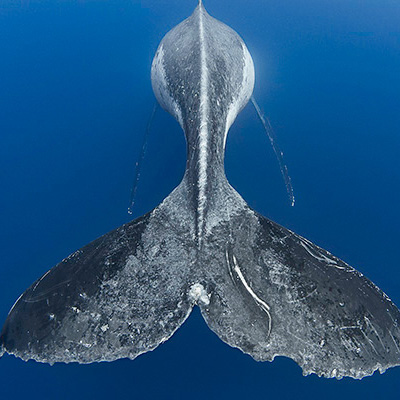
Besides having lots of fun and seeing friends while I’m Down Under, I’ll be concentrating on my humpback whale mother/ calf pair ID effort again this year.

I received reports of baby whale sightings at the end of June, which is early viz. the “average” timing, such as it exists. I’m hoping that the early sightings auger well for this season, and that we’ll have a bumper crop of juveniles.

In the past three seasons (2008, 2009, 2010), the ID count has been 16, 31 and 24 unique mother/ calf pairs.

Humpback whale mother and calf ID project, Kingdom of Tonga

If you’re going to visit Tonga this year, please consider helping me out with the ID effort. As I have in previous seasons, I’ll publish all the collated information online to be freely available for anyone interested, and ascribe full credit where credit is due.

I’ve set out a brief summary of the information that I need in this file: Tonga Humpback Whale Calf ID Summary (3.1MB).

Here are links to previous summaries:
2010 Humpback Whale Calf ID Summary
2010 Humpback Whale Calf ID Google Map
2009 Humpback Whale Calf ID Summary
2009 Humpback Whale Calf ID Google Map
2008 Humpback Whale Calf ID Summary

Finally…if you’re joining me in Tonga, see you soon. Get ready to have the time of your life!

Article: Focus Magazine Italy

If you happen to read Italian, here is a link to a PDF file of a pictorial on sperm whales that appeared in Focus Magazine Italy‘s summer issue: Focus Magazine Sperm Whale Feature, Summer 2011 (350kB).

Sperm whale feature in Focus Magazine Italy, Summer 2011

It’s the first time I’ve worked with this publication. I have to say that they are a truly friendly and professional team that made the process of working long-distance a pleasant experience.

Interview with Flip Nicklin

One of the people I looked up to when I was growing up is a man named Flip Nicklin.

He is National Geographic’s top cetacean photographer, the person who was responsible for many of the wild-eyed dreams of my youth, those in which I ventured into the deep-blue ocean to swim among whales and dolphins.

That’s pretty much what Flip has been doing for his entire adult life, and yesterday, I had a chance to talk with him, thanks to the magic of the internet.

Flip has recently launched a new book called Among Giants, A Life with Whales, which contains photos and stories from his countless adventures with cetaceans.

During our 20-minute chat, Flip tells me about how he got started (turns out that cetaceans are sort of a family business!), relates a few of the tales from his book, and shares some perspective on how the relationship between humans and cetaceans has evolved over time.

If you’re as much of a fan of cetaceans as I am, it’s worth taking a bit of time to listen:

And of course, if you’d like to purchase a copy of Flip’s book, it’s available at book stores and via online retail outlets, but I’d recommend purchasing via the Whale Trust site, as the highest amount of money ends up going toward whale research.

The book is also available as an iPad App on the iTunes store: Among Giants iPad App.

Photo Chat: Jon Cornforth

It’s been a hectic few weeks for both Jon and me. Jon was away in Alaska until just a few days ago, while I was in Papua New Guinea for the entire month of June.

And…as it turns out, both of us are headed out on trips in the next few days that will see us on the road pretty much until October.

Jon’s headed to the Bahamas soon, where he’ll be trying out a new Aquatech housing for his 5D Mark II with the wild Atlantic spotted dolphins there, and I’m going south on my annual trip to Tonga to photograph humpback whales.

So it was good that we were able to find a little time to catch up over Skype yesterday, just before I was fortunate enough to have a chance to have a brief conversation with Flip Nicklin (see next post).

Among other topics we discussed, Jon told me about how he (accidentally) dumped(!) his dad into the water in Alaska. Talk about a unique father/ son bonding experience.

We also shared our experiences with weather during our respective trips. Even though we were in totally different parts of the world, the weather patterns were off…basically we both had a lot rain.

Despite difficult conditions, Jon came back with stunning images like this:

Dwarf fireweed (Chamerion latifolium) covering the old Columbia Glacier moraine bar on Heather Island at sunset in Prince William Sound, Alaska
Dwarf fireweed (Chamerion latifolium) covering the old Columbia Glacier
moraine bar on Heather Island at sunset in Prince William Sound, Alaska

Not to be outdone by Jon, I whined a bit about how bad the weather was in PNG during June and about the dearth of critter life. Again, not to be outdone by Jon, I came back with photos of large aggregations of fish like this:

Countless hardyhead silversides (Atherinomorus lacunosus) swarming under the jetty at Samarai Island in Milne Bay, Papua New Guinea.
Countless hardyhead silversides (Atherinomorus lacunosus) swarming under
the jetty at Samarai Island in Milne Bay, Papua New Guinea.

Oh…if you’re looking for an adventure in the fall, Jon still has some spaces available for his trips to photograph polar bears with Steve Kazlowski later this year.

Equipment Note: Quad Ball Adapter

I had a chance to play with a new toy while I was in PNG…quad ball adapters, a product that a company in California called Xit 404 makes.

The concept behind this neat little gadget is simple. The adapter gives you the ability to attach up to four ball joints to any place where you can secure a standard T-plate mount.

Here, I’ve attached one of the adapters to a T-plate on a housing grip, and then hooked up four ball joints to the adapter:

Close-up view of quad ball adapter with four balls

Though it’s certainly possible to use four balls at one time, in practice, I only used two on either side of my housing.

I attached strobe arms to one ball joint, and used the remaining one on either side as a means to clamp down bits and pieces (light modifiers and such) in a secure manner…in effect, using the spare ball joints as extra hands to hold onto stuff I thought I might need (i.e., allowing me to carry even more junk than normal).

The extra ball joints also came in handy when I wanted to carry both strobes and constant lighting sources at the same time, such as when I wanted to have a focus light for shooting Dinah’s gobies, or when I thought it would be useful to have the flexibility of switching between taking still images and video footage.

I’m a big fan of simple, effective solutions like this.

If you find yourself wanting to carry lots of stuff down on a dive and/ or needing to have a range of lighting options, the quad ball adapter is worth checking out.

A bit of an extreme scenario, but it's possible to attach four arms via a quad ball adapter
This is a bit of an extreme scenario,
but it’s possible to attach four arms via a quad ball adapter

Disclosure: The quad ball adapters I tested were provided by Xit 404.

Exploring Palau by Kayak

It’s been a while since I visited Palau earlier this year. In fact, it’s been five months.

I’ve been eager to share some photos and write about my first substantial visit to the island nation since 1995, but I had to wait for two things. First, the trip was courtesy of Sam’s Dive Tours, Planet Blue Kayak Tours, and Sport Diver Magazine. As such, I had to wait for the article to come out in the June issue of the magazine: Hidden Palau, Sport Diver June 2011, 1.3MB.

Second, I had to wait until I returned from my recent trip to Papua New Guinea, where I was for the entire month of June. Since getting back, I’ve been swamped catching up with work, dealing with life’s little chores, and getting ready for my annual migration to the southern hemisphere to frolic with humpback whales.

So…realising that the only way I was ever going to write this post was to isolate myself…I’ve just escaped to a little bar in the basement of a building in Tokyo where I’m scheduled to meet some friends later tonight. But since it’s the middle of the day, there’s no one here, and there’s no 3G or Wifi signal. I have a pot of coffee beside me and a fully charged laptop battery, so here goes…

Aerial view of the Natural Arch formation in the Rock Islands of Palau

Dive Different
If you’ve been reading my blog for any reasonable period of time, you’ll know that I have a penchant for going to relatively unexplored places and doing unusual things. I like to “Think Different”, to borrow Apple’s slogan.

Palau is a wonderful place, with fantastic diving, but the islands don’t really fit my preference profile. It’s not particularly difficult to get to Palau, and there are literally dozens of boats ferrying hundreds of divers every day to well-known reefs. That, in short, is the reason I had not travelled to Palau to dive since 1995.

So…when I received an email asking whether I’d be interested in an assignment in Palau, I initially wasn’t all that excited. But one part caught my eye, a description of the trip as a: “very cool opportunity to shoot some places in Palau that don’t normally get covered in dive publications”.

Curiosity piqued, I pinged a few emails back and forth with friends in Palau and with the magazine, and soon realised that this could be a unique opportunity…a chance to explore some of the hidden, relatively unknown areas of otherwise well-known Palau, if that makes sense.

Exploring Palau by kayak
Exploring Palau by kayak offered a unique perspective
for a well-explored destination (and a great tanning opportunity!)

Specifically, the core concept of the trip was to explore Palau’s Rock Islands by kayak, meaning that we’d be going nice-and-slow through some of the most picturesque, untouched regions of the island nation.

By day, we’d explore inner waterways, clamber up sharp limestone formations, snorkel and scuba into hidden lakes, paddle under lush overhanging vegetation, and crawl through tight, submerged tunnels to see isolated, virgin coral formations. By night, we’d camp on beaches, dine al fresco, and sleep in tents.

I mean…how cool is that?!!!

Dining al fresco in the evening at Blue Devil Beach, Palau
Dining al fresco in the evening at Blue Devil Beach after a day of paddling

Who’s Who?
The cast of characters for this trip was short.

Ron Leidich was our guide. He’s lived in Palau for a long time…I think something on the order of 15 years…during which time he’s done the dive-guiding thing, but more recently, he’s been devoting time to exploring every nook and cranny of Palau’s Rock Islands…discovering, in the process, some pretty amazing stuff.

Ron showing us an insectivorous pitcher plant (Nepenthes mirabilis) while we were paddling to Disney Lake in Neco Bay
Ron showing us an insectivorous pitcher plant (Nepenthes mirabilis)
while we were paddling to Disney Lake in Neco Bay

Ron and I are about the same age (physically, and tragically…also mentally). Within hours of first contact, we got along like long-time drinking buddies…cracking stupid jokes, making obscure references to old movies, imitating cartoon characters, singing bad ‘70s and ‘80s tunes (Ron, not me!), and generally just acting like the (im)mature adults(?) that we are.

Anyway…poor Terry. The magazine sent Terry Ward to write the article, which meant: (a) I didn’t have the pressure of taking notes, and (b) she had to put up with our nonsense. From my point of view, (a) was terrific. From her point of view, (b)…probably not so much.

Terry listening to Ron's briefing for the adventures ahead
Terry listening to Ron’s briefing for the adventures ahead

In the beginning, I could tell that she wasn’t quite sure how to handle us, but good sport that she is, Terry became inured to us for the most part within a couple of days, and either ignored the insanity, or just shook her head from time-to-time in a vaguely parental manner.

Then there was Malcolm Maltel, who was arguably the most important person on the trip. He was our cook. Malcolm made outstanding(!) food, and lots of it…certainly a great way to wrap-up each long, tiring day.

Malcolm holding up a land crab (Discoplax hirtipes)
Malcolm holding up a Palau land crab (Discoplax hirtipes)

Malcolm also has an encyclopedic knowledge of the islands’ flora…comprising not just names of plants and flowers, but also traditional uses (food, medicine, etc.), some of which he shared with us during the trip.

Ron’s knowledge of the islands’ plant life is also incredible. Try as I might, there were few times when I could stump the two of them with a plant ID. Ron and Malcolm are working together on a guide book of Palau’s flowering plants, a draft of which we saw. It’s an incredibly detailed collection of information and pictures, including many things that probably haven’t been documented to date.

Rounding out the motley crew was Jefferson Nestor, who was in command of our support boat and made sure our considerable load of junk made it from point to point every day. Jefferson has one of the most infectious smiles I’ve ever come across (and of course, doof that I am, I didn’t take a good photo of him). I tried to make him laugh as often as possible, just to enjoy his amazing grin.

Twists, Turns and Tunnels
Perhaps the most significant thing I learned on this adventure was that even the most well-known places have secrets.

As I alluded to earlier, Palau is one of the most popular and frequently visited dive destinations in the world…for good reason. The reefs are teeming with life, and signature sites like Blue Corner, German Channel, and others rarely fail to deliver. If you’re a diving addict, it’s a must-do destination.

The thing is…there’s actually a lot more to Palau. Places that most tourists never see. Heck, places that even people who live in Palau don’t visit.

It’s to some of these places that Ron took us.

To access some of Palau’s hidden secrets, we had to navigate through tunnels, sometimes fully submerged, sometimes partially so. In certain cases, the fit was so tight that I felt like a contortionist folding myself into a tube of toothpaste.

As if that weren’t challenge enough, I had to drag camera gear through as well…Ouch!

Anyway, this photo pretty much sums up what the experience was like:

Entrance to hidden lake in Palau rock islands
Ron and Terry in one of the tunnels we traversed,
hidden lake visible in the background

We had to pick and choose the times we went through (and more importantly, headed back), as being on the wrong side of the tunnel at the wrong time could have turned into a less-than-enjoyable experience. In this case, as we crawled through, I carried my camera along bit-by-bit, setting it on the rocks as I made progress. (All those tedious hours in the gym finally paid off.)

There were hydroids covering the bottom of several tunnels, which gave Terry butt burn on at least one occasion. As you can perhaps surmise, both Ron and I thought that was rather amusing, though we (mostly) laughed behind Terry’s back…out of respect. Ron seemed immune to stings, perhaps from repeated exposure or just to a thick hide. I was always fully covered, so managed to avoid getting stung.

Anyway, you might be wondering, “Why bother going to this trouble?”

Well, on the other side of tunnels and passages like the one pictured above were pristine environments. Emerging from a tunnel into one of these unspoiled lakes was like finding myself immersed in a scene from the movie Jurassic Park…minus voracious prehistoric predators with menacing teeth, of course.

Above water, plants draped themselves across the rocks and one another, creating beautiful hanging gardens over the enclosed saltwater lakes, with birds nesting among the tropical foliage in complete safety. Normally shy tropic birds, for instance, flew low to the water, passing right over our heads. On one occasion, we saw a pair mate in mid-air, setting new standards for the Mile High Club!

Beneath the water’s surface, there were communities of undisturbed corals, and sometimes even populations of fish and other marine life that have been largely isolated from their cousins in the open ocean.

With nothing to disturb them, many corals in these secluded environments have grown to large proportions; some that we encountered were so fragile and thin that they were translucent.

There were corals in the lakes so fragile that they were translucent. This is the edge of a large Pachyseris speciosa formation
There were corals in the lakes so fragile that they were translucent.
This is the lava-like edge of a large Pachyseris speciosa formation.

Another example of translucent coral (Merulina sp.) in Palau's rock island lakes
Another example of translucent coral (Merulina sp.) in Palau’s Rock Island lakes

Of course, the visibility in these enclosed environments and nearby waters wasn’t terribly good.

But that was, in a sense, the whole point.

You see, protected places like these hidden lakes, other semi-enclosed shallow-water areas, sheltered mangrove forests and the like…serve as nurseries for many fish and other species of marine life…places of sanctuary.

In other words, a significant part of the reason that that the reefs of Palau are so healthy and such a magnet for divers from all around the world is because there are so many protected, pristine areas like this scattered among the Rock Islands, where corals flourish, young fish grow in safety, and marine life gathers to reproduce and disseminate.

No safe, hidden, murky environments = no healthy coral reefs and tropical fish.

It’s all connected.

Shallow, protected places have murky water, but provide a safe environment for corals to flourish and develop into intricate, unbroken formations
Shallow, protected places have murky water, but provide a safe environment
for corals to flourish and develop into intricate, unbroken formations

Juvenile pajama cardinalfish (Sphaeramia nematoptera) in Palau
Calm, shallow environments provide shelter for many juvenile animals,
like this baby pajama cardinalfish (Sphaeramia nematoptera)

Teasing Terry
Remember I mentioned “Poor Terry” above? Well, to give you but one example of what she had to put up with…

Among our many unique experiences, Ron took us to a place where he’s often come across piles of banded sea kraits (Laticauda colubrina) hauled up on the rocks above the water line. They seem to enjoy resting in groups of several individuals, as they were doing when we visited.

I know these amphibious reptiles climb onto land to lay eggs, so I was hoping to see some eggs, or at least some sign of egg-laying. But nope. Ron’s never seen any eggs either, so it’s a bit of a mystery why the animals gather on these rocks. Perhaps it’s just to take a break from swimming?

A pile of four or five venomous banded sea kraits (Laticauda colubrina) lounging on a shaded rocky ledge in the Rock Islands of Palau
A pile of four or five venomous banded sea kraits (Laticauda colubrina)
lounging on a shaded rocky ledge in the Rock Islands of Palau

Anyway, to see these animals up close, Terry and I had to dismount in a ginger fashion from the bow of the boat while it was sloshing up and down with the surge, and then scamper up the rocks, with the sea directly below us (while carrying camera and lenses, in my case).

So basically, we were perched on a steep limestone cliff face, surrounded by piles of slithering sea kraits, with no escape route if one of the reptiles took a fancy to us, or if more slinked up the rocks to join their friends.

Like other marine reptiles, these intriguing animals boast a powerful venom. I’ve never heard of anyone being bitten, and despite their sinister appearance, sea kraits are probably too intelligent to even consider wasting their precious toxin on us.

Sometimes, logic doesn’t really matter though.

In case it’s not entirely obvious from the photo below, Terry was scared. Actually, just saying she was “scared” is somewhat insufficient. “Scared —-less” would be closer to the truth.

Terry bravely facing down a den of slithering sea serpents

Obviously…it was too good of an opportunity to pass up. While she was moving among the rocks, looking for a safe, non-krait-occupied spot to settle down, I pointed behind her and belted out: “Look! There’re more coming up behind you!”.

In rapid succession came squeals of panic from Terry, then howls of laughter from Ron, Jefferson and Malcolm…all of which were audible above the sound of waves smashing against the island. Impressive, no?

Of course…there weren’t any sea kraits climbing up behind her. I should’ve felt bad, but I was too busy chuckling and trying not to drop my camera.

Poor Terry.

Life Will Find A Way
In addition to the hidden lakes, there are other transitional zones nestled among the passages and crevices of the Rock Islands…areas that create unique ecosystems and often provide safe havens for marine life.

One of Ron’s favourite places is a formation of multicoloured Lobophyllia coral he’s named “The Four Corners”.

The Four Corners Lobophyllia coral formation that Ron loves so much
The Four Corners Lobophyllia coral formation
that Ron loves so much

I’m no coral expert, but as I understand, Lobophyllia (often referred to as brain corals, for obvious reasons) are hardy animals. They’re generally found in shallow waters, where there is a decent amount of light to support the symbiotic zooxanthellae that impart colour to them, and more importantly, synthesise food for them.

Ron has found an area where the conditions shouldn’t be so good for these corals, but where they flourish nonetheless…a place he calls Darwin’s Wall as a nod to the cerebral common appellation for Lobophyllia.

There’s not a lot of sunlight that penetrates the canopy of overhanging trees at Darwin’s Wall, and the water is also murky…meaning that the zooxanthallae embedded within the coral polyps probably can’t produce a lot of food, certainly not enough to support the size and abundance of corals present in the area.

Instead, the large colonies of brain corals that live and thrive here may be relying more on nutrients brought to them by large volumes of water flushed daily through two tunnels that connect a large inner lake and the open water.

I know…not all that exciting to a normal person…but if you think about it, the Lobophyllia corals at Darwin’s Wall illustrate the critical point that Jeff Goldblum’s character in Jurassic Park made: “Life will find a way.”

Terry shining a light on multicoloured Lobophyllia brain coral at Darwin's Wall
Terry shining a light on multicoloured
Lobophyllia brain coral at Darwin’s Wall in the Rock Islands of Palau

Another example Ron showed us of life finding a way was in the Patch Reefs, a system of shallow-water coral reefs situated (in both a conceptual and physical manner) between the really mucky waters of the inner lagoons and the crystal-clear blue of the true open ocean.

Back in 1998, there was a really bad El Niño event that affected the entire the Pacific. I remember reading stories of mass devastation to coral reefs, accompanied by a chorus of proclamations that it would take hundreds, maybe thousands, of years for reefs to recover…if ever at all.

Doom and gloom all around.

Well…here’s one of those reefs that was devastated first by El Niño, and then by a massive crown of thorns starfish attack that left the entire area a crumbled, bleached-out wasteland:

Thriving coral reef in an area that was devastated by El Niño in 1998 and crown of thorns thereafter
Thriving coral reef in an area that was devastated by
El Niño in 1998 and crown of thorns thereafter

Sure doesn’t look like the perma-wasteland that so many divers, conservationists, scientists and other miscellaneous authorities asserted that it would be, does it?

Of course, most people would agree that in a perfect world, it’s best for reefs not to experience destruction due to El Niño events, plagues of crown of thorns starfish, or the carelessness of man.

But what this shallow-water reef and others around Palau (as well as the entire Pacific region) clearly demonstrate is that nature isn’t as frail and helpless as humanity too often assumes it to be.

Under the right circumstances, as here in Palau, where an intricate web of independent, but interdependent, ecosystems support one another…”Life will (definitely) find a way.”

In fact, it’ll do more than that. It’ll thrive, as evidenced by the diverse array of colourful juveniles and shallow-water current feeders I found amid the nooks and crannies of the Patch Reefs.

Brilliant juvenile chromis at Fantasy Island in the Patch Reefs

Among the thriving Acropora coral at Fantasy Island were many cute yellow coral gobies (Gobiodon okinawa)
Among the thriving Acropora coral at Fantasy Island
were many cute yellow coral gobies (Gobiodon okinawa)

Dascyllus carneus, a fast-swimming fish that typically lives among healthy corals on shallow reefs, snatching food from current
Dascyllus carneus, a fast-swimming fish that typically lives among
healthy corals on shallow reefs, snatching food from current

Learning to Kayak
One thing I forgot to mention to everyone before heading over to Palau was that I had never kayaked before. Oops.

I didn’t say anything until the first morning, when, with kayaks fully loaded, Ron exclaimed, “OK! We’re ready. Let’s go.”

I raised my hand and said: “Um…how do you get in?” to stunned expressions from all concerned. At that point, I had no choice but to fess up and admit that I’d never kayaked before.

Terry laughed. Ron looked baffled, but took it in stride. He gave me the 45-second Idiot’s Guide to Kayaking explanation of what to do, and off we went.

I’m proud to say that I had no problems. It took a few minutes to get the hang of using the double-sided paddle, but I managed to steer in a (relatively) straight line, and even handled swells and waves with no issue. I didn’t hit any islands either.

When we stopped to check things out, dismounting and re-mounting posed a minor challenge the first couple of times, but I did well. I have no doubt that Ron was proud of me.

Ron and Terry striking a pose with gear-laden kayaks

Until I flipped.

Before I elaborate, I just want to be clear that I did not flip due to difficult conditions. I flipped in glass-calm water, with no current, no wind, no waves, no menacing wildlife…nada.

Even better…I flipped twice.

So here’s what happened.

The first time, Ron was showing Terry and me how to glide under a low-hanging arch. Basically, paddle to get a bit of momentum, then lean back until you’re flush with the kayak and float through the arch to the other side. Sort of like doing the limbo, but seated in your kayak.

Ron demonstrated. Looked easy. Terry went through. No problem at all. I headed to the arch, leaned back. Everything was going just peachy until I remembered the sole admonition from Ron. During his explanation, Ron said that the one thing we shouldn’t do is lean right or left.

Now…when someone tells me not to do something, I have a tendency to, well…do it.

So “FLOP!” over I went. Ron sure knows his stuff. All I did was lean a really tiny, little wee bit to the right and before I knew it, I was upside-down. Didn’t even have time to blink.

Fortunately, the water wasn’t deep. It was barely chest-high, so I surfaced immediately, laughing so hard I could barely breathe. Of course, all the carefully packed equipment in my kayak was now on the sea bottom, so it took a while to regain my composure and un-discombobulate myself.

All Ron and Terry could do was shake their heads as they waited in the distance for me.

Now, once should’ve been enough to teach me a lesson, but never let it be said that I learn quickly.

The second time I flipped was…you guessed it…once again in dead-calm conditions.

We were paddling through a narrow mangrove area called Long Lake. It’s one of the most beautiful places I’ve ever had the good fortune of visiting.

The narrow tunnel formed by mangroves and other plants, the birds, the serenity…infused me with the same feeling of awe I get when I visit Hachimangu Kinomiya Shrine in Izu…that of being at one with nature, at peace, centered.

Anyway, as I looked up at the trees, paddle in hand, just floating along basking in the purity of Mother Nature…once again, Ron’s warning came to mind, and yup…over I went once more, this time to the left.

And once again, the water was shallow, so it was basically a repeat performance, with me scrounging around in the soft muddy bottom looking for everything I’d just spilled out of my kayak. Sheesh.

As it turned out, I took my spill in a perfect place to take a couple of photos to illustrate the integral role that mangrove forests play in the health of a complex ecosystem, and also to show how intricate mangrove tree root systems are:

Ron explaining the importance of mangroves to Terry

Intricate arrays of mangrove roots provide shelter for many juvenile animals

I tried explaining to Ron and Terry that I’d chosen that specific spot to take a spill because I knew that it’d be a perfect place to take photos…but they wouldn’t have any of it.

So, even though I flipped over twice, I got some nice pictures as a result, and also got to spend time in the most beautiful mangrove area I’ve ever visited.

Open Ocean
Of course, a trip to Palau wouldn’t have been complete without a visit to some of the nation’s world-renowned blue-water dive sites. So, toward the end of our trip, we managed to do one dive each at Blue Corner, the Blue Holes, German Channel and Ngemelis.

The days we had spent exploring the hidden lakes, inner lagoons, mangrove areas and shallow-water reefs of the Rock Islands helped me to appreciate those dives in an entirely new light. Kayaking with Ron’s guidance through the hidden environments of the Rock Islands had “pulled back the veil” so to speak, and given me an opportunity to see what underpinned the health of Palau’s world-famous reefs.

I won’t bore you with too much narrative about the blue-water dives…just a brief mention of the highlight for me of our handful of “normal” dives, which was having the opportunity to spend some quality time with a juvenile spotted eagle ray (Aetobatus narinari). I’ve always been a fan of these graceful animals, possibly because of their permanent mickey-mouse grin.

I learned that the Palauan word for eagle ray is the same as that for Audobon shearwater, and both are considered gods. So basically, I photographed a smiling baby god. Doesn’t get much better than that.

A baby eagle ray (Aetobatus narinari) at Blue Corner, with dive boats and barracudas visible behind
A baby eagle ray (Aetobatus narinari) at Blue Corner,
with dive boats and barracudas visible behind

Cavorting With Crustaceans
One evening, just before dinner, we somehow got on the topic of land crabs. I seem to recall that the discussion had something to do with catching land crabs to eat for dinner. They’re absolutely delicious, especially when a master like Malcolm prepares them.

Anyway, he casually let slip during the chat that female crabs would be heading to the water to release eggs soon.

Whoa! Hold the press. That immediately caught my attention, so much so that I actually forgot about dinner, and asked for more information.

In a staid, matter-of-fact tone, Malcolm told me that female land crabs in the Rock Islands make their way to the sea starting a couple/ few days before the full moon, when the high tide coincides with nightfall, to release their clutch of fertilised eggs into the water.

As it turned out, it was two nights prior to full moon when he told me that. It was also just before nightfall. The tide was almost high. And my camera equipment was anything but ready…Aiyah!

So…just as the female crabs were preparing to head to the waterline, I mumbled something to the effect of “Malcolm, you really have to give me more notice than this.” and scrambled (probably in a crab-like manner to any impartial observer) around our campsite, slapping a camera into a housing, attaching strobes to arms, digging out an underwater light, fumbling with various clamps to put everything together…generally creating a ruckus and working up quite a sweat.

Just as I got everything together, we spotted a single female heading to the water. I rushed over (probably, with multiple strobe arms dangling from my camera housing, appearing crab-like to any impartial observer) and followed her in. She was hesitant at first, but when nature calls, nature calls…so within a few minutes, she did a mad happy-hoppy dance to cast her eggs into the water, getting knocked sideways every once in a while by the surf.

It wasn’t easy holding up my camera rig (I really wish camera equipment could be less heavy) and following the frantic movements of the crab and surf, but I did manage to get a few photos:

A female land crab (Cardisoma sp.) releasing eggs into the surf zone

Cardisoma sp. land crab larvae visible at high magnification
Crab larvae visible at high magnification. See the pairs of eyes?

I looked for egg-laden females again the next couple of nights, but as is often the case, when I was actually prepared, nothing happened. C’est la vie.

Wrapping Up
As you’ve no doubt gathered by now, it was an eventful trip. The anecdotes above are just a few highlights of what Terry and I experienced and learned in Palau, thanks to Ron, Malcolm and Jefferson.

Logistically, this was one of the most challenging excursions I’ve done. Since we were on kayaks, we had to carry everything that we needed during the day…masks, snorkels, fins, wetsuits, scuba tanks, BCDs, underwater cameras, land cameras, changes of lenses, etc.

Moreover, everything had to be waterproofed (particularly given my talent for flipping over in calm water), and I had to have rapid access to all my gear, because often, the light and/ or current was just right only for a matter of minutes.

There was a lot of area to cover in much too short of a time, with many of the places Ron wanted to take us requiring pinpoint timing, down to the hour or so. The weather was unseasonably rainy and windy, which put on damper on many of our plans.

At night, the humidity was high, we were covered in salt, sand and sweat…and we had thunderstorms to boot (Lightning struck ground near us a few times, which was a stimulating sensation!).

Which of course meant I didn’t want to break open my cameras or deploy my computer and hard disks. Oh yes…I had my laptop, hard disks, batteries, chargers and lots of other sensitive electronics with me. We had a portable generator (that Sam’s Tours procured just for this trip), which I tried only to fire up every other day, in the early morning, when there was sufficient light for me to see and fully appreciate the myriad ways I could destroy my gear.

Suffice it to say that I was in a constant state of equipment-related anxiety…but it was definitely worth the effort.

Besides gaining first-hand insight into some of the hidden intricacies of the Palauan ecosystem, I made some great friends and had lots of fun, which is, after all, what travel and life should be about.

In all openness, this isn’t the type of trip that everyone will enjoy or should try.

If you’ve never been to Palau, then I’d definitely recommend doing a more standard dive itinerary for your first visit.

But if you’re adventurous, somewhat of a biology geek, enjoy getting out in to the fresh air, and don’t mind being away from the creature comforts of a hotel room, TV, aircon, etc., then this is an adventure of a lifetime. You’ll see, experience and learn so much that it’s hard to take it all in.

If you’d like to learn more about diving in Palau or exploring the Rock Islands by kayak, definitely get in touch with Sam’s Dive Tours.

On that note, it’s time for me to order a beer, as my friends will be showing up soon. I’ll conclude with a few more photographs from the trip, in no particular order:

Terry getting background information from Ron

Chance encounter with a pair of dugongs in Palau

Ron sitting on the remains of Japanese artillery from WWII

We came across a pod of short-finned pilot whales (Globicephala macrorhynchus)

Terry Ward with fish in Palau
Terry had me worried at one point

Ron, Terry and me just before going up with Palau Helicopters to take a tour over the Rock Islands
Ron, Terry and me just before going up with Palau Helicopters
to take a tour over the Rock Islands…Thanks Matt!

Wrapping Up PNG

It’s been nearly three weeks since I got back from my recent trip to Milne Bay aboard MV Golden Dawn, and I still haven’t been able to sort through and process all my photos. Sigh.

I’ll be heading out to Tonga soon though, so I need to focus my attention on preparing for the humpback whales…which means I probably won’t make any more headway on my PNG images for a while.

To wrap up my PNG posts for now, here’s a final photo, one that I took when we stopped at a village called Boga Boga at Cape Vogel. It’s a picturesque place, with lots of friendly, energetic kids.

Kids on the beach at Boga Boga village, Cape Vogel, Milne Bay

Trips like this are about more than just diving. Experiences such as visiting beautiful Boga Boga and meeting the wonderful people who live there are enriching and memorable.

In addition, sharing adventures and laughs with old friends and new helps to keep life’s priorities in perspective. When you’re on a boat for a month, isolated from the daily madness of political turmoil, economic crises and other miscellaneous social woes…it’s much easier to focus on what’s important and forget about the things that aren’t.

Of course, there’s always the danger of going a bit funny in the head, as Bob demonstrates in the following video clip (though one could reasonably make the case that he was already somewhat off):

I’d like to say thanks to everyone who was silly enough to join joined me during the trip and put up with my antics…and of course to Craig (and his crew!) and Bob. All kidding aside, their experience, knowledge and patience made the trip, and I’m looking forward to my next opportunity to share another adventure with them.

And finally, I’d like to give a shout out to Scubacam, Light and Motion, Zillion, Aquaforum, Xit 404, and Air Niugini.

It may not be obvious, but trips like this require a lot of preparation and logistical coordination (a situation exacerbated by the fact that I tend to schlep around so much junk and add new junk on a regular basis), and I need assistance and cooperation from a lot of people to pull everything together. So…thank you very much!

Oh…if you’re planning a visit to PNG, please note that Air Niugini has a specific baggage allowance for scuba divers, which some travel/ booking agents may not necessarily know. From Air Niugini’s website:

Air Niugini offers the following baggage allowance for scuba divers; International flights – 20kgs (44lbs) plus an additional 15kgs (33lbs) per person. Domestic flights – 16kgs (35lbs) plus an additional 15kgs (33lbs) per person. Air Niugini honours the International allowance for International passengers in direct transit on same day to a domestic port in PNG

Photo Chat: Mary Lynn Price

While I was away in Papua New Guinea, Apple released Final Cut Pro X, which has been entirely revamped from the previous Final Cut Pro software.

For normal people, this isn’t exactly earth-shattering news, but for video editors (and possibly also for photographers), it is. The changes to Final Cut are so significant and at such a core level that the initial feedback from parts of the video editing community, i.e., those people who’ve invested lots of time and effort over the years to become proficient with FCP, was overwhelmingly negative.

This caused me stress. Not because I’m a video editing expert (not by a long shot!), but because I had recently invested a great deal of effort learning the basics of Final Cut Pro, and I wasn’t all that happy with the prospect of (a) unlearning and re-learning everything, or (b) possibly even having to switch to something else.

In this context, I contacted my friend Mary Lynn Price, who is an Apple-certified FCP Pro and also the driving force behind DiveFilm.com, to ask her opinion.

She’s just started playing with the new software, but she’s already come to the conclusion that she “loves it”, in her words. Since Mary Lynn makes her living using FCP, this came as a huge relief.

After talking with Mary Lynn, I’m coming to the view that…while there are certainly still teething issues for the newly launched software…for people who want to edit home videos, put together quick-and-dirty short productions, and create multimedia essays (me!), FCPX might actually be a welcome development, as opposed to the abomination that some early reviews have suggested.

In this informative hour+ conversation, Mary Lynn highlights some of the key new features that many photographers looking to create multimedia pieces may find useful…like working in native H.264 format for DSLR footage (no transcoding!), one-click color balance (similar to the white balance function in Aperture and Lightroom) and clip auditioning (think: being able to try on clothes before you decide what to buy).

So if you’re just starting out with multimedia or wondering about if and when to try FCPX, it’s worth listening to what she has to say.

Note that you can use the links in the embedded audio player above to download the file, open it in iTunes, or even embed it on another site. If that fails, here’s a direct download link for the mp3 (about 87MB): Photo chat with Mary Lynn Price

Toward the end of our chat, we also talked a little bit about the skills and art involved with telling a story, whether through words, photos, video, or a mix of all these.

Mary Lynn is currently working with researchers at Montana State University to document Weddell Seals in Antarctica. Check out both the DiveFilm HD and Weddell Seal Science podcasts.

Weddell seal pup in Antarctica
Weddell seal pup hard at work…being cute

Note: When I was recording this, somewhere near me, someone turned on machinery that made a low-frequency throbbing sound, perhaps a large aircon unit (since it’s boiling hot right now), which I wasn’t able to hear while we were talking, but came through really loud on my voice track. I had to edit that out, which makes me sound at some points like I’m in a tunnel with cotton in my mouth.

Links to people and services we mentioned:
Philip Hodgetts
Philip Hodgetts FCPX Metadata book
Steve Martin’s Ripple Training FCPX Tutorials
Independent filmmaker Emiko Omori
Plural Eyes
Mediastorm

Charity Photo Exhibit Reception

Last night, I attended the opening reception for the charity photo exhibition organised to raise funds for the people of Northeast Japan who are suffering the fallout from the March earthquake and tsunami.

Though the underlying impetus for the event is nothing to be happy about, it was certainly good to see so many people, particularly from the underwater photo and video community, pulling together and cooperating for the purpose of raising funds.

There was food, drink, a few speeches (No one warned me I had to get up and say something!), and an opportunity to see many people I haven’t been able to spend time with for a while.

Among the highlights of the evening for me was bumping into Tateishi-san, who founded Diver magazine and was the first person in Japan to support my work and help me get established. He has since retired, so it was a rare pleasure to have a chance to catch up with him:

Tateishi-san and Tony Wu
Tateishi-san, who was the first publisher to support me in Japan

Also among the attendees was Ikuo Nakamura, who is one of the most well-known underwater photographers in Japan. I first met him some years ago when he visited Singapore courtesy of a photo exhibit organised by Epson.

Since then, we’ve made it a point to get together every once in a while to brainstorm (i.e., get ridiculously drunk), but my intense travel schedule in recent months has meant that we’re long overdue for another problem-solving session to address the woes of the world.

Tony Wu with Ikuo Nakamura
Me with Ikuo Nakamura

At the end of the evening, the organisers sent the contributing photographers off with a nice present, commemorative sake (rice wine) produced in honour of Dr Hideyo Noguchi.

Commemorative sake in honour of Hideyo Noguchi

The exhibition at Hideyo Noguchi Memorial Hall continues until 31 July, open daily from 12:00 to 20:00. In addition to T-shirts, photo books, and products from northeastern Japan, the photos on display are also available for purchase…with every last Yen being donated to relief and reconstruction efforts.

Samarai Blue

Here’s a short video clip I just put together showing what it was like to dive under the jetty at Samarai Island.

I took the video footage when it was cloudy overhead, so the light was diffuse and whitish, plus there was quite a bit of contrast between the dark, nearly black, areas under the jetty and the harshly lit patches of water. Did the best I could picking angles to minimise the conflict between light and dark.

I shot with a Canon 7D camera and Tokina 10-17mm wide zoom lens, using a Zillion housing and Pro One dome port. For lighting, I used two Light and Motion Sola 1200 lights, mainly just to add highlights to fish that swam close to me.

I also used the recently released Technicolor CineStyle picture profile. I think it may have helped with capturing greater detail in the wide range of light values, though I didn’t shoot any footage with other profiles for comparison.

Hope you enjoy the video. There certainly were a lot(!) of fish.

Charity Photo Exhibition

Just a reminder that there will be a charity photo exhibition starting next Saturday (16 July) in Tokyo at the Hideyo Noguchi Memorial Hall. The exhibit will be open between 12:00 and 20:00 through 31 July.

Admission is free, but 100% of proceeds from all sales and contributions go toward helping the people of northeast Japan, who are unfortunately still a long way off from getting back to life as usual.

Charity photo exhibit for Japan earthquake and tsunami
Charity photo exhibit to raise funds for the people of
Northeast Japan affected by the March earthquake and tsunami

I’ll be there for the opening reception on 16 July at 18:00, as will many of the participating photographers and volunteers.

If you are in Tokyo, please consider dropping by. For more information, please visit the event site: Charity photo exhibition for Northeast Japan Tsunami Region

Motion and Form

The jetty at Samarai Island in Milne Bay was red-hot during my recent visit to Papua New Guinea.

There were multiple swarms of thousands of fish, including aggregations of hardyhead silversides (Atherinomorus lacunosus) like the one pictured below so enormous that referring to them as “schools” seems inadequate. “Universities” would be more like it.

Robust silversides (Atherinomorus lacunosus), Samarai Island, Milne Bay, Papua New Guinea
Thousands of swirling silversides circling around a coral-encrusted
jetty post at Samarai Island in Milne Bay, Papua New Guinea

The currents weren’t too bad; the water was shallow; and the fish never strayed far from the relative safety of the areas under and around the jetties…so it was the perfect opportunity to concentrate on photographing broad, sweeping movements of multitudes of fish.

Which is precisely what we did, since encountering tens of thousands of fish in ideal photographic conditions isn’t an everyday occurrence.

If you find yourself at Samarai when the fish are around, or in a similar situation elsewhere, keep this in mind: The key to taking memorable photographs of such massive aggregations of fish is to snap the shutter at the precise instant that the seemingly haphazard motions of thousands of individual fish transcend chaos and coalesce into a recognisable pattern…a shape that evokes the magnificence of their collective existence.

There’s a heap of waiting and frustration involved, but it’s worth the effort if you capture the right moment:

Hardyhead silversides (Atherinomorus lacunosus), Samarai Island, Milne Bay, Papua New Guinea
Large schools of fish like these hardyhead silversides (Atherinomorus lacunosus)
at Samarai Island make for excellent subjects to depict motion and form

Incidentally…Julian Cohen, who was on Golden Dawn with me for the entire month of the trip, took some really nice photos of the friendly fish at Samarai and other subjects as well. He just contributed an article about our Milne Bay adventure to the latest issue of Underwater Photography Magazine, which is published by Peter Rowlands.

With Peter’s permission, I’ve clipped Julian’s four-page article from the issue to repost here: Julian’s PNG Article from UwP61 Jul/Aug 2011 (right-click to download). It’s worth a read, as Julian’s discussion and photographs provide an excellent overview of many of our trip highlights.

Please visit the Underwater Photography Magazine site to download the rest of issue 61 and peruse back issues.