Archive for October, 2010

Maybe Moby

Late last night, while browsing for books to download and take with me to Ambon, I had the crazy, some would say insane, notion that I might try reading Moby Dick again (I’ve tried and failed at least a dozen times).

When I typed “Moby Dick” into my chosen online bookstore, this is what I saw:


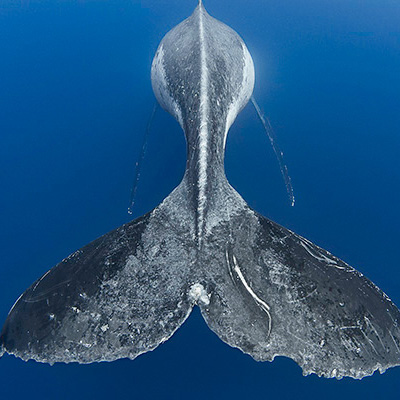
What’s wrong with this image?

Any way you look at it, this is a well-mannered humpback whale enjoying a frisky frolic in the sun. And here I was thinking for so many years that Moby was an all-white sperm whale with a bad attitude and a penchant for torturing semi-deranged seamen.

Amazon.com had more than one Kindle edition of Melville’s masterpiece available, at least two of which featured the same species shuffle.

So…I guess this means that Amazon’s mistake wasn’t just a fluke (Sorry, I couldn’t resist the horrible pun).


…and this one?

Spam. Canned.

So it turns out that the hijacking of my blog’s Google profile was the result of a reasonably well-documented, extremely clever WordPress hack known as the Pharma Hack.

Several people sent me links and information about the hack…Thank you so much!…and my web designer (who’s awesome by the way), got on the case and extirpated (I have so always wanted to use that word) the offending code from my WordPress install:


WordPress Pharma Hack extirpated!

In short, I was a bit behind on updating various bits and pieces of my WordPress installation due to my extensive travel schedule, which probably left the door wide open for the low-life scum of the earth spammers to abduct my site.

If you run a WordPress site and find yourself the victim of this hack, here are some useful links for more information:

Chris Pearson
WP Blogger
Sucuri

I Hate Spam

I suppose I should be flattered that spammers consider my site important enough to target, but in this instance, I’d prefer not to have the attention:


Anyone know how to fix this spam problem?

If you happen to know how this was done and how I can fix this, could you drop me a note?

Working the Angles

I’ve been wanting to post this photograph from my recent trip to Ogasawara for a while, but haven’t been able to find time to do so because preparation for my upcoming trip to Ambon has been so crazy-hectic.

Anyway, this is a photo of an Indo-Pacific bottlenose dolphin (Tursiops aduncus).


Top-down view of an Indo-Pacific bottlenose dolphin

It’s not a particularly rare or unusual animal, but I like the photo because of the angle. It’s not often that you come across a top-down photo of a dolphin, probably because it’s not all that often that you find yourself…well…on top of a dolphin!

Actually, I saw this animal surfacing slowly to take a breath, and I swam over specifically to get this shot…a slightly different take on an otherwise familiar animal.

Having a 10-17mm Tokina lens attached to a Canon 7D camera helped a lot. The fisheye perspective helped to accentuate the streamlined curvature of the sleek marine mammal’s body, and the 7D’s rapid shutter rate gave me several successive shots to frame the animal exactly right.

Me At Work

In contrast to my normal “Me At Work” posts…when I usually post photographs of me looking dorky while taking photographs…here’s a snapshot of me looking dorky standing next to my photograph of four sperm whales that was selected as the winner of the Underwater Category in the 2010 Veolia Environment Photographer of the Year contest:


Me standing next to my image of four sperm whales
at the London Natural History Museum

I met a lot of wonderful people while I was in London, including a gentleman from Belgium named Michel Demeuse and his son Frédéric, whose beautiful image of delicate mushrooms was the winner of the In Praise of Plants category. Michel was kind enough to forward this photograph to me.

During the course of dinner conversation, I realised that I had indirectly worked with Michel about 15 years ago…during the dark, grim days when I had to wear a suit (and shoes even!) every day. What a small world it is.

Wildlife Photographer of the Year 2010

Sperm whales have been good to me.

More by chance than design, they’ve played a role in every major contest I’ve entered.

Back in the year 2000, I won the grand prize at The Blue Earth Underwater Photo Contest (the largest underwater photo contest in Japan) with my image of a sperm whale with its mouth wide open and a longline hook in its mouth.

A year later, my book Silent Symphony received the International Prize for Books of Underwater Images at The World Festival of Underwater Images in Antibes, France. One of the photographs in the book was of a sperm whale.

This year (I haven’t entered any contests during the interim), I submitted a handful of images to the Veolia Environment Wildlife Photographer of the Year competition (co-organised by Veolia, the Natural History Museum and BBC Wildlife Magazine) and was fortunate enough to have this photograph of four sperm whales selected as the winning image in the Underwater World category:


First place in the Underwater World category of the Veolia Environment Wildlife Photographer of the Year 2010

Being in London for the past few days has been an incredible experience…first, seeing so many beautiful images collected and displayed in a magnificent venue (the Natural History Museum), and second, having the opportunity to meet so many gifted photographers covering the entire range of nature photography.

If you live in London, or happen to be in one of the cities that hosts the travelling photo exhibit in the coming months, I highly recommend making time to see the selected images. They are, in a word, inspiring.

Finally…a huge “Thank You!” to the organisers and sponsors for putting on a terrific contest, arguably the best of its kind in the world, and for giving me the chance to meet so many wonderful people.

Physeter Follow-Up

After I posted this photo of a sperm whale from Ogasawara to Flickr, I received a comment/ question from Rick Pearson.


Friendly sperm whale encountered west of Chichijima, Ogasawara
Photograph taken under permit

Here’s Rick’s comment:

Hey Tony, any more info about this particular whale? Is it a male (kinda hard to tell from this angle), and how big was it? I went to your blog page and didn’t find much more info there, just that it was very friendly. The reason I’m asking, is that the entire front, flattened portion of it’s head is gray, and there are lots of scars all over the head and around the mouth. I haven’t seen that much gray in any underwater sperm whale photo, and according to both scientists, and the old time Yankee whalers, that much gray on the front was most often found only on older, and therefore much larger, male sperm whales.

I certainly noticed the grey colouration right away when we came across this whale, largely because it made the whale easy to spot, but also, as Rick alludes to, most sperm whales don’t seem to have so much grey.

I wasn’t aware of any possible correlation with the whale’s age or sex, however.

Anyway, I promised Rick I’d find and post another photo of the same whale, showing the underside so we can at least decide if it’s a male or not, so here it is:


Sperm whale hanging in the water
Photograph taken under permit

And here’s a zoomed-in view of the genital area:


Close-up of the whale’s underside
Photograph taken under permit

The whale wasn’t very big, at least as far as sperm whales go. I’d estimate it was 12 metres long at most, and it didn’t have the bulk of a mature male. I’ve been in the water with two mature bull sperm whales, and believe me…when you see a big bull…you know it!

Anyway, the colouration is intriguing. If anyone else has any insights or relevant knowledge, please share!

Oh My Marlin’

Sperm whales weren’t the only thing we saw in Ogasawara.

We came across two species of dolphins (Tursiops aduncus and Stenella attenuata), as well as a family of Cuvier’s beaked whales (Ziphius cavirostris…I came oh so very tantalisingly close to getting in-water photos of them!).

We also rescued a baby Bulwer’s petrel (Bulweria bulwerii) that might have left the safety of its nest too soon. It was adrift in the water, unable to fly. Three of us managed to surround it, allowing me to grab hold of the frightened bird and take it back to land to be nursed to health and set free a few days later.

The most adrenaline-inducing non-sperm whale encounters, however, were with two large marlins that buzzed us at close quarters on two separate occasions…both times while we were preoccupied with large cetaceans.

This one was probably around two to two-and-a-half metres long (without the pointy part):


One of the marlins that buzzed us during a whale encounter

I’ve gone for years without ever seeing a marlin in the water, and now I’ve seen three in the past three months: one in Tonga, and two in Ogasawara.

By the way, does anyone know what kind of marlin this is? The local fishermen suggested that the fish were either striped or blue marlins.

Between The Lines

Photographing sperm whales can be a challenge for many reasons, including the fact that…well…they’re not always terribly photogenic. They often just look like big brown blubber logs with stubby fins, a tail and a mouth.


Making sperm whales look nice can be challenging.

Sometimes, you have to look between the lines…or in this instance, between the jaw lines…to see something interesting:


See the leftover squid arm? Note the big teeth too.

I have to confess that I didn’t notice the squid arm while I was in the water, since the whale passed by at relatively high speed. The swells were also considerable, which made framing the whale a challenge as well.

I can’t be 100% certain, but I suspect the leftover calamari segment was from an Architeuthis squid. From the above photo, it looks like the arm was attached to the whale’s face, perhaps as a result of the “teeth” on the squid’s suckers, which look like this (photo below from last year):

giant squid suckers

In October 2009, I recovered a 351cm segment of an Architeuthis arm from the water after we saw a sperm whale breach. I suspected at the time that the squid arm might have been attached to the whale and became dislodged when the cetacean breached.

This photo seems to offer some support for my conjecture.

Note: Photographs taken under permit.

Back From Ogasawara

I just got back from Ogasawara, where I was fortunate enough to spend some more time with sperm whales.

I’m not sure how much I’ll be able to write about the trip before I take off again in a few days, but here’s a sample image, taken during an encounter with a particularly inquisitive whale:


Friendly sperm whale encountered west of Chichijima, Ogasawara
Photograph taken under permit