Archive for 2009

Humpback Whales Tonga 2010

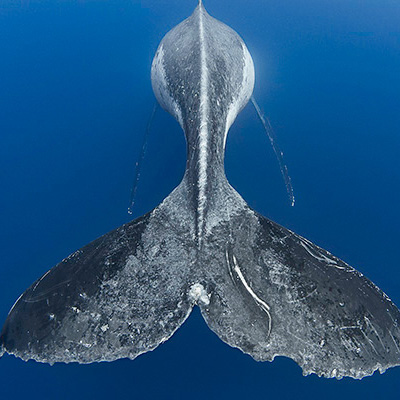
Humpback whales (Megaptera novaeangliae) are among the most charismatic and well-known of marine mammals. Most everyone has seen images of humpbacks, and many have heard recordings of their haunting songs. Few people, however, have ever seen a humpback, much less been in the water with one.

If you’re looking for an opportunity to swim among these gentle giants, take photo/ video of them, and learn about their behaviour, the Kingdom of Tonga in the South Pacific is one of the few places you can go to do so.

whale

Next year will be my 10th season in Tonga. Over time, I’ve spent dozens of hours in the water with these whales, and I’ve learned a lot about how they behave. With this experience, I’ve taken hundreds of people into the water for high-quality, personal encounters with humpback whales.

For just about everyone, it’s a life-changing experience. Even the most jaded and cynical of people who’ve “been there, done that” come out babbling like little kids after they’ve experienced eye contact with a humpback.

It’s an experience you can’t really put into words. You have to do it to understand. Over the years, I’ve come to appreciate and enjoy everyone’s reactions as much as I do my time in the water with the whales.

This year (2009), I organised a single, seven-day trip for six people from outside Japan (all my other trips are for Japanese travellers). To be honest, I was hesitant about doing this, as coordinating people from around the world and from different cultures poses a much greater logistical challenge than working with groups just from Japan.

In hindsight, I’m really glad I did it though, as I made some really great new friends, and I know that everyone on the trip thoroughly enjoyed this unique experience.

So…for the 2010 humpback whale season in Tonga, I’m going to be a bit more ambitious, and I’m planning two trips, six people per trip:

Trip 1: 14-20 August 2010 Fully Booked
Trip 2: 21 August – 31 August 2010 Fully Booked

If you’re interested in either of these trips, please use my contact form to let me know.

If you’re thinking about it, but aren’t really sure, please look back through my blog archives and read some of the entries from August and September of each year. The Tonga-related posts will give you a better idea of the conditions, what to expect, etc.

I’ll be continuing with the calf count that my friend Takaji and I started in 2008, so if you join one or both of the trips…expect to be put to work looking for baby whales!

Update 05 October: The trips are fully booked. If you’d like to be informed if someone needs to cancel, please drop me a note via my contact form.

On Golden Dawn

For those of you who are joining Eric Cheng and me on our upcoming adventure in the Eastern Fields of Papua New Guinea aboard the MV Golden Dawn with Capt Craig Dewit, here’s a brief preview of what’s in store.

If you’ve never been aboard the Golden Dawn, Craig generally works hard, though it may not always appear like he’s doing much:

Craig

He generally knows where he’s going, though sometimes, you find yourself deposited in places where it doesn’t seem like there’s a lot of good diving to be had:

johan

Also, you should know that Craig has a little camera and fancies himself a good photographer. So it’s best to humour him, or better yet, recruit other people to listen to him and marvel at his photographic finesse, as I did here:

camera

Because on occasion, he manages to drop you into really interesting situations for face-to-face personal encounters:

shark

Or group discussions:

humpheads

Or just to appreciate pristine, unspoiled scenery:

reef

The upcoming expeditions in November and December are fully booked, but Craig and I are plotting another trip to visit reefs he’s just discovered (i.e., no one has ever dived before).

If you’re a glutton for punishment adventurous and think you’d enjoy picking on Craig sharing a trip with Craig, I’ll post more information when we’ve figured out the details.

Week Five in Tonga

whale breachingI’m a week behind posting this update. Partially, the delay is due to travel. I was in transit for several days, and I had lots of people to see and errands to run along the way. Mostly though, I haven’t felt like writing since I received the news of my friend Ongo’s passing. Actually, I haven’t felt like doing much of anything, but it’s time to get on with life.

My final week in Tonga for this season was characterised by wind. Lots, and lots of wind. In fact, the entire season has been windy, such that some areas around the islands have been difficult or nearly impossible to access on many occasions. Sure, there were a few OK days, but it’s been the windiest I’ve ever experienced in Vava’u.

I’m no weather expert, but I think I discern a possible pattern.

The first time I visited Vava’u was in September 1998. The weather was horrific. Cold, wet, windy…miserable. The next time, in September 2002, the weather was just shy of horrific. 2003 improved somewhat. 2004 and 2005 were fantastic. 2006 was ok. 2007 a bit worse. 2008, lots of rain and generally not great. 2009…ripping winds, though much less rain than 2008.

1998-2000 was an El Niño/ La Niña period. A minor La Niña occurred in 2000-2001, and El Niño in 2006-2007, with La Niña following in 2007-2009. Since June 2009, El Niño conditions have formed again in the equatorial Pacific region.

So in my personal experience over the past ten years or so, whenever there’s an El Niño/ La Niña event, the prevailing weather and wind conditions go a bit haywire in Vava’u. Conversely, in 2004/ 2005, when there was no El Niño or La Niña influence, blue skies and calm, flat seas prevailed. Perhaps it’s a coincidence, or maybe the locally discernable effects of these global weather patterns are magnified because Vava’u is in the middle of the ocean with no major land mass nearby.

I have no idea how long the current El Niño will last, or whether it will be followed by La Niña, but I suppose I’ll find out in coming years weather there really is a correlation, or if I’m seeing patterns where there are none.

Counting Calfs
We ended the season with 25 ID-ed calfs…amazingly, the target number I had set relatively early in the season, once I saw the rapid pace of new calf appearances. (03 Oct ’09 Note: The finally tally turned out to be 26 calfs that we identified. I initially mis-ID-ed one as Mei Mei. See calf summary for details.)

Our final calf find was during our last day on the water, when we came across a friendly mother and relatively large calf in the afternoon. Fortunately, the pair were resting in a sheltered area (we had been beaten up in rough, exposed seas during the morning), so we were able to spend quality time with the whales.

The calf turned out to be female, and we named the baby Nofo. Naming the calf Nofo was in honour of our close friend Aunofo, but as it turns out, Nofo’a means goodbye in Tongan…so we inadvertently picked a name with an appropriate double meaning.

Calfs ID-ed during our final week:
- Mei Mei: Sighted her three days during our final week, including our initial encounter with the RTHK folks
- Ika: Named for Ongo’s eldest son
- Noah: Named for another of Ongo’s sons
- Nofo: Encountered on our final day

whaleOf course, now the hard work begins, as I have to sort through all of our photos and pick the ones that I’ll use in the calf summary I’m going to put together. And then…I have to collate data and actually put the summary together!

Adding to the workload will (hopefully) be images and additional data from other people. For instance, on the Monday after I left Tonga, I received an email from Alexis and Nathalie (who were on one of my boats and stayed on for a few days longer) with photos of another mom and baby that neither Takaji nor I had photographed. So that makes the count 26!

Assuming additional data comes in during the rest of the season, we should easily cross 30 calfs. I’ll post a summary document as soon as I can, and update it as and when more photos and IDs come in.

Jumping back a bit in time…one of the main reasons Takaji and I started doing these calf counts is because we didn’t believe the generally accepted view that between six to eight calfs visited the waters around Vava’u each year. Our initial informal tallies during the 2004/ 2005 seasons led us to believe there were dozens, not a handful, of babies each year. Still, everyone we asked either had no opinion, or insisted that there were only a few calfs.

Our experiences in 2006 and 2007 reinforced our view, so beginning last year, we decided to document the calfs we encountered. By using photographs of mother and calf pairs, we were able to establish definitive IDs for many calfs, and therefore come up with a rigorous tally, which we’re happy to share with anyone who’s interested.

whales

In 2008, we ID-ed 14 calfs around Vava’u (plus an additional two at Toku Island). We spent a total of 66 boat-days on the water (that’s excluding one boat-day at Toku), so that’s 14 calfs in 66 days = 0.21 calfs/ day.

This year, we ID-ed 25 calfs in 59 boat-days on the water (again, excluding one day at Toku), which = 0.42 calfs/ day.

Of course, this isn’t a strict, variable-controlled measurement, but 0.42 vs 0.21 provides a fairly accurate reflection of the difference between 2009 and 2008, at least for the August/ first half of September period.

In short…despite the strong winds and relatively difficult conditions this year, we saw lots of baby whales (as did most everyone else who visited Vava’u this year).

What does this mean? I hesitate to extrapolate too much, but I think it’s fair to say that the common wisdom was flat-out wrong.

In addition, the fact that we documented the return of a humpback whale mother this year that was in Vava’u least year, suggests that another piece of oft-stated “wisdom” may be in error. There are people who insist that the presence of humans in the water is scaring humpback whales away. These people say that there are fewer whales in the area, and that the ones that do come to Tonga stay farther away from Vava’u than before.

Instead of arguing the point (which in the interest of being completely open…I think is a load of ****), it’s best to let the whales do the talking and let the facts speak for themselves. They’re returning to Vava’u, and even having babies repeatedly in the area, so they can’t be all that put off by the presence of a few ungainly swimmers in the water.

Travel Silliness
Anyone who travels frequently probably has a lot of “stupid travel stories”. I certainly do.

Just to add one to my ever-growing list…on the way back from Vava’u, we had a day in Nukua’lofa. We stopped off to see one of the handicraft vendors I’ve known for a while, and we picked up a nice wooden carving of a whale. It’s somewhat big, but not too large to carry, and it’s light, so we figured we could carry it on the plane.

When we reached X-ray at the airport, one of the security guards told us that we could not take the whale on the plane. When I asked what the problem was, he said: “It’s a weapon.”

Pause about five seconds for me to process that statement…and then I said: “Actually…it’s a whale. A nice, friendly one.”, smiling for emphasis.

“No. It’s a weapon. You should know you are not allowed to carry weapons on board. We will have to detain you.”

“It’s actually a whale. Here. Take a look.”

“No. It’s a weapon.”

“Ummm, it’s a whale.”

“No. It’s a weapon.”

You get the idea.

So after all was said and done, we convinced the hyper-vigilant security guard to let us check the weapon whale in, thereby averting the possibility of a renegade wooden whale taking over the plane mid-flight.

Crisis averted.

Shortly after we boarded, we were served a meal, complete with…metal knives and forks. Good thing the whale wasn’t on board to make use of the utensils for nefarious purposes.

whale carving

Wrapping Up
There are more things I want to write about, but it’s probably better for me to put them off until I’m in a better mood.

Our 2009 humpback whale season was, as always, action-packed. Besides the many whales we saw, the calfs we documented, the strange trill sound we recorded, the whale poop I swam through, the whale dandruff I collected and the injured whale we encountered…we swam with tiger sharks, bronze whalers, sailfish, barracuda, spinner dolphins, pilot whales, large jellyfish, a manta ray (that actually spooked a whale…it was quite funny) and more stuff that escapes my immediate recollection.

All told, 45 people from around the world joined us this year to swim among and learn about humpback whales. We took 15 +/- students from Vava’u High School into the water to see a mother and calf up close. We donated school supplies to a school for handicapped children and schools on outlying islands. We spent time with some of the best friends we have anywhere in the world. And sadly, we lost a dear friend.

Finally…to everyone who joined us this year…thank you for being such wonderful travel companions.

I’ll post my schedule for 2010 in a few days, so if you’re considering joining us next year, check back soon!

whales

Tribute

A close friend passed away recently.

I suppose such news always comes as a shock, but it was all the more so in this instance, as I received the news while checking email in the airport, just a few days after we’d parted ways…standing together outside a restaurant in Tonga, where we’d just shared a meal, along with a lot of smiles, laughs, hearty pats on the back, and promises to see each other again next year.

The rest of the long trip home was a bit of a blur, as I struggled to accept the reality that I’d never see my friend Ongo again.

ongo

There is so much I’d like to write about Ongo, but I’ve been staring at the screen for a while now, and nothing terribly coherent seems to be coming out. Writing is the act of transcribing what’s on your mind, so perhaps my thoughts are still too jumbled to convey in a meaningful manner.

Even so, I want…perhaps need…to write what I can, in order to pay my last respects to a dear friend who played a big role in my life.

Ongo was a school teacher before he became a boat captain and business owner. In fact, his love of teaching was a big part, if not the over-riding theme, of our relationship.

whaleFor starters, he taught me most of what I know about the humpback whales that visit Tonga. He didn’t hold a PhD; he wasn’t a recognised “expert”; he wasn’t affiliated with any big organisation known by a clever acronym…but he sure as heck knew more about whales than any of those people.

(Photo to the right…that’s Ongo in the boat raising “banzai!” arms)

His sixth sense for what the whales would do was accurate to the point of being spooky. The number of times the whales breached when he said: “They’ll breach soon.” is uncanny. The number of times the whales went exactly where he said they would go defies comprehension. The number of times he put me in exactly the right place at precisely the right time…is a big part of how I learned about how humpbacks think.

The joy he derived from sharing his knowledge and experience was infectious. It was one of the main reasons that my friend Takaji and I started taking people to Tonga from Japan.

Over the past five years, we’ve brought hundreds of Japanese visitors to Tonga, and with Ongo’s help, we’ve established a bond between the two cultures that I hope will continue as part of Ongo’s legacy.

More recently, we worked with Ongo to share the knowledge we’ve gained from him with the children of Vava’u. We’ve held talks and presented slideshows about humpback whales for kids from the local community, and this year, I was able to take some of them into the water to see whales up close.

The look of surprise, delight and wonder in the kids’ eyes was matched only by the look of happiness and sparkle of satisfaction in Ongo’s eyes as he observed the activities.

ongo

I like to think he was proud of me and of the kids. Me, for having paid attention and learned over the years. The kids, for trusting me enough to get into the water, even though many of them were scared.

Ongo is gone now. There is no getting around it. But the things he taught my friends and me are alive and well.

We will go back to Tonga again next year. We won’t be going back just to see the whales. We will be visiting to continue the projects that we started with Ongo…and to honour the memory of a good friend, and a great teacher.

group photo

Me At Work

The 2009 humpback whale season is wrapping up for me. I’m on the way to the airport shortly.

My last day on the water was a difficult one, with blistering winds and three- to four-metre swells in some areas. But…we found calf number 25, so it was worthwhile.

We named the calf Nofo, which carries two meanings. Nofo is one of our best friends here, and Nofo’a means “good bye” in Tongan.

It’ll take me some time to write up my Week 5 summary, as I’ll be in transit for the next few days.

Meanwhile, here’s a photo of me with the film crew from RTHK. I was doing my best to act naturally…but the big fuzzy thing sneaking up on me made me a bit nervous.

filming

Whale Dandruff

Ok, it’s not really dandruff, but it’s sort of similar. This is a piece of skin from an adult female humpback whale, the mother of Noah…our 24th ID-ed calf for this season.

whale skin

Most of the time, when a humpback is active at the surface, it sheds bits of skin like this. So if I were a DNA-specialist, an easy way to get samples would be to jump in the water and collect the samples by hand.

In case you’re wondering, the skin is tough, a bit of a cross between leathery and plasticky (is that a real word?), supple while underwater, growing more brittle as it dries out.

When Noah’s mom dived down, there were hundreds of skin flakes like this floating around. Maybe she needs to try a new brand of shampoo?

Equipment Note: Preventing Flooding

vacuumOne thing I forgot to mention in my previous equipment post about camera housings was the vacuum seal that David at Scubacam installed in my Seacam 5D Mark II housing.

The principle behind this quick modification is simple. Once you close the housing, you can test the integrity of your O-ring seals by pumping out some air and creating a vacuum inside.

If your housing is properly sealed, the vacuum will hold. If it’s not properly sealed, then air will leak in, and the vacuum won’t hold.

By watching the pressure gauge on the vacuum pump, you get immediate visual feedback.

I have to admit I was a bit sceptical about the practicality of pumping out air every time I open and close the housing, but after a few weeks with this little modification…I love the peace of mind I get from knowing with 100% certainty that my housing is closed properly before I head out on the water.

Contact David if you want him to install one of these in your housing.

Week Four in Tonga

childThis past week was one of the most (if not the most) challenging and rewarding weeks I’ve had in Tonga.

Challenging…because we had a lot of people from several countries here simultaneously: Officially…five from Japan, three from Singapore, two from France, two from the United States. Unofficially, we ended up taking fifteen Tongan students and their teacher out to swim with whales, and also helping a TV crew from Hong Kong.

Rewarding…because we pulled everything off without any major glitches, and because we were able to share the beauty and grace of the humpback whales with so many people from such diverse backgrounds…and influence so many lives in a positive manner.

Calfs, Calfs, Calfs
First and foremost, in the midst of all the activity, we managed to identify another nine calfs by the end of the week, bringing our total to 21 photo-verified mother/ calf pairs over four weeks (compared to 14 such pairs in the Vava’u area over a six-week period in 2008).

As I mentioned in my earlier posts from this season, I suspected early on that 2009 would be a great year for calfs. The abundance and intensity of heat runs over the past couple of years suggested a reasonable probability for a near-term increase in calf births. Emails, etc. from friends in Tonga that I received before I arrived suggested an early start to calf births. And finally, our initial pace of calf IDs suggested that…well, there were lots of babies around.

The calfs we ID-ed this week are:
Luna: Mom has a unique dorsal fin that’s easy to spot
Vanilla: Named for the delicious vanilla gelato that a friend makes for us here
Sesame: Named for the mom and baby’s resemblance to black sesame seeds
Bubbles: Named for the penchant of the attending escort to blow bubbles
Gelato: The other half of “vanilla gelato”
Dialga: A pokemon character (the influence of Takaji’s kids)
Palkia: Ditto Dialga
Mama’s Boy: Named for the tendency of the baby to stick next to mama, despite being large already
Full Moon: So named because we found the calf on the day of the full moon (actually just shy of one day after).

whale

We also re-sighted Luna, Blackberry (from last week) and Dialga…adding to our list of repetitive sightings. The repetitive sightings are important, because they give us some insight into the movements of the moms and babies over time. Our working hypothesis based on last year’s timeline is that the mother/ calf pairs don’t stick around Vava’u for too long at any given time.

It seems as if they’re here for a day/ a few days, then move on, sometimes re-visiting the area at a later point, sometimes never being seen again. Of course, it’s entirely possible that they could re-visit without our noticing, but over time, hopefully we’ll be able to glean some meaningful pattern from all the data points.

One thing I should mention is that it’s not easy ID-ing the calfs. In most places (in fact, in all cases that I know of), humpback whale IDs are based on photographing the underside of their flukes (tails) when the whales dive.

This is better than doing nothing, but I see several inherent problems with this accepted methodology.

First, whales don’t always show you the backside of their tails. In fact, most of the time they don’t. And even if they do, you might miss the shot. This, by definition, significantly restricts opportunities for ID.

Second, there’s a lot more to a humpback whale than its tail. By ignoring the rest of the body (on which there are often easily distinguishable, unique marks), you miss out on ID opportunities.

Finally, by restricting yourself to only taking photographs from a distance above water, you never actually see what’s going on under the waterline, so you can’t associate specific whales with specific behaviour…at least, not accurately. This, by definition, means you gain minimal (actually, quite often zero) insight into what whales are actually doing.

A parallel would be aliens studying human society by photographing only our asses from space while making a point of not observing our behaviour. For some people, this might be adequate. Most people (and whales), however, aren’t just rear ends.

For all these reasons, we ID mom/ baby pairs by using underwater photos first and foremost, and then photographing from every angle possible. We of course look for unique fluke patterns, but we don’t restrict ourselves. We also watch what the whales do underwater, and make notes (in writing and mentally) for future reference.

Our ID of Lilo earlier on this season, for instance, did rely on the fluke, but not the underside (which is what most other people use). We used the dorsal side, which is more readily visible but often ignored. Had we only concentrated on taking topside photos of the underside of the fluke, chances are high we would have missed this ID.

Some whales, like Luna’s mother, have unique dorsal fins. Luna’s mom’s dorsal fin is almost non-existent, with a craggly stump in its place. This, plus four white rune-like marks on the stump, make it easy to ID Luna and her mom. In fact, when I happened upon the pair again two days after my initial ID, it took all over 0.000005 seconds to ID her. Again, had I obsessed about the underside of the fluke…

whale

Other whales have no specific unique marking, but the sum total of the patterns on their bodies makes it easy to ID them…in which cases in-water full-body photos are invaluable.

Of course, taking good underwater photos of whales in a consistent manner isn’t a simple process by any means. At this point, our hit rate is really high, because we know how to read the whales and understand how to behave around each one. Each whale is an individual, and their personalities can differ as much as the personalities of two different people. Accepting, understanding and respecting this is absolutely key.

People Power
The past week saw the most international group of people we’ve ever brought here.

Besides the logistical headache of making sure everyone’s travel arrangements were in order, we had to contend with the challenges of operating in two languages (English and Japanese) and adapting to differing cultural norms. This is something that seems like it shouldn’t be too difficult, but it can be stressful and exhausting. In fact…it was.

However (a BIG however), we had a great time, and we were fortunate, as we have been over the years, to have terrific people join us here. We enjoyed spending time with old friends; we made a lot of new friends; and hopefully, we made a lot of people really happy. The smiles, laughs, and squeals of delight (yes, you Serene), made the hard work worthwhile. All the people who had cameras took terrific photos, so they have a lot to show friends and memories to keep forever.

whales

We also had unanticipated “guests” at the end of the week. On Saturday, I took out a group of fifteen students (+/-, I forgot to count exactly how many there were) and one of their teachers to swim with whales.

Most Tongan people in Vava’u have never seen a whale up close, much less been in the water with one. Quite often, it’s a mystery to them why people would come from distant lands to get into cold, wet conditions just to see the tofua’a (whale in Tongan). Equally often, people here are scared to get into the ocean and/ or scared of being close to the whales.

We decided some time ago to contribute back to the local community, which has been really kind to us. One of the ways we’re trying to do this is by teaching kids about the whales. Last year, we produced a short video that was shown to dozens of school kids, along with a short talk and Q&A about whales. We wanted to take some of the kids out last season, but the right circumstances never materialised.

On Saturday, after sending off some people at the airport, I rushed back into town and hopped on a friend’s boat that we had chartered for the day to take the kids out. The weather was great (unusual this year), with low winds, bright sun, calm waters.

In short order, we found a chilled-out mother and calf (the one we named Full Moon) in clear visibility. At first, the kids were excited to be on the boat, but afraid to get into the water. It took a bit of convincing, but once the first of them joined me and came out of the water babbling incoherently with excitement, everyone wanted to get it…even the ones who initially maintained, “I can’t swim!”

With such ideal circumstances, I was able to get all the kids in for a close-up look at the maternal bond and loving relationship between mother and baby humpback. The boat crew got in too, as well as other people on board.

All things considered, the day was a smashing success, and I have no doubt whatsoever that it’s a day the kids will never forget. I’m pretty sure they understand now why people come from far and wide to peek under the waves. I’m really looking forward to doing this again at the next opportunity.

kids

Finally, on Sunday (technically, not part of Week 4…but since I’m late writing this post, I might as well write about Sunday too), I had a TV crew from RTHK in Hong Kong with me. They had already spent a couple weeks here in Vava’u, so they had quite a bit of footage. They mainly wanted footage of me getting in/ out of the water, taking photos, swimming, etc.

So…we decided to roll the dice and look for cooperative whales in calm waters, figuring that we’d either find them the perfect conditions for filming, or we’d strike out. Fortune smiled upon us, and…bingo! We found a mom and baby whale in an ideal location, both of which gave them a beautiful performance both in-water and topside. (I named the calf Mei Mei, but she goes on next week’s list).

Perhaps the best part of that day was getting the head guy, Jerry, into the water with the whales. Although he had been here for a while, the poor fellow had stayed topside the entire trip to film and give directions, letting everyone else experience the fun stuff. That’s dedication.

So on his final day, Jerry finally made it into the water, and he emerged with same perma-grin that the high school kids and our international group of travellers had on their faces just days before.

Such is the positive power that in-water encounters with humpback whales can have.

Looking Ahead
The upcoming week will be our final one in Tonga this season.

On the one hand, I’m relieved, as it’s been a long, tiring month so far and I really(!) need a break. On the other, I don’t want to leave. I know I’ll miss the whales right away and be wondering how many calfs I’m not seeing, how many heat runs I’m not enjoying, etc. And I know I’ll miss all the great people of Vava’u, many of whom I count among my dearest friends.

After we leave, it’ll take a bit of time, but we’ll compile the calf data that we have, and I’ll put together an organised summary, which again, as with last year, I’ll post to the net and make available to anyone who wants to read it.

Finally, we’ll commence planning for our 2010 schedule, so if you’re interested in joining us, stay tuned…I’ll post details soon.

whales

Equipment Note: Camera Housings

It’s always a bit nerve-racking to use new equipment for the first time on a big trip. My stay in Tonga is just over five weeks, and if anything goes wrong, I don’t have a lot of options for getting replacement gear.

This time around though, I didn’t have much of a choice, as I’ve just upgraded to Canon 5D Mark II bodies from my trusty Canon 5D cameras.

Canon modified the Mark II bodies from the original 5D just enough that my old housings wouldn’t work, so I had to get new ones to go along with the new DSLR cameras (…why can’t they take pity on underwater photographers every once in a while?).

During this trip, I’ve placed my trust in two housings, one from Seacam, and another made by Zillion.

I’ve only been using these housings for a few weeks, and then only for snorkelling and natural light photography (as opposed to diving and taking pictures with strobes), so it’s still early days as far as my learning curve with both housings. For what it’s worth, here are some of my thoughts at this stage, starting with a couple of general points:

First, if you’ve been on a trip with me or sent me a question asking “Which housing should I get?”, you’ll know that I don’t make a point of pushing any particular brand, because everyone’s needs are different, and there are a number of issues to consider when you invest in a DSLR housing system.

For starters, you should ensure that there’s a reliable dealer and authorised service agent near you for any equipment you’re considering, as there is a 100% chance that you’ll need help at some stage. Even if you know what you’re doing, you’ll want someone nearby who can perform regular servicing and maintenance for you.

In my case, I have Aquaforum for the Zillion housing, and Scubacam for the Seacam housing. Both shops are knowledgeable and reliable, so I bug them a lot (such a major understatement!) with questions. They have spare parts on hand, and they can help me customise whenever I need something (which is pretty much always).

The fact that I have these two reliable shops to consult plays a big role in why I have the two housings I have now.

Second, I don’t believe that there is a perfect system. Over the years, I’ve used Nexus, Sea & Sea, Subal, and Zillion…and now Seacam. Each brand has its strengths, as well as things that could be improved. I’ve taken photos that I like with all of them. The key is to find the right combination of features and functionality that suits your needs and budget.

Making sure you research and understand the housings you’re considering is probably the best thing you can do before you take the plunge. These days, there’s a ready pool of information on websites and internet forums, so all it takes is an investment of time to research.

By “research”, I mean reading before you ask questions. Research doesn’t mean firing off a barrage of generic, no-thought queries to random people, like: “Which brand is best? Which ports should I get? Which accessories should I buy? Where is the best price? How do I use all the stuff?”. If you do that, you probably won’t get a meaningful reply, so you won’t learn much.

So how are my two housings performing?

Let’s start with Zillion, since I’ve been using Zillion housings for a while. For what I’m doing on this trip…surface photography on snorkel, the Zillion housing performs beautifully. It’s light and compact (the housing is made of ABS plastic), which means minimal drag in the water. Even though the housing is light on land, it’s slightly negative in the water, because it’s shaped to just fit the camera, which means there’s not a lot of air in the housing.

zillion

I love the results I get when I combine the Zillion 5D Mark II housing with the Pro One dome. The dome is a perfect match for a 15mm fisheye lens, and with a +2 diopter and 6cm of extension tubes, my 17-40mm zoom lens is nice and crisp.

Of course, I’ve been using Zillion housings for a while, and I provide a lot of feedback to the manufacturer, so many of the features are things that, by definition, work for me.

Seacam housings are new to me. Of course, I’ve played with other people’s Seacam gear, but the 5D Mark II housing is the first Seacam housing I’ve actually used.

Initial verdict…all the positive feedback I hear from other photographers is well deserved. The housing is about as sturdy and solid as you can get. In fact, it’s the most solidly built housing I’ve ever used. The machining of the gears, levers, buttons, etc. is excellent. All the pieces fit and work together perfectly, showing amazing attention to detail. Accessing all the controls on the camera body is easy.

seacam

Something that will probably only make sense to people who’ve used many diffferent housings…I love the hybrid bayonet/ screw mount for the port. I’m generally wary of bayonet mounts because the only time I’ve flooded a camera due to my own fault was with a bayonet mount that didn’t seat properly. Yet, bayonet mounts ensure that your ports align the same way all the time…which makes life much easier when you have multiple housings and ports and switch back and forth during a trip.

I prefer screw mounts for the security (you can’t screw the port in if it’s seated improperly), but since every screw-mount port flange varies a bit, you often have to re-align dome shades and other attendant pieces each time you switch ports…a major pain in the rear.

The Seacam housing incorporates a unique solution…a screw mount that locks like a bayonet mount. In other words, you screw the port on, but it locks into place like a bayonet mount, giving you the same alignment each time…the best of both worlds.

I know…you have to be a major underwater photography geek to do cartwheels over something like this, but I would certainly do cartwheels…if I could.

Using two different housings creates some inherent challenges.

For instance, the grips are different on each housing, which means I need to fine-tune the way I hold each one. I know this sounds like a trivial matter, but every split-second counts with fast-action whales, so it took me a few days to adjust.

Also, the Seacam housing with the fisheye port attached is positively buoyant in the water, while the Zillion is somewhat negative. I’ve learned to fine-tune the timing and speed I use to bring the camera around to my eye for each housing, so I can nail the shots I want with both housings.

The layout and placement of the controls on the two housings are different, so it’s taken a while for everything to become second nature. After three weeks or so, however, I can just about manipulate all the main controls on both housings without thinking too much. By the end of this trip, I should have it down cold.

The difference in knobs and such will probably become more of an issue when I’m doing reef and macro photography, as I’ll need to access the shutter, aperture and ISO controls more often. I don’t anticipate this being a major problem though. It just means I’ll have to squeeze a bit more performance from my brain (oh yeah…that’ll definitely be an issue).

In summary, I’m extremely happy with both my housing choices for the upgrade to 5D Mark II cameras. Naturally, it’s taken some time to “get the feel” of each new housing, but as you can see from my recent posts, I’ve had no problems getting humpback images.

My next trip after this is also a snorkel-based trip (looking for sperm whales), but after that, I’ll have an opportunity to use both housings for reef photography. I’ll post more about using the housings then.

Little Vanilla

There are several people here with me now who are taking part in the first non-Japanese group that I’ve organised for swimming with whales in Tonga…two visitors from the US, two from Singapore and two from France.

One of the people, Nathalie, nailed this image of a calf coming up for a breath of air. She was so happy that she showed everyone on the boat (several times) and was all smiles from the rest of the day (and the next day too).

The group decided to name the calf (the 14th one we’ve ID-ed this season) Vanilla…for the delicious vanilla gelato made by one of our friends here. I had three servings the other night…which no doubt contributed to the selection of the calf’s name.

whale

Nathalie took this photo with a Canon G10, proving that you don’t always need the biggest ‘n baddest equipment to get great shots.

Even more amazing is the fact that Nathalie was somewhat nervous when she arrived just a few days ago, and she even lost a fin on her first foray into the water.

Nonetheless, she persevered, and now has this wonderful image (as well as others) to show for her effort…after only a few days.

Well done Nathalie!

Mom, Baby, Escort

Here’s another photo of White Patch, our eighth ID-ed calf for this season, with her mom and an escort in attendance. The escort was really relaxed and laid back, which isn’t always the case.

whales

…and yes, the calf really is as cute as it looks.

Week Three in Tonga

If my second week in Tonga this season was busy, my third one was as hectic as rush hour at Tokyo Station, both in the water and on land.

In the water, I finally(!) got to see a heat run this season, an experience that was punctuated by the an unusual sound from one of the five whales involved; our ID-ed calf count grew to 12 from six; one of the calfs we met was perhaps the most active one I’ve ever seen; I managed to get a couple spending their honeymoon with us into the water with a singer for a honeymoon serenade; and besides whales, Takaji and I managed to see and photograph a tiger shark, sailfish and barracuda in the water.

On land, we had 18 people here at one point, making even the simplest of tasks a logistical challenge. Among those are the first group of six lucky(?) people to join me on my inaugural non-Japanese group…two from Singapore, two from the US and two from France.

In short…I’m utterly pooped (so please excuse any incoherencies below).

Listen to the Music
Since writing about the heat run, I haven’t seen any more. I think by now, it’s safe to say that heat runs are relatively scarce this year, at least in comparison to the past two years. In 2007 and 2008, I don’t think a week went by when we didn’t see at least one major heat run, often several. In seasons leading up to those two years, I had certainly seen heat runs, but not the same quantity, and not of the same intensity.

Several researchers from both the northern and southern hemispheres have been kind enough to listen to and provide feedback about the recording of the strange sound that we heard during the heat run. The consensus view is that the sound is a form of social sound made by humpbacks in non-singing situations.

whale

The term “social sound” of course is somewhat nebulous, encompassing all sounds besides the standard song that humpbacks use. My lay person’s interpretation is that humpbacks use sound to communicate in many ways that we’re not aware of yet, i.e., that they talk to one another.

Perhaps I’m just more attuned to the sounds now, or perhaps it’s a relatively vocal year, but I’ve been hearing lots of chatter in the water among whales this season…certainly more than I’ve picked up on before.

First, there’s tonnes of singing. Dive down 10 metres or more in just about any location, and you’ll hear at least one singer, often what seems like several. In addition, I’ve heard calfs, escorts and paired whales making all sorts of sounds this season.

In any case, sound opens up an entirely new area of interest for me, so I’ve already started bugging my friend David at Scubacam about putting together some sort of small portable hydrophone I can strap to myself to record while I’m interacting with cetaceans. (Poor David)

Counting Calfs
Last season, we ID-ed 16 calfs in six weeks, two of which we spotted at nearby Toku Island. Taking those out of the count for the moment, it means we had 14 calfs in six weeks here in Vava’u.

At the end of three weeks in Vava’u this year, our count is 12 ID-ed calfs. Of course, there’s an element of chance involved in our ability to find and ID calfs, but we’ve been doing this for several years, so our methodology is stable and consistent.

What does this mean? It’s a bumper crop of baby whales this year.

whale

During the past two seasons, when there were heaps of heat runs going on, there were relatively few babies…at least compared to the informal baseline we had in our heads from the 2004 and 2005 season (when we first started trying to count and ID calfs).

At the time, I speculated that the increase in heat runs would translate into an increase in babies in upcoming years. My reasoning was that since heat runs take place to determine which male gets mating rights with a given female, a large number of heat runs meant a surplus of mating-ready females. Taking into account the gestation period required (11-12 months), I figured we’d see a bump up in baby numbers soon.

The number of calfs we’ve seen and ID-ed this year seems to bear this out, though obviously, there could be other factors involved. For instance, I’ve heard anecdotally that there are relatively few whales at the nearby Ha’apai group of islands this season. It’s possible that the whales just decided to concentrate their babies around Vava’u for 2009, and stay away from other island groups.

I can’t know for certain, but in any case, it’s good to see so many babies about. It’s great for the people who are here to swim with whales, and if the higher numbers of babies translate into a growing healthy adult whale population in future years…it can’t be a bad thing.

Conversely, with a high proportion of females having calfs this year, there are perhaps fewer unattached females about, accounting for the relatively few heat runs.

whale

If we have another solid season next year, followed by a flattening in the number of babies, and then a relatively high frequency of heat runs thereafter, it’ll fit with my working theory. Of course, life is never quite so simple, so I fully expect to be thrown a few curve balls by the whales. We’ll see what happens.

In any case, by the end of this season, we should have a concrete list demonstrating a bumper crop of calfs. Hopefully, this will help put to rest some of the unsubstantiated negative sentiments I’ve heard in recent years saying that the humpback population here is plummeting because of…(fill in your pessimistic doom-and-gloom reason of choice).

Our list of new calfs this week:
7. White Patch – distinct white patches on both sides of the calf’s body
8. Blackberry – mom almost entirely black, dorsal fin has a distinct lopped-off appearance
9. Sneakers – sneaky, difficult to spot
10. Genki – breached from 08:30 to 14:00 non-stop, often completely airborne
11. Hachi – also did airborne breaches, had a habit of being left behind by mom and escort
12. Ziggy – mom almost all black like Blackberry’s mom, with mom and baby swimming in zig-zag pattern

One of the funniest calf stories this week involved White Patch. We found White Patch in the Hunga Channel, with mom and a really laid-back escort. On one particular rest stop for the whales, White Patch came up from depth, where she (the calf is female) had been resting under her mother. After coming up for a few breaths and checking us out, she swam back down again to rest. This is a typical pattern of behaviour.

The one twist, however, is that White Patch swam to the escort instead of her mother, and nuzzled up against the escort’s belly. I’m not sure what the escort thought (escorts are males), but he didn’t move a muscle. Soon thereafter, mom must’ve noticed. She started to surface…and seeing White Patch under the wrong whale, she made several emphatic gestures (tail swishes and pectoral fins waves)…after which the calf hurried over in frantic lost-calf style and joined her mom. If I had to guess, I’d translate from whale-speak to human-speak as something along the lines of: “Get over here…RIGHT NOW!”

We’ve seen this happen once before, last year with a mom, calf and escort in North Bay. I can’t recall which specific calf is was offhand, but it was equally entertaining.

whale

Swimmers
It’s not only the whales that have been keeping me busy and laughing.

Many of the people who visit Tonga with us have been doing so for several years, so they’re “veterans”, so to speak. They’ve progressed from the initial excitement of just seeing a whale fluke, to being able to discern more subtle behaviour and wanting to see relatively unusual things.

This past week, however, we had six people from Japan who were here for the first time, as well as my first-ever group of six people from outside Japan…so twelve whale newbies in total.

On the one hand, this poses a big challenge, since we obviously want all of them to have a great time and say positive things about whales in general, and the humpbacks of Tonga in particular…but also, it’s fulfilling…because the reactions are so strong, expressive and joyful.

Two of the people here this week were a nice young couple on their honeymoon (actually the third honeymoon couple we’ve had). Besides helping them to see whales, I was able to find a singer and get them right above to listen to the haunting melody and booming bass below. We threw a mini-party for them too…and sent them back home with what I hope are unforgettable, positive memories.

And lastly, one of the people in the non-Japanese group squealed (yes, squealed) when I showed her two large males sitting right below us. Visibility was limited and the whales were counter-shaded, so they were extremely difficult to spot. Even as I pointed directly to them, it took several minutes for her to be able to make them out.

When she finally saw the outline of one of the whale’s fluke and body sitting just below us, she squealed in a manner which I can only describe as reminiscent of a giggly little schoolgirl. I teased her about it (how could I not?), but it’s reactions like this that make the hard work worthwhile.

Other Stuff
The waters here are full of life. If you recall, I saw a tiger shark and some other sharks associated with the injured whale a couple of weeks ago.

This week, Takaji was approached by another tiger which wasn’t as shy as the one that approached me, and he managed to get a couple of photos. To hear him relate the story, he basically stuck the camera out in front as protection and snapped the shutter on instinct. I commented that a real photographer would’ve gotten an image with the shark’s mouth open.

On the same day, a couple of sailfish buzzed him and he got beautiful images of them with sails fully extended.

barracuda

By comparison, my non-whale encounter this week was much less adrenaline-charged. On one swim, a large barracuda shot up at high speed from depth and charged me…perhaps mistaking the surface activity for a baitball or something similar. Once it got close enough for a good look, it veered away, then came back, almost as if thinking: “Hang on a second…you sound like a meal, but you don’t look like a meal. What’s going on?”

I know I can confuse humans, but it’s the first time I recall perplexing a predatory piscine.

That’s it for now.