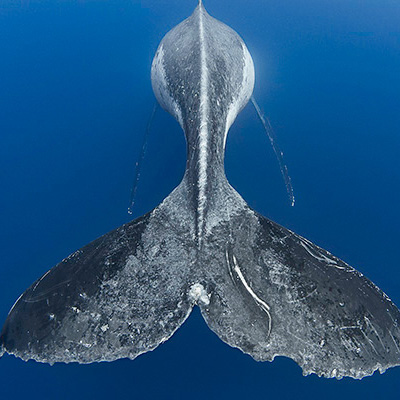
I’ve just updated my humpback whale calf summary file with another calf addition…calf #30 (a female), contributed by Nonie Silver.
Nonie named the calf “Kiran”, which means “ray of light” in Hindi/ Sanskrit.
The good news is…there is more calf information coming in, with at least two that look to be baby whales that are not in the PDF file yet.
The bad news is…it’s a lot of work(!) to go through all the information, verify IDs, prepare images, update and upload the file. Since I’m leaving for my Eastern Fields trip soon, I probably won’t have another opportunity to update until I’m back at the end of the year.
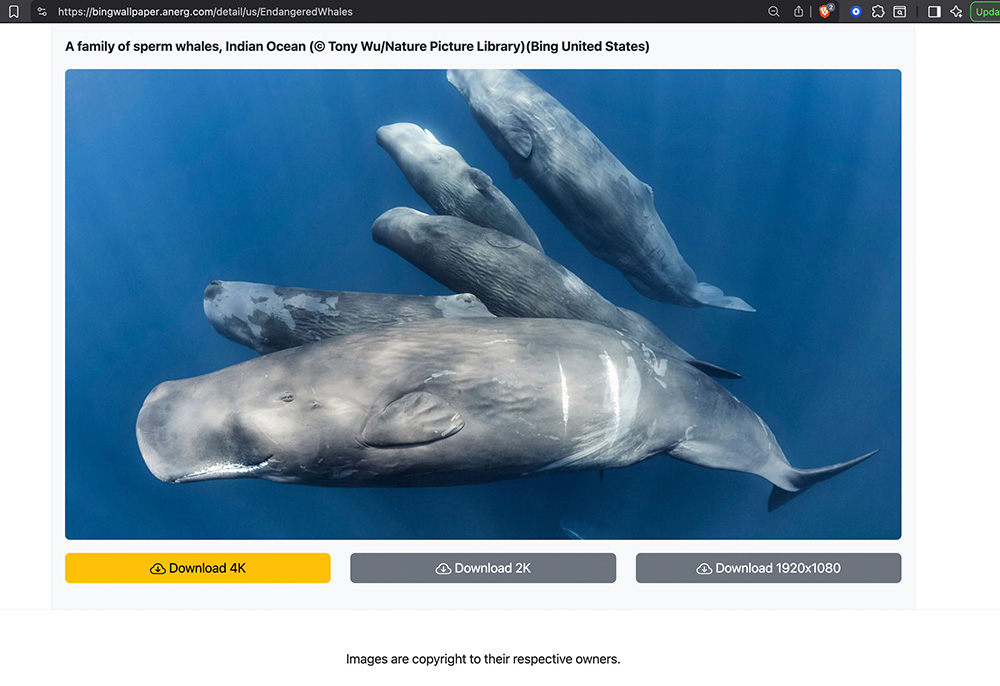
Besides the fact that we saw sperm whales, lots of dolphins, and giant squid parts(!), the trip to Ogasawara was a lot of fun. We had a terrific group of people, and Ogasawara is a laid-back, unspoiled bit of paradise in the middle of the Pacific that’s difficult not to fall in love with.
Below is a short video/ slideshow to give you an idea of what it’s like in Ogasawara. It’s a large file, so let it buffer before you play if you have a relatively slow internet connection.
All the images and video (including the sperm whale underwater) were shot with Canon cameras…5D, 5D Mark II, 1D Mark III.
I may be heading back to Ogasawara again next year. If you’re interested in joining, drop me a note via my contact form.
Here is a sentence that I’ve been wanting to write for a long time: “I swam down into the blue and retrieved the arm of giant squid.”
I know. For most people, doing something like this isn’t a life goal. I get it. I’m not normal.
But it doesn’t matter, because I did it, and it’s something I’ll never forget.
Here’s the condensed version of what happened:
While we were cruising along in deep water looking for signs of sperm whales, the captain’s wife shouted something from the top deck. I looked up and saw her gesturing frantically, but with the combined noise of the engine, wind and ocean swells, I could neither understand what she was saying, nor grasp the reason for her excitement.
Following the time-tested principle of “act first, think later”, I grabbed my mask, snorkel, fins and camera and jumped into the water. Visibility was excellent. I immediately saw a long, reddish object sinking into the blue…and swam down about 10 metres to take a closer look.
As I approached the squid arm, my brain finally kicked in (the “think later” part), and I realised that the only reason a rapidly sinking giant squid arm would be at the paltry depth of 10 metres is if a sperm whale (i.e., large animal with big mouth) had just dropped it…like perhaps only seconds earlier.
At that point, I looked around in a brief moment of panic (or sanity, depending upon your point of view)…thinking that perhaps the whale that had dropped such a tasty morsel might not appreciate my absconding with it. Fortunately, the previous owner was nowhere to be seen, so I avoided becoming whale food grabbed the squid arm and swam back to the surface.
We kept the arm segment on ice until the next morning, when we had sufficient space and light to measure it, then donated it to the research community.
Below is a short video of fellow underwater photographer Douglas Seifert measuring the (pungent) squid arm:
If you understand the pun in the post title, I don’t think it’s necessary for me to write anything more about this photo, except to note that the dolphin is a Tursiops aduncus.
If you don’t get the reference, then nothing I write will make a difference…so there’s no point in writing more.
During my stay in Ogasawara, I was fortunate enough to encounter four species of dolphins, three of which I was able to photograph.
First up were pan-tropical spotted dolphins (Stenella attenuata), which we encountered several times. Pan-tropicals are a lot of fun to watch from the boat, as they can be really active and playful, but they’re the total opposite in the water.
There can be a few dozen swimming like crazy around the boat, but the second you get in the water…poof! They vanish quicker than kegs at a frat party.
We also saw two different species of bottlenose dolphins. The first was the kind that most people are familiar with…common bottlenose dolphins, or Tursiops truncatus…recognisable by their short snouts.
I’ve seen this particular species of dolphin in many places around the world. Their temperament varies from location to location, with some populations being highly approachable, and others just downright rude. In Ogasawara, they’re somewhat standoff-ish…generally ok with boats, but not easy to approach in the water.
There was also a second species of bottlenose…Indo-Pacific bottlenose dolphins (Tursiops aduncus), which are relatively slimmer, and a heckuva lot more friendly than their truncatus cousins…at least in these waters. They’re accustomed to boats and people, so if you’re a decent swimmer, you can swim along with them…if they’re in the right mood.
Finally, we saw some rough-toothed dolphins (Steno bredanensis), though we weren’t able to get photos. In fact, images of rough-toothed dolphins are quite rare, though I was lucky enough to get a nice in-water shot a couple of years ago in Tonga.