Archive for July, 2009

One Year

A year ago today my best friend died.

In many ways, I can’t believe 365 days have passed. I’m reminded of her every day…each time I walk past one of her favourite cat-spotting corners; whenever I sit some place where we used to settle together and contemplate life as we watched the day go by; every time she appears in a dream splashing in the surf or jumping up to sit on the bed with me.

To mark this day, I looked through thousands of photos I have of Pasta, each reminding me of a specific moment, a specific day, often a specific silly thing she did…re-connecting with memories that fell into place like pixels in an image to form an emotional imprint.

In the end, I chose a photo from our last outing together.

pasta

Like me, Pasta enjoyed travelling. For a dog, she was incredibly well-travelled, having resided in three countries and explored an abundance of scenic locations in each.

I selected this image because it reflects the pleasure she derived from exploring. But also, because it symbolises something important…the fact that she’ll always be with me, even if, as with a reflection in the mirror, I can’t reach out and touch her.

There’s a Taoist proverb about life: “The journey is the reward.”

So it was for Pasta.

So it should be for us all.

Random Rhinopias

In the process of clearing my hard drives, backing things up, re-arranging filing systems and such before my upcoming trip, I came across this image of a bright-orange Rhinopias.

rhinopias

The fish only appears bright-orange because of the illumination from the artificial light of my strobes. In real life, the cleverly disguised scorpionfish blended in almost perfectly with the green seaweed surrounding it…no doubt explaining the somewhat befuddled expression on its face at having been spotted.

I took the photo on one of the reefs (I think it was End Bommie) near Loloata Island Resort a few years ago, after wrapping up an expedition aboard MV Golden Dawn.

I can never figure out which Rhinopias species is which, so I won’t even attempt it. Let’s just call this one a Rhinopias tangerine, because I like tangerines.

Ready for Tonga (Almost)

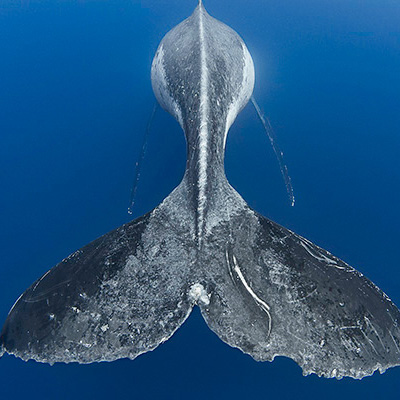
breaching whaleIt’s that time of year again. Time for me to undertake my annual migration to the southern hemisphere, to visit my friends in the Kingdom of Tonga and hopefully spend some quality time with humpback whales.

In preparation for this trek, I’ve been preoccupied with packing, unpacking, repacking, re-unpacking, re-repacking, etc. as I try to figure out what exactly I’ll need for the next couple of months.

Yes, I realise it’s not a bad problem to have. But it’s one heckuva headache nonetheless, given the length of time I’ll be there, and the fact that it’s darn near impossible to get spare parts and such once I’m on location.

A few random thoughts while I procrastinate re-un-re-packing.

A Simple Way to Save the World
One thing I really wish consumer gadget manufacturers would do is sort out their convoluted electronic Tower of Babel.

Each manufacturer has proprietary batteries and chargers.

Then, in the case of cameras at least, each manufacturer produces unique batteries and chargers for each line of cameras they churn out, often changing batteries and chargers when they launch new cameras from year to year.

So even though I’m only carrying equipment from two manufacturers, Canon and Sony, I end up with this:

electronics

On the one hand, I understand, since battery technology keeps improving, and camera form factors vary.

On the other hand…this is really and truly annoying. Not only do I end up with extra weight to schlep across the planet, but just think of all the waste resulting from so many chargers, so many batteries, so many extraneous things being made, packaged, sealed in environmentally lovable substances like plastic and styrofoam, shipped all over the world, and finally discarded (as toxic waste?) when their useful life has passed.

As if that’s not enough, I have to pack a bunch of plug-shape converters so I can actually use all these electronics in each location…because if you have a US-style plug in Aussie-style plug territory…all your hi-tech stuff is about as useful as Vegemite.

If all the gadget manufacturers could just agree on a standard system…say something like the inductive charging system the Palm Pre is using or something along the lines of what WildCharge is offering, it’d probably go a long way to saving the planet.

Of course, I know it’ll never happen, because it’s such an obvious thing do to.

Whales
baby whaleI think this will be my eighth whale season in Tonga. As I’ve gotten to know the terrain, the whales and their habits, the focus of my photographic efforts has evolved from just getting a pretty photo to trying to discern some pattern to what the whales are doing.

This may some as a surprise (though it shouldn’t), but we don’t actually know very much about whales, including the southern hemisphere humpbacks.

Sure, there are textbooks and all sorts of people who are prepared to pontificate, but really…we don’t know much.

One of the reasons for this is that not many people actually spend time in the water with whales on a consistent basis.

Being one of the fortunate few who has this opportunity, I’ve taken to trying to understand more about the calfs that visit Tonga (or more specifically, Vava’u in northern Tonga) each season.

Before my friend Takaji and I started keeping count, the generally accepted wisdom about humpback calfs in the Vava’u area of Tonga was that a handful (estimates hovered around six to eight) were born each year, stayed in the vicinity through the season, then headed back south with mom to feed in the Antarctic.

We’ve demonstrated beyond a shadow of a doubt that significantly more than a half dozen calfs or so are born at and/ or visit Vava’u each year, and as of last year, we’ve started a more systematic method of recording our observations, with the objective of documenting what we see, establishing positive IDs with photographs, and trying to figure out if there’s any pattern to mother and calf behaviour.

I summarised last year’s calf sightings into a PDF file, which you can download here.

This season, I’m hoping to enlist the help of other friends in Tonga, and I have additional plans to improve the quality of information we collect.

Stay tuned.

Equipment
On the equipment front, I’m taking two Canon 5D Mark II bodies, a Canon 1D Mark III and a Canon 5D.

I’ll be using the two 5D Mark II bodies in the water, one in a Zillion housing with Pro One ports, another in a Seacam housing, primarily with a Canon 17-40mm lens and the Canon 15mm fisheye.

The Canon 1D Mark III paired with a Canon 100-400mm zoom is for topside fast-action (i.e., whales going nuts), and the 5D is for general topside stuff and as a spare (I’m taking along a housing for it just in case).

For topside, I’ve decided to go light, and I’ll only have two lenses…the Canon 85mm 1.8 and Canon 50mm 1.4.

I know I’ll find myself wanting other lenses at various times, but I’ve learned from experience that I’m more productive when I’m restricted in lens choice. It forces me to think outside the box and be creative, as well as to concentrate on seeing, rather than fretting over which lens to stick on the camera.

I want to pack some topside strobes along, but I don’t think I can manage the space or weight, so I’ll probably have to do without. (I might manage to stuff a strobe into an unsuspecting nook or cranny of my baggage at the last second.)

I’ll also have a Sony HDR-XR500 with me, in a Light and Motion Stingray housing.

My strategy is to fit everything into two small hard cases, a backpack and a beltpack and appear as inconspicuous as possible for someone whose luggage exceeds airline weight limits by several multiples.

Back to Packing
I’ll update as often as possible while I’m in Tonga, though my access to the net probably won’t be as frequent or as reliable as I’d like it to be. But I’ll be in an idyllic spot in the South Pacific surrounded by good friends and frolicking cetaceans, so I can’t really complain.

Here are a few posts from my 2008 whale season:
Week 1
Week 2
Week 3
Week 4
Week 5
Week 6
Humpback Whale Calf Summary

And finally, here’s the next big fad in keeping fit. I just have to figure out how to split royalty fees with the whales.

Time to re-un-re-pack again. Or was that un-re-un-pack?

Seeing the Light

There’s always a measure of satisfaction when you finally solve a puzzle, particularly when that puzzle is something you’ve lived with for a long time.

You experience a moment of “Eureka!” followed by a deep sigh of release, as years of pent-up frustration at not knowing the answer finally dissipate. Yesterday was such a day.

Fair warning: This is a somewhat dry technical discussion, so if you read on, you run the risk of being bored to tears. Don’t say I didn’t warn you.

Background
I use Zillion housings. I use fibre-optic cables to trigger Inon strobes, mainly my Z220 strobes, though I own Z240s and have recently acquired an S2000.

I really like this combination, because: Everything’s light (Zillion housings are ABS plastic, Inon strobes are compact); The strobes run on universally available AA batteries; I use rechargeable NiMH batteries for maximum efficiency and minimal environmental impact; I’m in Japan a lot, so it’s easy to get parts and servicing; Fibre-optic cables are a helluva lot lighter than sync cords, and they don’t flood.

Most people who use fibre-optic cables use them with cameras that have built-in, pop-up strobes. Inon circuitry allows for the light from the internal strobe to control the external strobes, making it possible to use the native camera intelligence to control strobe output…hence terms like S-TTL and even wireless S-TTL…meaning you can just point and shoot without worrying about the strobes too much.

The problem is that I use cameras without pop-up strobes. Specifically, I’ve used the Canon 1D and 5D series, most recently the Canon 5D Mark II.

With no pop-up strobe, you need to get creative to use a fibre-optic connection, because fibre transmits optical signals (i.e., light), not electrical signals (which is what your camera sends out via the hotshoe).

The Work Around
So for several years, I’ve been using a work-around. Inside the Zillion housings I use is a clever proprietary mechanism that converts electrical input to optical output.

The result? I can fire my strobes via fibre-optics, even though I’m using cameras without built-in strobes.

The immediate drawback is that I can’t shoot with any simulated TTL function, but that’s not an issue for me, since I shoot everything under manual control.

The second, less obvious challenge, is that something funky happens in the electrical-to-optical conversion process, causing the strobes to misfire.

I discovered this with the first Zillion housing I used, with my Canon 1Ds Mark II. I got the housing two days before leaving for a month-long trip, and upon testing, discovered that every photo turned out black, or too dark relative to what it should be.

After a bit of screaming, running around in circles and calling people at random to plead for emergency assistance, a work-around materialised in the form of an extra part, called a Focus Light Controller (FLC), from Inon.

As I understand, this gadget was designed by Inon for use with Inon housings to stop activation of the focus light on their strobes, so it wasn’t designed to deal with the issue I was facing at the time, and it’s not even marketed by Inon (it’s not on their website).

But, the FLC happens to cancel all pre-flash signals, so…on the (untested and unproven) theory that the problem I was facing was due to pre-flash signals, I invested (about US$450!) in a bunch of these FLCs and hoped for the best. I was desperate.

They arrived via courier the day before my departure. I tried them. They worked.

So I’ve made do with this work-around ever since. As far as I know, I’m the only person to use this unusual configuration. (If you’re wondering what other people who use the same cameras, housings and strobes do…so am I. There’s no way they’re getting proper light output.)

Fast Forward
As the saying goes, “If it ain’t broke, don’t fix it.”

Following this age-old wisdom, I continued using this work-around successfully with my Canon 5D cameras, and I assumed that the same solution would work with my new Canon 5D Mark II camera when I travelled to Izu recently.

Oops.

I didn’t have time to test everything before departing, so it wasn’t until I was on location that I discovered…nothing worked. At all. Excellent timing. *$@(%!(!#!!!

Anyway, with quite a bit of lost sleep and muttering under my breath, I managed to finagle around the problem and get decent photos, but it wasn’t fun, and the circumstances were far from ideal.

So, once I got back to Tokyo, I set about trying to figure this out once and for all, with the help of Nagamatsu-san from Aquaforum and Kojima-san, the owner of Zillion.

The Resolution
I’ll spare you the details of the many agonising tests, discussions and disagreements we had, but after a few weeks of back-and-forth, we finally figured it out yesterday.

In short, the conversion from electrical-to-optical requires a power source. Not a big power source, but just enough to kick the optical signal along. The design used in the Zillion housing draws power from the camera’s battery. Since not a lot of power is required, it never affected the camera’s performance.

What we discovered, however, is that the route through which the power was derived has an unexpected side-effect.

The Zillion conversion process takes power via the remote-release socket on the left side of the camera (when viewed from the rear). In the process of testing, we stumbled upon the fact that under certain instances, the camera outputs an electrical signal via that socket.

This unanticipated electrical output sent an unanticipated “fire!” signal to the external strobes via the fibre-optic cables, resulting in mis-firing/ mis-timing.

The FLC work-around I used worked because the FLC (mis)interpreted this “fire!” signal as a pre-flash and stopped it.

So we had an unintentional signal being stopped unintentionally, producing the desired result. Who says double negatives don’t not work?

(Actually, there was an additional minor, unrelated issue that further complicated the situation, so in reality, we had an unintentional signal being stopped unintentionally before it was able to be stopped unintentionally, producing…a mess.)

In hindsight, this makes sense. But for the past several years, no one ever thought of this (at least, not that I’m aware of). We’re not certain what the electrical signal is for, but I surmise that the electrical output is from the camera back to the remote release to let the remote release know whether the camera is focused or not.

Solution
So, now that we finally know the root of the problem, we have several possible solutions to test. Fortunately, for my upcoming trip to Tonga, I won’t need strobes, so there’s time to re-configure the conversion circuitry to fix the problem.

This situation doesn’t affect a lot of people outside Japan, but if (a) you have a Zillion 5D or 5D Mark II housing, (b) you use fibre-optic cables instead of traditional sync cords and (c) you are using Z220 strobes, you will have a problem and need to contact me or Zillion.

For later series strobes, including the Z240, D2000, S2000 series, there may be an issue, but you can minimise the impact by ensuring that the magnet button on the right lower side of your strobe is in the “up” position in the case of the Z240, and that you do not have the magnets installed in the case of the 2000-series strobes.

Remember, this only applies if you’re using fibre, and if you use a Canon DSLR that does not have a pop-up strobe, in a Zillion housing. (In other words, don’t panic and flood me with emails.)

When we have out a permanent solution, I’ll post again.

Aside
If you’ve attended any of my talks or been on trips with me, you know that one of the things I keep emphasising is that obsessing over the exact camera settings you use isn’t a good idea.

This is a perfect example.

Had I been locked into a specific, tried-and-true, always-use set of camera settings, I would have never succeeded in getting the squid shots in Izu. As it was, I understood that there was insufficient light coming from my strobes, so I fiddled to get the appropriate ambient light exposure and minimised the requirement from my strobes.

In fact, I had no idea what the settings were until after I came up, downloaded the files and looked at the metadata in Aperture.

And finally…my heartfelt thanks to Nagamatsu-san and Kojima-san for spending the time and having the patience to slog through this time-consuming, tedious testing process!

Rhinobatos at Hatsushima

We arrived at the ferry dock early in Atami (熱海) early the morning of 25 June for a quick 25-minute ride over to Hatsushima (初島).

It was my first visit, and it was an uncharacteristically beautiful day given that we were in the midst of rainy season (梅雨). In fact, the days preceding had been characterised by dark clouds, strong winds, dense fog and lots of rain. On this day, however, the ocean waters were as placid as the surface of a lake, the sky was a soothing baby blue, and the Pacific breeze was fresh and invigorating.

yellow guitarfish

Hatsushima is small. Only 41 families live on the island, comprising something on the order of 125 people. There are another 100 or so workers that come and go, so all told, less than 250 people spend time on Hatsushima on a regular basis.

One of those people is Shinohara-san, who runs the only dive operation on Hatsushima. He’s been doing it for the past 12 years, though he divides his time between his business on this island and his shop on the mainland, both called Seafront.

Once we reached our destination, I got off the ferry and walked a few hundred metres to the dive shop. Shinohara-san had come over on an earlier ferry and was already in the water scouting for the particular fish I was hoping to see…a yellow guitarfish (Rhinobatos schlegelii), known as sakata-zame (サカタザメ) in Japanese.

Most of the time, I research marine animals in advance of going to look for them…paying particular attention to favoured habitat, feeding preferences, mating patterns and the like.

In this case, however, it was more of a “Hey, that looks cool. Can you show me one?” one day while I was flipping through a marine-life guidebook with Shinohara-san and the guys at Seafront.

I was a bit surprised when they said: “Sure, they’re almost always at Hatsushima.”

yellow guitarfish

Surprised, because the type of response I’m more accustomed to hearing in places I visit is: “You should have been here last week”; or “We see them sometimes, but they’re very difficult to find.”; or “We passed a whole bunch of them on our last dive. You should’ve told me you wanted to see one!”.

In any case, later in the morning, I found myself in the water scanning the sandy bottom for this odd-looking cartilaginous fish. It wasn’t difficult to find one. In fact, we found a total of five…all in buried in the sand at around 12 to 15 metres.

They’re actually somewhat elusive if you don’t know what you’re looking for; guitarfish are really good at concealing themselves and blending into their surroundings. But with a veteran guitarfish-spotter like Shinohara-san showing me the area, finding the cryptic bottom-dwellers wasn’t a problem.

I still don’t know very much about these fish, but I do know that I can’t get enough of their unique, dorky appearance.

If you’d like to see one (or five for that matter) of these…now you know where to go.


View Hatsushima in a larger map

Rant, Rave, Respect

I generally don’t like to write about negative stuff, because…well, there’s plenty of negative stuff out there. Just turn on the TV or glance at a newspaper and just about all you get is negative stuff.

But there’s been a string of events lately that I have to say something about. I need to blow some steam.

This is a graphic that I lifted from a site where a person named Rayven Collins, who lives in Clarksville Tennessee in the US, showcases some of her paintings.

stolen image

The image is/ was also on many other sites where Ms Collins has posted it. On some of those sites, she is even offering the image for sale, such as in this screenshot, taken from a site called imagekind:

pirated image

Ms Collins is selling the image on the site for US$11.39, or $92.48 framed.

The thing is…it’s not her image. It’s a direct copy of a photo taken by my friend and mentor Carl Roessler. In fact, the image is on the first page of his website. (Note: She’s supposed to take the image down, so it may not be there for much longer.)

When a person helping Carl contacted Ms Collins to ask her to remove the image from her sites, here’s the…let’s just say impolite…email that Ms Collins sent Carl (typos and all):

“I just want to say that you disappoint me as an artist. Most photographers would be honored that their work was used as a reference and instead you make yourself look like an asshole and have my drawing removed from imagekind and zazzle.

Your great white shark photograph has to me been considered as nothing more than a stock photograph. I see it everywhere with your name no where to be seen. It’s been used as album covers for local bands with your name no where in place because it is a stock photograph.

Just wanted to say you should be ashamed for your selfishness. I’m not even sure if you even took the photograph yourself. If I have the wrong “photographer” then I do apologize and please disregard this message.

By the way, it doesn’t take any talent to click a button but skill to duplicate nature by hand. Granted it was a talent to have took the photograph and not be eaten but someone with no artistic skill could and have performed what u did.

It is my fault for not gaining your permission to begin with but like I said I thought is was a stock photograph and am still convinced it still is. that is all.”

So wow. She attacks, retreats, attacks, retreats…in an incoherent flood of verbal diarrhea…all basically to say that she feels she has the right to use his image without his consent because she has unilaterally decided that it is a stock photograph (ignoring for the moment that people pay for stock photographs)…by which she means “free for me to use as I please because I’m the center of the universe”.

I especially love: “it doesn’t take any talent to click a button”, followed by a self-congratulatory statement suggesting that her copying Carl’s image line-for-line required much more skill than actually taking the photograph. (…so this is a novel argument…”Plagiarism requires more skill than photography!” Uhuh. And people think the education system is f*cked up.)

I certainly won’t be surprised if Ms Collins sends me an equally egotistical, vitriolic, incoherent polemic if she sees this.

Then, there’s one of my own recent experiences. One particular blog post I put up recently got highlighted on a number of social networking sites like StumbleUpon, Digg, Reddit and others…resulting in something on the order of 50,000+ views so far, along with lots of contacts from ad agencies, print publications, divers and others.

I didn’t expect this, as I literally wrote the post on a whim in order to procrastinate packing for Izu, but of course, I’m delighted that so many people have seen and commented on it.

A lot of people linked to my post. Some copied the photo and/ or text and linked. Some…well, just took the photo and/ or text.

Take this, for example:

no credit given

This is from a blog written by a woman named Sara Pulver, who, coincidentally, is also an artist.

Now, Sara highlights my image and text in a positive manner, so that’s a good thing. But notice the part I underlined in red: “Cannot find the name of who wrote this”.

Really? Really? You mean the “© Tony Wu | www.tonywublog.com” plastered on the image (in fact, just above your “Cannot find the name of who wrote this”) is too subtle for you? Seriously? For someone who is an artist (and therefore should appreciate the value of intellectual property), has a website, and has a blog…you’d think she’d recognise a URL slapped on the front of an image.

I could go on and on with more examples (like a guy who replied: “chill man, whatever turns you on dude” when I asked him politely to stop selling cards he printed using one of my images), but I feel the steam gradually subsiding, so I’d better wrap this up before I decide to be nice again.

The problem isn’t Rayven or Sara. Nope. It’s much bigger than just them.

The problem is respect…or more precisely, lack thereof.

It seems like people have a tendency to believe that just because they’re on the internet and hence not physically nearby or easily identifiable, they don’t need to have respect for others.

This underlying issue explains both Rayven’s and Sara’s lack of regret for stealing (yes…it’s stealing) intellectual property; it explains trolls on web forums who feel free to call people names, make unsubstantiated accusations, and otherwise just be nasty; it explains people who write to me with questions yet never bother to say “thank you” when I send a detailed reply…it explains all this and more.

At the risk of sounding like an old fuddy duddy…it doesn’t matter if you’re on the internet. You should treat everyone just like you would treat them in person (if you’re an ass in real life, well…not much we can do about that, is there?) and just like you want to be treated.

Of course, not everyone is like this. Some people have sufficient courtesy to write and ask whether it’s ok to use a photo or not…like Montana Black, another artist who did actually write to me to ask for permission to use a photo. I happily agreed to her request, so she got her whale model, and I got a very nice painting from Montana. Everyone’s happy. See how easy it is?

And yes. I realise that things are lot faster and looser on the internet than in the old days…say like three years ago…when print dominated. I’m ok with that. But at least acknowledge your sources, have the decency to ask for permission, get facts before opening your big mouth, and give credit where credit is due.

The internet has changed a lot of things. But some things should always remain the same.

Ok. Rant over. Back to more productive things.

Shhhhhhhhh

While I was out shopping the other day (actually, more accurate would be…while I was out holding shopping bags and trying my best to look interested the other day), I was forced to spend time I visited a shop that had some sort of sale going on…some thing or another that originally cost Yen 1995 was selling at a special price of two for Yen 3150 (Can you tell how emotionally invested I was in the shopping process?).

khush

Somewhat curious, but more concerned about devising a subtle but effective strategy for minimising my time holding said shopping bags, I didn’t give it much thought…until a few minutes later, when I noticed another sign at a nearby retail establishment, whose oddly familiar name seemed to suggest a preference for keeping things quiet:

store

A bit of quick math and I understood why.

The second outlet (Hushush), offering discounts of 30% to 50%, was clearly undercutting the first outlet (Khush Khush), as the first outlet’s two for Yen 3150 amounted to a measly 21% off.

Obviously, Hushush didn’t want Khush Khush to catch on to its competitive advantage.

Mum’s the word.

A Bit About Work Flow

Oops. I meant to talk a bit about image-processing work flow in my last post, but forgot. I must’ve been too preoccupied constructing my sophisticated photo-shoot schematic.

Anyway, I hit a bit of an obstacle after getting back from my first day with the Canon 5D Mark II. After downloading my files and making two complete copies, I dragged a random RAW file over to my desktop, with the objective of opening it in Photoshop to see how I did.

Fail. Big time.

You see, every time Adobe releases a major upgrade of Photoshop and related software, the company has the charming habit of ensuring that the previously perfectly good version of their software doesn’t get updated to work with RAW formats from new cameras as they’re released.

Being armed only with Photoshop CS3, I couldn’t open the 5D Mark II RAW file…at least not with Adobe software.

There is a workaround. You can convert RAW format to Adobe’s DNG format, and then open with previous versions of Photoshop, but who the &*#$(@ wants to do that?

Otherwise, you need to invest in new software, which of course makes sense from Adobe’s point of view, but doesn’t really from mine, since I only use a handful of really basic functions in Photoshop, none of which have changed substantially in any iteration of the software I’ve had.

To solve the problem, I brought everything into Aperture (which I normally do anyway, but I was just in a hurry in this case to see how my first photos turned out). I sorted, tagged and picked a few favourites out of the day’s shots. Perfect.

Then, I experienced my next obstacle with Aperture’s RAW conversion. The RAW converter does an OK job, but the results from Aperture’s conversion process for underwater images, especially those involving lots of blue, aren’t as good as they could be. For topside photos and macro stuff, Aperture does just fine, but with blue water in the background…not so much to my liking.

Anyway, the work-around was to use Canon’s proprietary RAW conversion engine, built into its Digital Photo Professional (DPP) software, which comes packaged with Canon DSLRs.

The software is slow and clunky, but the RAW converter is by far the best for Canon files…which makes sense if you stop to think about it.

DPP gives you control over quite a few things, the most useful of which I’ve found to be Picture Style (Canon’s proprietary colour-management profiles), exposure and light temperature. There’s also a chromatic aberration correction function, which can help quite a bit if you’ve got a file with noticeable colour shift. I pretty much don’t touch all the other controls.

And of course, transferring from DPP to Photoshop CS3 was no problem, producing beautiful files and obviating my inability to convert 5D Mark II RAW files with CS3.

Yes, this process takes longer and is more cumbersome that a straight Aperture-based conversion, or opening with CS4 RAW Converter, but I believe it results in the highest-quality files, and the fact that I don’t need to buy CS4 is a big bonus too. I only converted the files I really liked, and left all the others alone (i.e., this more troublesome process makes me edit more harshly, which is a good thing).

Finally, I had my first real-life chance to make use of the MarineLife Keywords List I wrote about a while ago.

All I had to do to label my squid shots was look-up “bigfin reef squid” in the MarineLife Keywords index that I had already imported into Aperture, and, like magic, I had everything I needed in order to tag the squid images:

bigfin reef squid: Sepioteuthis lessoniana; bigfin squid: Sepioteuthis lessoniana; Cephalopods: Cephalopoda; Invertebrates; Loliginidae; Mollusks: Mollusca; Squid: Teuthida; Teuthoidea

…in practical terms, meaning I didn’t have to (mis)type all those long multi-syllabic tongue-twisters into each photo’s metadata. All I had to do was drag-and-drop the list onto all my squid files and I was done!

So to summarise, my work flow for the 5D Mark II:

- Import into Aperture; delete junk so no one else sees cruddy images;
- Tag with MarineLife Keywords; add location tags (Note: Save $5 off MarineLife Keywords with discount code I692W094 at checkout);
- Use Aperture’s Smart Albums to pick out favourite images;
- Open selected file with Canon DPP; adjust; send to Photoshop CS3;
- Make final minor adjustments; save as required format.

New Camera, Random Thoughts

Using a new camera and housing for the first time is always a bit nerve-wracking…all the more so when you’ve got limited time, a fever, bad weather, and skittish animals…as I did in Izu.

Plus, just to add to my anxiety, a bunch of people were expecting me to get good photos, none of them allowing for the (entirely realistic) possibility that I could flub up and botch the whole trip.

pair of squid

Just days before my departure, I got a Canon 5D Mark II, the successor to my favourite camera for the past several years, the original EOS 5D.

Yes, I know. The camera has been out a while, but there wasn’t much point for me to invest in one until I had a housing for it…so as soon as I had a Zillion 5D Mark II housing in my eager hands, I got the camera and headed to Izu.

There’s been so much written about the 5D Mark II that I’m not going to bother talking about specs and such. Just Google the camera name and you’ll find plenty of technical information about it.

I am, however, going to tell you that after four dives with the camera…I love it. Here’s why:

By way of background, I’ve used a number of Canon DSLRs over the past several years, including the 1D, 1Ds, 1D Mark II, 1Ds Mark II, 1D Mark III, 5D, and 40D. Of all those cameras, the 5D was my favourite.

It’s the right size for my hands, so I don’t get as tired carrying a couple of them around all day as I do with the larger 1D cameras, and the colour rendition seems the nicest of all the Canon cameras I’ve used…at least to my eye.

Also, I’m a simple shooter, meaning I stick to the basics…i.e., as long as I have control over shutter, aperture and ISO, I’m happy. I don’t fiddle too much (especially underwater) with the options and additional functionality available on DSLRs, so the 5D was perfect for my needs.

With this in mind, I had high expectations for the 5D Mark II.

The camera didn’t disappoint. As you can see from the photo at the top of this post and from my earlier post about the squid I photographed in Izu, the colour rendition of the 5D Mark II is outstanding.

I shot the squid image above at ISO 320, with the aperture pretty wide at f5.6, shutter set at 1/200, and illumination for the squid from two Inon Z220s set far to the left and right, pointed nearly straight out. I was using a Canon 17-40mm lens, zoomed in close to the 40mm end, with a Pro-One Dome and a +2 diopter.

diagram

Why did I choose these settings? Well, in short, because I had to. It was pretty dark, so I needed to use a relatively high ISO to pick up ambient light, but also, my strobes were mis-firing and not putting out enough juice.

No matter what I tried, I couldn’t get the strobes to work properly, so I needed the extra camera sensitivity to be able to wrap sufficient light around the squid. (I think I’ve figured out the cause of the strobe difficulties. I’ll write about it later once I can confirm.)

To say that I was worried about how the images would turn out is like saying I was sorta nervous on my first date!

Fortunately, the camera performed beautifully. Despite the relatively high ISO (I usually prefer to stick to ISO 100, or up to 200 max), the noise levels were fine. I’m not a pixel-peeper, so my criterion was viewing the files at 100% on-screen and checking for ugly stuff.

Despite the difficult lighting situation, the camera did a great job distinguishing the nuances in light levels to make the squid look 3-D and not flat (as they appear in many photographs I’ve seen of them).

If I had one gripe, it’s with the autofocus. The reason I switched from Nikon to Canon many years ago was Canon’s superior AF on the long lenses I use topside. Underwater, in dark conditions, Canon AF doesn’t work as well as I’d like.

Obviously, the AF is good enough for me to get the photos I need, but it just seems to be less zippy than it should be…primarily in low EV conditions and with macro subjects. This was true with the 5D, and it doesn’t seem to have improved any in the 5D Mark II.

Again, I’m not a technical expert…I just know what I experience.

From what I hear from friends, the recent Nikon DSLRs have excellent AF, so I’m looking for an excuse and the circumstances to try a Nikon D700 underwater…[insert sound of me clearing my throat]…a not-too-subtle hint to anyone who might be in a position and of the inclination to send a camera my way!

But, the minor AF issue aside, the bottom line is that I’m happy enough with the camera that I’ll be getting a second 5D Mark II body soon, which I’ll be putting to work in a Seacam 5D housing that I’ll have my hands on shortly…[insert video clip of me rubbing my hands together in anticipatory, lustful manner].

Staying Wet

The water temperature while I was in Izu recently ranged between 19ºC and 21ºC, mostly hovering around the lower end.

The first time I dived in Izu back in 2006 was also the first time I used a drysuit, since up until that point, I had completely avoided getting into water below 28ºC…as any sane person would do.

Having lost my vestigial grip on sanity since that time, I let my friends persuade me into diving in Izu with a wetsuit during my recent squid search.

To this end, I had a custom wetsuit made, 6.5mm farmer-john style bottom with a 6.5mm pullover top and attached hood. On the recommendation of my friends at Dan’s Dive Shop, I went with the consensus top-of-the-line suit, made by a company named UGO.

(Side Note: UGO is an acronym for the company owner’s name, Yuki Goto, which is kind of funny, because a few friends mentioned that UGO 6.5mm suits are considered the Ferraris of wetsuits. If you take the first two letters of the owner’s name (instead of just using the letter “U”), you get “Yugo”, which…for those of you old enough to remember…was the antithesis of a Ferrari.)

The neoprene used by this company is special. I don’t completely understand why, but everyone agrees that it doesn’t compress as much as normal neoprene, it molds to your body, and it’s really warm.

Custom-tailored, the suit was a bit difficult to get into initially, but not as difficult as I had imagined. Actually, getting the suit off was more of a chore.

wetsuit

Anyway…I’m sold. The suit fit so well that I was almost entirely dry after I got out, and I was as toasty, if not toastier, than with my drysuit. Plus, it’s a lot easier to move around in a wetsuit, as you don’t have sudden shifts in buoyancy (air pockets move around inside a drysuit).

And never to be discounted is the fact that with a wetsuit, I can pee if the need arises. It’s the simple pleasures that really count sometimes.

The major drawback is the difficulty of learning how to take the pullover top off. It’s a tight fit, so it requires a nimble twist-and-flip technique. My initial attempts were more of a flop-and-squirm. But, on the last dive of my recent trip, I finally succeeded in dis-wetsuiting without external intervention…to a hearty round of applause from bemused onlookers.

wetsuit

Contemplating Calamari

Squid are fascinating.

Their bodies are generally slender and elongated; they have eight arms plus two tentacles; they can manipulate body colour and patterns via chromatophores; they squirt ink as a means of self-defence; they have large, inquisitive eyes; and most of all…they just look weird, like some fantastic figment of a child’s hyperactive imagination.

In case you were wondering, there are something on the order of 300 known species of squid, ranging from the relatively small ones divers come across in shallow waters to gigantic deep-dwelling species that probably spawned age-old legends of vicious man-eating krakens.

A couple of weeks ago, I travelled to the Izu Peninsula in Japan to spend some quality time with one particular type of squid…bigfin reef squid (Sepioteuthis lessoniana), known as アオリイカ (aori-ika) in Japanese.

bigfin reef squid

Thinking About Sex
To clarify one thing right upfront…I usually don’t go to the trouble of taking a trip just to see relatively common squid, but this trip is something I’ve been wanting to do for a while.

You see…each spring and summer throughout the waters of the Izu Peninsula, bigfin reef squid gather in large numbers for courtship, mating and egg-laying. The diving community in Japan has documented this phenomenon for many years, so there’s plenty of information available (in Japanese of course) on this annual event.

When the water warms up to around 19ºC or so, which usually happens some time around late May to early June, the squid come inshore and into the shallows to do their thing. For whatever reason, the water didn’t warm last year, and there was very little squid mating (at least in the areas that divers frequent), so my friends in Izu were understandably anxious about how this season’s major squid social event would develop.

As it turned out, the warming of local waters took place suddenly, shortly after my earlier visit to Izu in April…which meant squid mating started early this year, with lots and lots of squid.

So it was that I made my way back to Izu, with the sole ambition of being a squid-sex voyeur.

mating squid

My Peeping Tom Experience
All told, I stayed a week in Izu, but due to a convergence of foul weather, sudden fever and equipment problems, I was only able to spend a few dives observing the squid. Despite the seemingly bad luck, I was actually quite fortunate.

I got sick on the days with the worst weather, so I didn’t really miss much. My equipment flubbed up on the days with the worst light and water conditions, so again, I didn’t lose out.

And on the three dives when I had optimal conditions (clear water, cooperative cephalopods, no other divers flailing about and chasing squid away)…my new Canon 5D Mark II worked perfectly and I was completely alert. Plus, I had learned a lot from observing the squid during my earlier dives when I wasn’t able to get any photographs…so by the time all the starfish finally aligned, I was able to nail the shots I wanted.

Here’s a rundown of what I observed and learned:

- In preparation for mating, the squid gather in large groups, usually near or above a site they’ve collectively decided to use for depositing eggs. How they decide on a specific site is beyond me, but it’s common practice for the local fishermen and dive operations to sink a few clumps of tree branches in relatively shallow water (say 15 to 20 metres) just before squid mating season. This provides the squid with convenient nurseries, and divers with predictable access to the squid.

In the two locations where I dived with squid, the trees of choice were Castanopsis cuspidata (in Futo harbour) and bamboo (at Hatsushima). As far as I can tell, there’s no particular reason for the selecting these trees, besides local availability.

group of squid

- The squid appear to engage in much of the courtship, male-to-male aggression, etc. in mid-water, relatively high up in the water column. Once a male and female have paired up, they mate in mid-water and then descend to the egg-laying area together.

- The male protects the female all the time. If another male approaches, the original male becomes visibly agitated and flashes warning colours, communicating obvious irritation. If the intruder persists, both males extend their swimming fins and flare out their legs and tentacles…basically engaging in a visual pissing match. Occasionally, more than two males go at each other…leading to a twisted turmoil of tangled teuthid tentacles.

laying eggs

- Occasionally, the males make physical contact, but it seemed as if the original male usually wins without having to resort to 10-limbed fisticuffs, and the male/ female continue toward the bottom. Once they reach the egg-laying site, the males stands guard over the female while she deposits a bunch of eggs. Though it’s tempting to interpret this as an act of cephalopodic chivalry, it’s probably just the male ensuring that the eggs he fertilised are placed in a safe location without interference.

- One particular amazing talent I saw is the ability of the males to flash “Stay the heck away!” colouration on the half of their bodies facing a potential competitor(s), while simultaneously maintaining a soothing “I love you” white tone on the side of their bodies facing the females (proving beyond a shadow of a doubt that males of all species, even invertebrates, can multi-task).

male squid fighting

- Even though they pair up, the squid seem to move in groups. Mated pairs approached egg-laying locations in waves, and then retreated more-or-less all at the same time. Perhaps they behaved this way in order to have some semblance of safety in numbers. This would make sense, given the abundance of moray eels hidden among the tree branches, ready at a moment’s notice to grab a savoury squid snack, as well as the many brown-lined puffers (Canthigaster rivulata) milling about, darting in to take a small bite out of any squid that wasn’t paying attention.

- The time during which females are busy laying eggs seemed to be prime time for male squid to challenge one another, often with the relevant female appearing to be oblivious to the mad waving of tentacles and angry displays of colour going on behind her. On a few occasions, it seemed as if a female I was watching departed the site with a different male than she’d arrived with (…women…sigh). I couldn’t be completely certain, so that’s something I’ll have to watch out for next time.

- There are apparently two major mating cycles, with the first running from May to late June/ early July, followed by a hiatus during which there’s little or no mating, and then another round of mating in August/ September. I apparently caught the tail-end of the first round, as most of the squid disappeared a few days after I left. The second round doesn’t always take place, so it’ll be interesting to see what happens in a month or two.

trio of squid

- There seems to be some measure of local variation from site to site. For instance, between the two sites I visited (Futo and Hatsushima), the squid at Hatsushima were slightly bigger (perhaps 10-15cm longer for the largest males) and seemingly less cautious around me (though that might have been due to fewer divers being around). There seemed to even be some differences in the squid populations at different tree branch clusters in the same general area. The squid I encountered at the Yoko-iso dive site in Futo were less wary of me than the ones at the Yoko-bama site.

I’m tempted to speculate that each unique sub-population/ sub-aggregation of mating squids develops a temporary group dynamic that determines their sub-population’s behaviour and characteristics, but it would take much more time and methodical observation to establish whether that’s actually the case or not.

laying eggs

- After the squid finish mating, they die, which provides a feast for the moray eels and other scavenger/ predators in the area. This is similar to the “mate and die” reproductive strategy followed by other marine animals, such as salmon and octopuses. The squid don’t just mate once though. As soon as the female lays her eggs, she’s off to mate again. I’m not sure how long this continues, but it goes on for a while.

- Finally, although it’s definitely possible to get close to the squid, it takes time and patience. On my first dive with the squid, another group of divers approached after I’d spent 25 minutes waiting for the squid to get comfortable with me. Just as the nervous cephalopods had accepted me, the other divers rushed in…finning madly, blowing bubbles, snapping away with cameras and mis-aimed strobes. And, of course…the squid vanished into thin water, as any self-respecting cephalopod would do when confronted by a gaggle of stark-raving lunatics.

Wrapping Up
As always, I owe a debt of gratitude to my friends in Izu who educated me about the squid and helped arrange the logistics of getting to the right places at the right times.

Specifically, Satoshi and Issei took great care of me while I was in Futo, and Shinohara-san escorted me for my first visit to Hatsushima.

group photoAlso, one thing that’s unique to Japan is the close relationship between the fishing and diving communities. There are positive aspects to this symbiosis, as well as some challenges, but in short, having the support and cooperation of the fishing community is essential.

I was fortunate to have the help of Hiroshi-san, who took us out on his fishing boat to the Yoko-iso dive site in Futo. This was critical, as it got me to a relatively isolated school of squid, where I was able to spend all the time I needed to watch, learn and photograph. Thanks Hiroshi-san!

If there’s one regret I have about this experience, it’s that I didn’t have video gear with me. There was so much action and drama, and the squid are so expressive…that there were many times I found myself wishing I had been prepared with video equipment.

Circumstances permitting, I’ll head back again next year to give it another go.