Archive for Places, Adventures RSS Feed

Kokopo Cowboy

Sometimes, you just have to take a picture.

cowboy

Canon Eos 5D, 1/100, f5.6, ISO400, 420EX, Inon Z220 in Kokopo, Papua New Guinea.

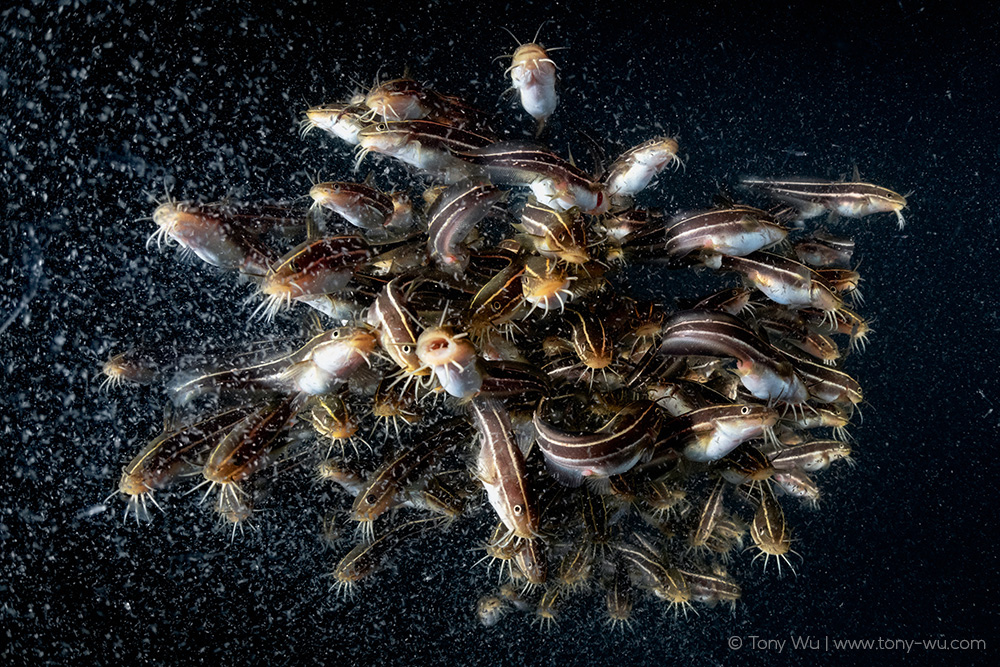
Kokopo Cardinalfish

Last July, I was on MV Golden Dawn just off Kokopo, which is the center of activity in the Rabaul area of East New Britain, PNG these days, given that Rabaul town is covered in ash and there is regular volcanic activity spewing dust, red-hot rocks, ash and noxious fumes into the air and onto Rabaul.

We were moored just off shore, with a muck bottom about 20m to 25m below. Everyone else geared up and went for a wreck dive. I chose to stay behind, and dived down on the mooring line to look around.

A bunch of discarded tires were part of the mooring set up, and around/ inside/ among the tires were substantial communities of life…eels, stonefish, cleaner shrimp and lots of fish.

eggs

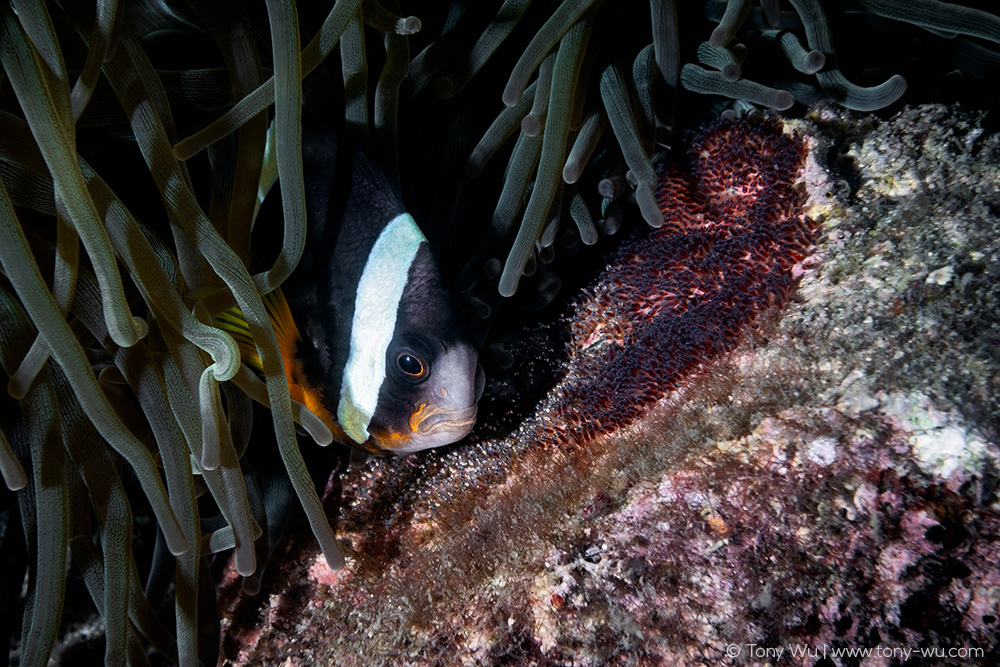
Given that it was two days before full moon, I kept my eyes open for courtship activity, which tends to happen around full and new moons. Sure enough, there were a couple of species of cardinalfish around the tires, both engaging in mating rituals. A few were carrying eggs, perhaps fertilised around the previous new moon.

With murky water, swarms of fish, plus tires/ chains/ ropes flopping all over the place, it took many(!) tries to isolate a single fish. This one had an enormous mouthful of eggs, ripe enough that I could easily make out the baby eyes.

In case you don’t know, male cardinalfish care for fertilised eggs in their mouths, occasionally spitting them out to aerate them, which is what’s going on in the picture below.

aerating eggs

Both photos shot at f8, 1/200, ISO160 on a Canon Eos 5D with a 100mm macro lens, plus two Inon Z220 strobes.

Can anyone help me ID the species?

Update 28 Jan: I think we’ve determined it’s an Apogon apogonides, common name plain cardinalfish. Thanks Ron!

Quick Trip to Izu

I made a quick overnight trip to Izu recently to discuss an upcoming project, and I took advantage of the opportunity to visit friends and make new friends too.

First, I stopped off to see Keiu-san and Michiyo-san, who own and operate Dan’s Dive Shop. They took wonderful care of me and a couple of friends during an extended dive trip in Izu a couple of years ago (meaning they were incredibly patient with us!).

keiu and michiyo

They’re both veterans of the diving scene in Izu, and they seem to know just about everyone in the area. Keiu-san also has a species of basslet that he discovered named after him, Rabaulichthys suzukii.

I also met Yokota-san who runs a dive shop named Go To The Sea. Actually, I “met” Yokota-san virtually (via email) some time ago, when news of the recently discovered Maluku frogfish broke.

yokota

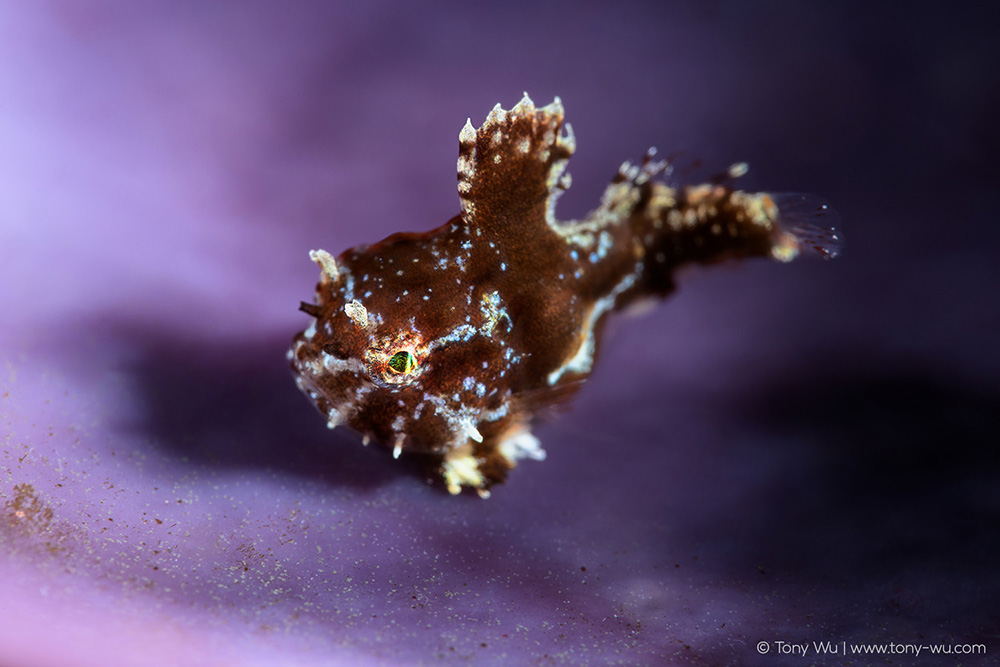
At that time, I sent him a few photos of the fish that I had received from Maluku Divers. Yokota-san is a die-hard frogfish maniac, and he was one of the first people in the world that I know of to point out that the Maluku frogfish probably belongs to the Histiophryne genus.

Yes, I know. If you’re not a fish nut, this revelation probably doesn’t mean much. But at the time, there was significant debate about how to ID the new frogfish. In case you’re interested, DNA tests have subsequently been performed, with results to be announced shortly.

These days, Yokota-san is focusing his energies on ID-ing hermit crabs. He showed me a couple of albums filled with hermit crab images and IDs. I never realised how many different species there are.

And finally, I hooked up for a chat with Yamabe-san of PNG Japan and Shinohara-san of Sea Front. If you’ve read my blog posts before, you know I’m a big fan of PNG, so I’ve known Yamabe-san for some time. This was the first time I met Shinohara-san, however.

yamabe and shinohara

He’s one of the pioneers of diving on the eastern side of the Izu peninsula, concentrating on the Futo area. He also takes people to Hatsushima, which is a small island just off the coast. I’ve never been there, but from photos and video he showed me, there’s a lot of soft coral (I would’ve never imagined) and large schools of fish swarming around.

Of course, no trip is complete without good food. Keiu-san’s family owns and operates one of the best known citrus gardens in this part of Japan, called Suzuki-en. If you find yourself in the Usami area of the Izu peninsula, it’s worth dropping by to pick fruits yourself (which is much more fun than it sounds), or just buy some fresh fruits.

Just as I never realised how many different types of hermit crabs there are, I was amazed at the variety of citrus fruits at Suzuki-en. Apparently, one citrus fruit or another is in season from October to August, so there’s only about a month each year when there’s nothing ready to pick on the trees.

I love citrus fruits, so we stocked up (or more accurately, Keiu-san and Michiyo-san stocked us up).

And just before I left Izu, Shinohara-san took us to a small soba shop that’s hidden away and nearly impossible to find, as it’s run out of a small house. The noodles were seriously delicious, so everyone had seconds. But for a lack of time, I probably would’ve gone for thirds.

food

Articles About Ambon (Japanese)

If you happen to read Japanese, here’s a PDF article (5.9MB) about Ambon. I also have an article about Ambon in the most recent issue (Feb ’09) of Diver magazine in Japan (though I don’t have a PDF for that one).

Thoughts on Churaumi

pairChristmas is coming up, and the flow of emails, meetings and other requests has slowed down, so I finally have a few moments to jot down some thoughts about my recent trip to Okinawa, specifically regarding my visit to the Churaumi Aquarium.

First and right up front, I enjoyed the aquarium. I was pretty sure I would, based upon what I’d heard from friends who’ve been there, but at the same time, I wasn’t entirely certain.

Some people object to captive environments for all animals; others more to keeping large animals like whale sharks in manmade facilities. I’m not entirely for the concept, but I can’t completely oppose the practice either. It’s not a black-and-white issue for me, as I see arguments for and against.

From my point of view, in a perfect world, I’d rather that all animals be allowed to roam free in their natural habitats. It’s much more fulfilling, for instance, to encounter a whale shark in the open ocean than it is to stare at one in a big tank. But of course, we don’t live in a perfect world.

groupAlso, having worked previously with an aquarium in Singapore, I know that there can be significant problems with captive facilities, including high mortality rates and mistreatment of animals, often due more to ignorance than bad intent.

On the other hand, the standard of care for animals in captivity can be very high. It really depends upon the facility and people involved. Also, venues like public aquaria give visitors the chance to experience the beauty and wonders of nature…an opportunity many people probably wouldn’t otherwise have.

I visited many aquaria when I was a kid, and there’s no doubt that what I saw and learned during those visits contributed to my obsession with the oceans and my desire to do what I’m doing now. Moreover, in many captive facilities, there’s research conducted and hence valuable knowledge gained, some of which may be helpful in ensuring the health of wild animal populations.

In the specific case of Churaumi, I liked what I saw.

First, in typical Japanese fashion, everything was highly organised. This in itself doesn’t necessarily mean everything’s ok, but if you’re looking after the well-being of living creatures, being organised is a prerequisite as far as I’m concerned.

mantaIt’s not the ticket-taking process and such that I’m referring to, but the cleaning/ maintenance of the tanks, the layout of the facilities behind the scenes (I went “backstage” to take a look), and the level of knowledge demonstrated in the set-up and presentation of the exhibits, as well as the staff’s ability to answer questions. In short, they had it together (By contrast, I’ve been to other facilities where it was painfully obvious that the relevant people didn’t have a clue.).

Next is the health of the animals. If animals are unhappy or not comfortable, it generally shows. I’m not naive enough to believe that there are no problems at the aquarium, but I watched the animals in the main Kuroshio Tank exhibit for an entire day. They behaved normally (as far as I can tell from having observed the same animals in the wild), and I didn’t notice any obvious signs of stress. The mantas, for example, were lining up and swimming in a row, males following a female…perhaps a precursor to mating. To date, there have been two baby mantas born in this aquarium, of which one has survived (the first was killed by its father, for unknown reasons).

Finally, there’s the effect that the exhibits have on visitors. There were swarms of school kids at the aquarium in the morning, and without exception, they were enthralled. There were plenty of adults too, most of whom stared and gawked in wonder. Seeing the wide-eyed reactions and hearing the excited chatter of visitors reminded me of how fortunate I am to have been in the water with most of the animals there.

What clinched it for me though, was seeing a woman confined to a wheelchair staring up at the mantas, whale sharks, tuna, mahi mahi, eagle rays and all the other fish. At the risk of sounding sappy…it was a heart-warming sight. There’s probably no other way that she could have found herself literally just a few metres away from these amazing animals.

wheelchair

Of course, there were some reminders of the downsides of captivity. A few fish had what appeared to be injuries, perhaps from colliding with parts of the enclosure, or maybe in disputes with other animals. There were separate enclosures for manatees, sea turtles and big sharks (a tiger, a couple of bulls, and sandbars). These enclosures were far too small. There’s also a cetacean show, something I’m personally less keen on, primarily because I’ve interacted with dolphins and whales in the wild, and I know them to be intelligent, social animals that may be as cognizant of their circumstances as we are.

On the whole, however, I have to give the aquarium a thumbs up. Nothing in life is perfect, and I think the positive effect the aquarium has outweighs the negative aspects.

behind the scenesIf you happen to visit Churaumi, here are a few practical pointers that’ll help you get the most out of the exhibit.

1. Get your tickets at the Kyoda rest area.
2. Plan on taking photos of the main Kuroshio Tank in the afternoon. The sun in the morning creates distracting reflections on the acrylic. Spend the morning viewing the other exhibits.
3. Sign up for the backstage tours, where you get a chance to see the innards of the aquarium, including a top-down perspective of the main tanks. Spaces and times are limited, so do this early.
4. Everything is in Japanese. If you don’t speak Japanese, take a friend who does. You’ll understand and appreciate much more this way.
5. There are two feeding times, at 15:00 and 17:00, when they feed the whale sharks, something that’s worth seeing. The 15:00 time was jam-packed when I visited, even though it was a weekday during the off season. The 17:00 time wasn’t. Tour buses and groups tend to leave after the 15:00 feeding.

feeding

One final, tangential observation: I’m not sure what the exact percentage was, but a significant proportion of people (probably the majority) were taking pictures not with cameras, but with their camera phones. I realised several years ago that this would happen, but it was another thing altogether to see it. Camera manufacturers take note: the market for stand-alone compact digital cameras will dwindle…much sooner than you think.

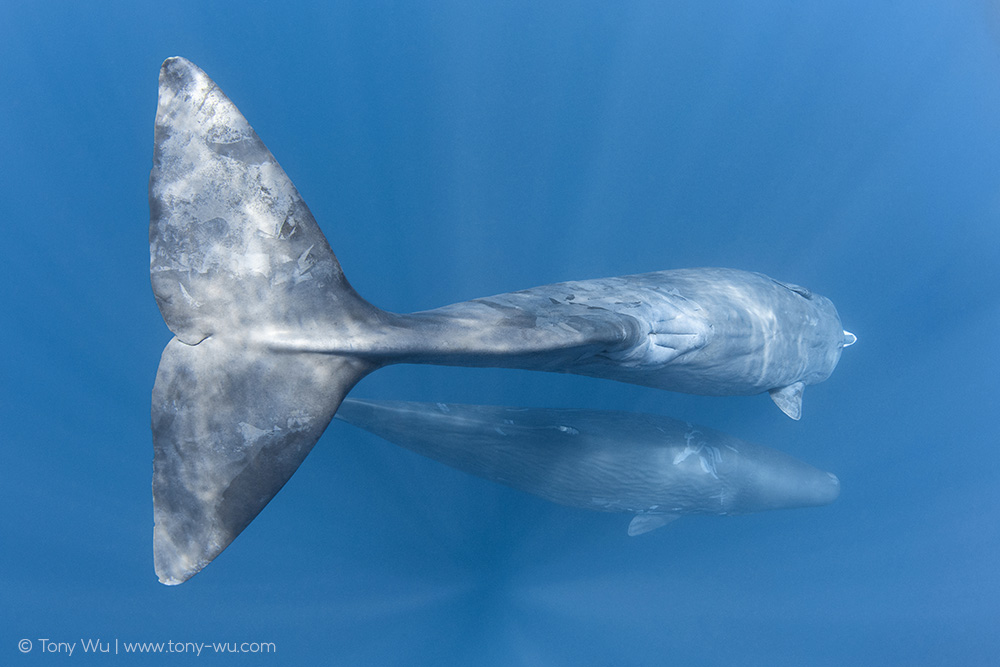
Whale Shark

Spent the entire day at Okinawa Churaumi Aquarium today, gawking at whale sharks, mantas and lots of other stuff. Too tired to write anything now, but here’s an image from today:

teaser

In Okinawa

shirtGetting an early start this morning (by early, I mean obscenely early, like 03:30), I made it to Okinawa unscathed, and have had a full day driving around, sightseeing, walking around trinket stores, and otherwise just acting like a tourist. Fortunately, the weather’s been great, so it’s been a pleasant, if tiring, day.

Given my sleep-deprived state, my priority now is to stay awake to a decent hour, then crash and get some rest, so I’m ready for a full day at the Okinawa Churaumi Aquarium tomorrow. This is the first aquarium in the world to keep whale sharks and manta rays successfully in captivity. The first and second manta births in captivity also took place here.

ticketsIn case anyone else is heading this way, I thought I’d mention that I found a place where you can purchase entrance tickets to the aquarium for Yen 250 off the normal price of Yen 1,800.

There’s a rest area of sorts called 道の駅 (michi no eki) at 許田 (kyoda) on route 58 which runs along the western coast of the main island of Okinawa.

If you drive from the airport at Naha toward the aquarium, it’s on the way. There are other places that offer discounted tickets too, but Yen 1,550 is the best deal available. There are food and tourist knick-knacks available at the kyoda venue too.

Ok, that’s as coherent as I can be right now. I leave you with a photo from the exterior of a restaurant (called Donanchi どなんち食堂) I just visited to get some traditional Okinawan food, like ゴーヤーチャンプルー、スクガラス豆腐、紅芋コロッケ and other stuff, all of which was delicious (I have no clue how to translate those dish names). I washed it all back with a mug of Okinawan draught called Orion beer.

Orion beer’s corporate slogan is “For Your Happy Time”, which in true Japanese-English form, means nothing and a lot at the same time.

restaurant

Phuket Pals

Ever since getting back from Thailand, I’ve been struggling to catch up with correspondence, meetings and general life stuff. Things have a way of piling up, and I dread facing the mountain of tasks after every trip, but in the grand scheme of things…it’s not so bad.

While in Thailand, I was fortunate enough to spend a bit of time in Phuket. I visited the Similans, Richelieu Rock and nearby islands for the first time in about ten years. The visibility in the Similans was fantastic, and as I remember from before, there were tonnes of fish around.

tina and ulrikeI was on one of the first few trips on the new boat MV Dive Asia 1. It was so new that it even “smelled” new, like when you get in a brand new car. The boat is spacious, especially the rear dive deck. The food is terrific, and true to world-famous Thai hospitality, the crew was fantastic. Check out their website if you’re contemplating a visit to Phuket.

We had German, Austrian, Welsh, Thai and Japanese guests aboard, so it was an international mix, as is often the case on dive boats. After the trip, I squeezed my way into a photo with two of my fellow divers, Tina and Ulrike from Germany. Being a photographer, of course, I managed to look away from the camera at just the right instant. Is it just me, or do all photographers screw up photos that they’re in? Thank you Tina, Ulrike and everyone else on the boat for being great boat-mates!

khun pacharaWhile on land, I also visited a few friends and made some new ones. One of the places I visited was Hotwave Wetsuits, which makes custom wetsuits (and other stuff too) for shops and individuals. Though it was the first time I met Khun Pachara, who owns the shop, we hit it off right away, and had a lot of fun.

Besides normal wetsuits, Khun Pachara has a lot of unique stuff, such as hoods with devil’s tails (one of my personal favourites), and she can make just about any design. I saw several photos of people who had made wetsuits to transform themselves into well-known superheroes and such.

Cool, eh?

Escape from Bangkok

With a police escort leading the way, we pulled up to the plane at 22:20 on 4 December, a little after TG flight 6409 was scheduled to depart. Squinting through the glass, I could just make out silhouettes of planes…row after row of them, parked on the tarmac like silent sentinels guarding empty runways and lifeless terminals, their elongated bodies fading into the night.

One by one, each of the eight buses in our convoy parked alongside the Boeing 777-222 that was to transport us to Tokyo. Two sets of doors opened with the characteristic “hshhhh” sound of hydraulic pistons, followed by a queue of listless people moving like weary wraiths in the night, silent for the most part, plodding up aluminium steps and shuffling into the waiting plane.

Boarding was quick; everyone wanted to leave. At 23:10, just 35 minutes behind schedule, TG 6409 took off, filled to capacity with travellers like me who had been stranded in Bangkok due to closure of Suvarnabhumi international airport.

First, Phuket to Bangkok
waiting for busAs I’ve observed on many previous occasions, one thing you should always expect when you travel is what you can’t possibly expect. It’s a fundamental law of the universe that holds as true as gravity and superglue.

Even so, sometimes things get out of hand.

While I was in Phuket, the People’s Alliance for Democracy (“PAD”), one of the political parties in Thailand, ramped up ongoing political protests by occupying Suvarnabhumi airport in Bangkok, Thailand’s primary international gateway. I joked with my friends that we might get stuck in Phuket. As it turned out, the joke was on me.

When it came time for us to return to Bangkok, the PAD had completely taken over the airport, meaning no flights in or out. What started as another amusing sideline in a long string of antics in Thai domestic politics suddenly seemed much more serious.

The immediate implication for us was that we had to decide whether to stay in Phuket and wait things out, or find another way back to Bangkok. Admittedly, being stuck in Phuket might not seem like a bad thing, but being grounded involuntarily anywhere for an indeterminate period of time isn’t ideal. I had things to do and people to see in other parts of the world, so I had to leave at some point. I figured the airport siege wasn’t going to end quickly, so we booked an overnight bus to Bangkok.

underwater

We were fortunate, as we arrived at one of the bus companies just as it decided to add an additional bus trip. For Baht 1,047 apiece, we booked passage on a 24-seat bus for the 12-hour journey. Most of the other buses were already fully booked for days to come.

The trip wasn’t too bad, except for the woman in front of me who snored like a mountain gorilla and kept me awake all night. All things considered though, we made the right decision, as the airport remained shut long after we left Phuket.

Enmity and Irony
Though I had plenty to do once in Bangkok, I found myself unable to concentrate.

I wasn’t worried or panicked. After all, I’ve been through this type of situation and other travel nightmares many times, plus I’ve lived and worked in Thailand for many years so I know the lay of the land.

With each passing day however, the general mood in the city seemed to deteriorate. The government, such as there was one, wasn’t doing anything visibly productive; violence, albeit minor incidents, increased; rhetoric became more heated; a few bombs and grenades went off. There was talk of civil war, though rumours always abound in situations like this.

To be clear, I didn’t feel that I was in any particular danger, but it didn’t seem like there was going to be any resolution to the crisis in the near term, and it seemed that emotion, rather than reason, ruled the day…which is never good.

normal lifeHere’s the thing though…if you walked around without being aware of the political standoff, there was little sign of any problem. Taxis drove around as recklessly as ever; people crowded into food centres at all hours; shopping areas like MBK and Fortune Town were packed. Basically, life for the average Bangkok citizen wasn’t terribly affected.

The people bearing the immediate brunt of the airport standoff were tourists (who comprise Thailand’s largest single source of foreign exchange revenue) and businesses related to tourism and associated commerce and trade.

Hotel occupancy plummeted; tourist centres like the Sukhumvit and Silom areas were relatively empty; travel agents were unable to book any flights; cancellations for the peak holiday season in Thailand poured in from around the world. As a result, the Baht lost value against other currencies; the country’s reputation as a safe tourist haven took a severe hit; foreign investment projects were put on hold; and international credit rating agencies put Thailand’s national debt and the obligations of many private-sector Thai entities on credit watch for downgrades.

All of these knock-on effects from the protests will have an impact…and definitely not a positive one…on the lives and welfare of everyone in Thailand.

The irony of the situation is this: The PAD was allegedly protesting for the good of the people of Thailand, but the unintended(?) consequences of the protest will hurt the Thai people economically far worse than anything since the collapse of the Baht in 1997.

Thank You Thai Airways
My own escape from Bangkok was probably less stressful and frenetic than that of many other people. Having lived in the country before and having friends to help me was a huge advantage.

Plus, I tend to avoid panicking. Being the first-in-line to get out makes sense in some circumstances, but not in this one. Things weren’t nearly bad enough to warrant rushing for the door, and the first people to get out via the emergency flights set up at U Tapao no doubt had to contend with lack of infrastructure and ironed-out procedures, making the experience more painful than it had to be.

At the same time, I didn’t want to wait until everything was back to normal, one because there was no telling how long it would take and two, because I figured going through the process of finding my way home along with the 350,000 other estimated stranded passengers would make for an interesting experience.

Life is the sum of your experiences. Just as I will always recall witnessing the mass marches in Manila during People Power, being in Bangkok when soldiers opened fire in 1992, being placed under house arrest by Suharto and his cronies shortly before his downfall, along with many other such (mis)adventures, being in Thailand during these protests is an experience I’ll never forget.

On 1 December, I checked around for flights, a process that took a while, since travel agents weren’t able to book the special flights set up by airlines to evacuate travellers from Bangkok, and also because the airlines understandably weren’t answering phones.

To cut a long story short, the airlines I was able to check…ANA, JAL…were charging exorbitantly high prices. For example, one-way economy Bangkok to Tokyo on ANA was Baht 50,000 (about US$1,400). Even allowing for the fact that the flights were emergency flights, departing from an unfamiliar airport three hours outside of Bangkok, prices like this were…less than reasonable.

As an indication…a normal full-fare, round-trip business class ticket Bangkok-Tokyo-Bangkok on Singapore Airlines is only a little more. ’nuff said.

For that price, I was considering driving up to Chiang Mai, then taking SilkAir to Singapore and catching a flight to Tokyo from there. Chiang Mai-Singapore-Tokyo-Singapore on SilkAir/ Singapore Air was less than Bangkok-Tokyo on ANA.

I’m sure there were valid reasons for requiring a premium to normal fares, but from where I stood, the word “gouging” came to mind.

numberAs a last-ditch attempt to find a reasonable alternative, I went to the Thai Airways HQ building on 2 December. They had a war room of sorts set up, with a main information counter, counters for each regional destination, interpreters for every major language, staff all over the place to answer questions and help, people providing free food and beverages, medical staff on call, free international phone calls, and representatives of the Thai Hotels Association on hand to provide accommodation for stranded passengers.

As soon as I inquired about the price and availability of a seat to Tokyo, a nice woman whisked me away to consult with several people, all of whom were incredibly helpful. Within minutes, I had a seat on a flight on 4 December for Baht 23,810…still expensive, but far more reasonable than everyone else.

I imagine that in the hours immediately following the closure of Suvarnabhumi airport, the Thai Airways office was probably chaotic. But by the time I visited, everything was well organised and running smoothly. The deluge of lost, helpless and frustrated travellers looked relieved and some, like me, even happy.

In short, Thai Airways’ service exceeded all my expectations, and made an otherwise agonising ordeal much less painful.

Thank you, Thai Airways.

Departure Time
A couple of days later, I arrived at BITEC, where the check-in facilities for Thai Airways had been set up in a convention hall, about five hours before the scheduled 22:35 departure time. Formalities like baggage x-rays and seat assignment out of the way, I hung out with friends for a couple of hours until making my way back into the temporary terminal at 19:30.

To say that everything went smoothly wouldn’t be completely accurate, but things weren’t too bad given the circumstances.

As I sat in the “lounge” (i.e., on a chair in the middle of everything), several flights (Zurich, Stockholm, Melbourne, Rome, Johannesburg) were cancelled. I don’t know why, but I do know that the people on those flights had to pick their stuff back up, trudge to another counter to wait in another line to go to another hotel to start the process all over again. Even as my deepest sympathies went out to them, I kept my fingers crossed that the same fate wouldn’t befall me.

People were strewn everywhere…standing, sitting, lying down, sprawled and contorted. Most were in good spirits. There were, of course, a few loud-mouthed a**holes in front of me, from the UK judging by their speech.

There was no attempt to guide people in a systematic way to minimise crawling all over one another when flights were called, and we were forced to carry all our own bags (which for me meant trudging over piles of people while schlepping over 60kgs) through a narrow passage in the back of the hall.

I wished at the time that Thai Airways had managed the departure lounge as well as the company had their HQ operation, but given the circumstances, it wasn’t a big deal.

I eventually made it over, under and around everyone standing between me and the gate (a loading dock at the rear of the convention hall), handed over my baggage, then boarded a bus. Soaked in sweat and exhausted from the effort, I collapsed into a seat, dozed off briefly as we waited for the other buses to fill.

When all eight buses were loaded up, a police escort led us out on to the expressway for our hour-long drive to the tarmac, where we stepped off the bus and onto our plane. Five-and-a-half hours later, we landed at Narita.

(Click here for full Collage view.)

Parting Thoughts
As I think back on the experience, a few things come to mind. For what it’s worth:

First and foremost is my admiration and gratitude to the staff of Thai Airways. I’m certain that all of them were put under a lot of stress. In fact, I heard about the stress directly from several staff members I spoke with. A Thai friend of mine observed that people in Thailand respond well in emergencies and are particularly good at providing assistance to those in need. When the tsunami hit a few years ago, the Thais responded quickly too. Perhaps it’s the Buddhist influence and emphasis on compassion that runs strong through the culture. Whatever the reason, Thai hospitality saved the day for me.

Second, I know that in all but the most unrealistically optimistic of scenarios, Thailand is going to suffer as a result of these protests. The global economic crisis is bad enough, but these protests hit Thailand at the worst possible time in the worst possible manner. Estimates of the resulting damage vary, but all sources agree it’s going to be huge. Just one indicator…Thai Airways is considering suing the PAD for Baht 20bn (about US$560 million) for damages and will be asking the government for substantial financial help. The shockwaves of this protest will continue to smack Thailand for many months.

Which brings me to my next point, or more accurately…a question. What did the protests achieve? As I understand, the PAD’s primary objective was to prevent former PM Thaksin and his friends from holding power, as they consider Thaksin to be corrupt and overly power-hungry. The PAD alleged that PM Somchai was a Thaksin puppet, and staged protests to bring down the government. When the Thai courts ruled that three of the parties in the ruling coalition were guilty of corruption, the coalition government was disbanded and PM Somchai forced to resign. Claiming victory, the PAD agreed to leave the airport. Good for the people, right? Perhaps not.

First, the courts were in the process of ruling anyway, and probably would have come to a similar judgment, rightly or wrongly, without a closure of the airport.

Second, the “Democracy” element of the PAD name is misleading at best. Elements of the PAD wish for greater power to be restored to the royal family, not for a spread of democracy; some commentators suggest royal family support for the PAD. The use of violence and threat of economic damage to the country to remove popularly elected leaders isn’t democratic by any stretch of imagination, no matter what the PAD may think of those who were elected. In other words, the PAD appears to stand for anything but democracy. The PAD should rename itself to reflect its objectives more accurately and honestly.

Third, there’s little reason to believe this is over. The immediate hostilities ceased just before the King’s birthday. Whatever people’s differences are, most in Thailand revere their King (at least on the surface), and surely it’s no coincidence that weeks and months of friction dissipated a couple of days before the King’s birthday. Many expected to King to say something about this situation during a speech on the eve of his birthday, but he was apparently not feeling well enough to speak (he’s 81 years old), so there was no light shed on his views of the yellow/ red conflict…which is to say that none of the underlying issues have been resolved. In fact, the dissolution of the three political parties on corruption charges is easily circumvented by reconstituting the parties under different names…something which has already taken place before in Thailand and is happening again now. Same people, different party names, same political conflicts. Some time in the near future, the trouble is likely to start again with the same unresolved issues.

Fourth, the polarisation of Thai society into the yellows and reds (PAD vs Thaksin supporters) is not good. In recent weeks, there have been too many instances of antagonism and confrontation uncharacteristic of Thailand. Friends describe to me conversations with other friends, who demand that they pick a side. A “with us or against us” mentality prevails, which is perhaps the one thing that made me the most nervous. Gang/ mob rule, egged on by irresponsible/ disingenuous leaders, fanned by power-seeking moneyed interests…not a positive direction for society. This tone encourages irresponsible behaviour, such as public beatings by PAD members of alleged Thaksin supporters, or grenades tossed into PAD gatherings. A friend who works at an airline conveyed that the PAD left parts of the inside of the Suvarnabhumi airport in shambles…restaurants raided, property damaged, merchandise stolen, airline lounges ransacked. Is this type of behaviour in the best interest of Thailand?

Finally and most seriously, the consequences of the PAD’s actions will reverberate and inflict damage like a cascade of free radicals coursing through a sick body. There’s no telling how bad the damage will be, but everyone in Thailand, including the PAD protestors, will be hit, and hit hard.

So to go back to my question of what the PAD achieved…time will tell, but as of now, I can’t think of anything positive.

If you’re interested in more background reading about the current situation in Thailand, here are a few good articles: Asia Times, The Economist, Asia Sentinel.

Me At Work

I’ve been preoccupied for the past few days trying to find a reasonable way out of Thailand. I finally managed to book a Thai Airways flight in a couple of days. In case anyone else is still looking for options, I recommend going to the Thai Airways HQ on Vibhavadi Rangsit Road in Bangkok. They have emergency counters set up on the ground floor of Building 3, with lots of incredibly helpful staff who are doing an awesome job looking after stranded travellers. Seriously, they were fantastic.

On a more positive note, I did manage to get a few dives in while I was in Phuket. Khun Ake, a friend of mine, took this photo of me with a manta ray. My friends and I were the only ones to see the manta up close, when it swam right under us after we had surfaced. Of course, we dumped air immediately and went back down. The site was West of Eden at Similans island seven.

manta

Ambon Adventure

Instead of writing a trip report about my recent visit to Ambon, I played around with a web 2.0 service I’ve been watching for some time to put together a multimedia essay of sorts. The service is called Vuvox, and essentially, it allows you to combine various media forms into online shows and presentations, which you can share on the Vuvox site and also cross-post to other places on the net.

I created what’s known as a Collage in Vuvox, with a series of photographs and a bit of text, supplemented by a few video snippets and hyperlinks. The photos and text carry the story line, and the video segments help give you a feel for the particular animals and locations. The hyperlinks take you to additional information.

Vuvox is still in beta, so there are a few quirks here and there. I had a minor problem while putting this together and emailed Vuvox for help. A representative responded within minutes, which tells me they’re on the ball.

After playing around with the service, I can say that I really like Vuvox. It’s a slightly different way to tell a story, and the final product you come up with can take many forms, depending on the content, the intent and your storytelling skills (as well as how much work you want…or don’t want…to put into it).

The primary drawback I see is that whatever you create lives “in the cloud”, to use the parlance of the times, which means you can’t download it and keep it on your computer, iPod or other media player. That’s kind of a bummer, but it’s a relatively minor point, and perhaps they’ll figure a way around this at some point in the future.

To all divers and fish buffs: take particular note of the segment on the newly identified Maluku frogfish. The embedded video may be the first evidence of a frogfish using toxins or some other noxious substance to ward off a would-be predator. As far as I know, there is no other documented instance of a frogfish being toxic. (If someone out there knows of such a case, please send me a message.)

The video of the Maluku frogfish fish was taken by Chutinun Mora, who is the graphic designer of FiNS Magazine.

One cautionary note: You may need relatively high bandwidth to watch the video clips. If you experience stuttering, let the clip load, then hit play again.

If you want to see a wider view of this, go directly to the Vuvox page here. The collage effect is arguably nicer with a wide screen.

Ambon Slideshow

I posted a few images from my recent Ambon trip on Flickr (slideshow below). I’m still working on a summary of my trip (“contemplating” is perhaps a more accurate representation than “working on” at this stage), which I’ll post when I finish.