Archive for May, 2010

New Math

There’s something that’s bothered me for a long time. Like years. A couple of decades, actually.

Bicycles are a big part of life in Japan. Many people use bicycles to get around, particularly to get to-and-from train stations, from which they commute to-and-from work, school and such.

If you live in a country where bicycles are not a mainstream form of transport, it might not occur to you, but with thousands of bicycles in every neighborhood, there is substantial demand for parking space.

Around most train stations, particularly those in or near major urban centers, there are dedicated parking lots for bicycles. They range from simple open-air plots of land to fancy multi-level covered parking lots…just like there are for cars.

Of course, you have to pay to use these bicycle parking lots.

The thing that’s bugged me for so long is the pricing system. Example below:

illogical sign

The typical arrangement is something like what’s indicated above. For bicycles: 1,500 Yen for one month; 4,500 Yen for three months. (The 2,000/6,000 pricing is for small scooters.)

Umm…duh.

I have never been able to figure out why it’s necessary to show the price for three months.

Most people in Japan, I assume, are able to multiply 1,500 Yen by three to derive 4,500 Yen, so why the need for that extra column? Just to fill up space perhaps? Why not list the prices for two, four, five, six, seven, etc. months as well if we’re going to do simple calculations for everyone?

I know. In the grand scheme of things, it’s not a big deal. It’s just something that gets under my skin every time I pass one of these signs.

Today, however, I came across this sign…

logical sign

…and felt an enormous burden lifted off my shoulders.

Looks like someone else finally figured out the math and realised the three-month deal wasn’t such a bargain after all.

Of Humpbacks and Humans

This is a true story.

Like most stories worth telling, there is a point. Several, in fact.

The Tragedy
On 11 August 2009, I and a bunch of friends from Japan encountered an injured humpback whale in the waters of Vava’u in the Kingdom of Tonga.

It was just the sort of day for a tragedy. The skies were grey and overcast; the seas a drab, murky mess; visibility both in and out of the water low; the prevailing mood “depressed”.

Sighting whales was, of course, the reason we were out and about, so finding a pair of approachable whales was a good thing. Or so it seemed.

Not long after entering the water, we noticed that something was wrong. With poor visibility, it was difficult at first to pinpoint precisely what that “something” was, but once the whales passed within close proximity, it was obvious.

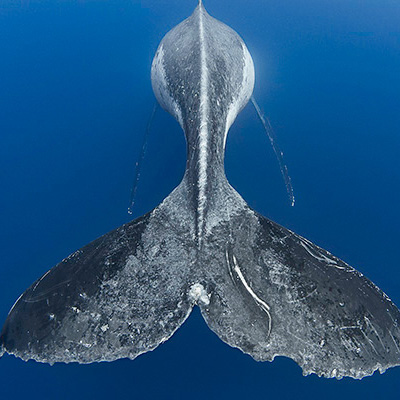
injured humpback whale

One of the whales was hog-tied. Its pectoral fins were bound to its side, and the rope or netting had sliced into the animal’s body. The injured cetacean was weak. It couldn’t swim properly. It was covered with parasites. And there were sharks circling…waiting, no doubt, for an easy meal. The scene was heart-wrenching.

Despite my desire to stick with the whales, I pulled everyone out of the water in short order. Several large bronze whaler sharks shot up at high speed from the murky depths and buzzed us. The conditions were ideal for sharks on the prowl, not so good for land-lubbers flopping around at the surface.

Back on the boat, we followed for some time, long enough to see that the uninjured whale stayed with the injured one, perhaps protecting it, perhaps hoping for a miracle. Difficult to know for sure.

The injured whale was a female. It was, without question, about to die.

injured humpback whale

The Drama
As shocking and depressing as our experience had been, the real story took place after we got back on land.

News of our encounter spread quickly through the community. By the time we washed up and went to dinner, many people in town had heard about the encounter, though…as is often the case…the specific details of our experience seemed to become more distorted with each re-telling of the tale.

Several people, expats who live and/ or work in Vava’u, informed us that they knew who was responsible for the doomed whale’s plight.

To elaborate, they told us that it was the practice of some villages in the area to use nets to catch sea turtles for food.

They further informed us that many of the expats had been trying to teach the locals about why turtle nets are a no-no.

Slaughtering endangered sea turtles and ruining reefs was bad enough, but now…it was obvious that someone’s turtle net had killed a humpback whale! This, of course, was an unforgiveable transgression.

Person after person agreed, and a bit of a mob mentality developed. Emotions escalated. Indignation permeated. Within short order, several people asked us to give them copies of our photos so that they could use the images to educate the locals.

Actually, “asked” doesn’t convey the correct connotation. “Demanded” is more accurate.

There were, of course, some polite requests, but one woman (a person we hadn’t previously spoke with) in particular became quite agitated. She insisted that we hand over our photos because, well…it was for a “non-profit” cause. Emphasising repeatedly that her demands were for a “non-profit” purpose, she produced a USB memory device and stuck it in one of my friend’s faces saying “Put the files on this” in an emphatic tone.

Yes…she stuck a memory device in his face and demanded that he give his photos to her. That very instant. Or else. She pouted and stammered a few times to underscore how serious she was.

Given that we hadn’t even had time to look at the images ourselves and were still trying to process what exactly we had witnessed, I didn’t think it appropriate to hand anything over, and I particularly didn’t think that we should be “educating” the locals quite just yet.

We declined the requests several times in a graceful manner, until that particularly demanding woman became so obnoxious and unbearable that I set aside all pretence of polite social discourse and put an abrupt, unambiguous stop to the insanity. The audience dispersed.

In the ensuing days, I had time to examine the photos closely. I went out of my way to ask about turtle nets. I tried, in vain, to set up a meeting to see an actual turtle net (seems like they’re not that common). I showed fishermen (both local and expat) the photos and asked their opinions.

Eventually, I concluded that the net was not a net. It was a longline. At 100% magnification, the metal clips characteristic of longline fishing were obvious in many of the photographs. The fishermen I consulted agreed.

This, of course, made much more sense. Humpback whales travel long, long distances in the open ocean. Fishing fleets set longlines in the open ocean. Villagers, to the extent they use turtle nets, wouldn’t be using them in open ocean. They would more likely use them in coastal waters.

The chances of a whale getting entangled in an industrial-strength, open-ocean longline are much greater than in a handmade net set near the coast.

The Lessons
Everyone was upset about the tragic, pointless death of the whale. Rightly so.

The people who became distraught and unreasonable were good people who just got carried away. It happens.

But I learned some things about human nature and behaviour from the experience. Things I wanted to jot down so I don’t forget, and also to guide my own conduct if I should ever again find myself in a similar situation.

1. Don’t ever assume anything. Get the facts. Think things through. Then draw conclusions.

The expats in this story assumed, with zero evidence, that local villagers were responsible for the death of a humpback whale. They were, in effect, ready to lynch the locals for killing the animal.

The problem is that they formed their views based on emotion, not fact.

Longline fishing is the practice of rich, industrialised countries. So if someone were looking to assign blame, it would be the expats and tourists (me included) from rich industrialised countries who were more closely associated with the whale’s death than the local villagers.

Discouraging the use of turtle nets might be a valid issue. But it had nothing…absolutely nothing…to do with the plight of the poor humpback whale we encountered.

2. Always avoid mobs.

Person after person piled on and agreed that local villagers were responsible for the death of an innocent whale. The thing is, of the people tossing around accusations, none…not a one…had seen the whale in question.

Herd mentality is bad, and it’s much too easy to get swept away in the moment if you cede self-control and good judgement to a mob.

3. Using the term “non-profit” does not mean you can demand anything you want.

The woman who was so indignant that we didn’t immediatley hand over all our photos as soon as she mentioned the term “non-profit” was clearly under the impression that using the term “non-profit” gives you a license to steal.

Yes, demanding property that isn’t yours is theft.

I encounter this mentality with disturbing regularity. Many people seem to believe that simply being a non-profit entity, or worse, just stating an intention to undertake something in a “non-profit” manner entitles you to demand stuff for free…especially photographs.

The woman in question owns a yacht, along with her husband. Had I demanded the unconditional and immediate use of her yacht for “non-profit” research, I’m sure she would have balked at the suggestion.

And yet, she was, and perhaps may still be, entirely convinced of her right to appropriate other people’s property simply by labelling her demand as “non-profit”.

That, in my book, is a “non-starter”.

My Data Robot

One of the less glamorous aspects of photography these days is making redundant copies of data. I’ve been generating up to 200GB of data for a typical project in recent months, a figure that keeps escalating with increased RAW file sizes, plus the addition of video and audio files.

It’s in this context that I love my Drobo units. They make the process of backing up data relatively painless, and they provide a layer of built-in redundancy (meaning you have some protection against individual disk failure).

On the rare occasions when I have to replace one of the disks in a Drobo unit however, it can take quite a while for the data rebuild-and-protection procedure to finish:

backing up with drobo

44 hours seems like a long time, but actually, for the peace of mind of having multiple copies of all my files, it’s no big deal.

The copies I’m making now are backups of backups from recent trips…a dull(!) but unavoidable task I have to complete before heading out again.

Bedlam in Bangkok

I have so many things to be doing (and I’m trying to make progress), but I’m still glued to my computer monitoring the flow of information coming in from Bangkok.

The military crackdown took place this morning, with the government successfully retaking Lumpini Park and nearby areas, followed by the surrender of several key opposition leaders (some others apparently fled).

But that was just the beginning. Heightened emotions coupled with lack of centralised control among the protestors meant things got out of hand quickly.

Buildings have been set ablaze, financial institutions attacked, media outlets surrounded, journalists threatened…and a curfew has been imposed beginning at 20:00 local time. Violence has reportedly spread to other parts of Thailand as well, though it’s difficult to assess the scale of the problem.

Anger prevails, and the atmosphere is toxic (both figuratively and literally due to the many burning tyres and other debris).

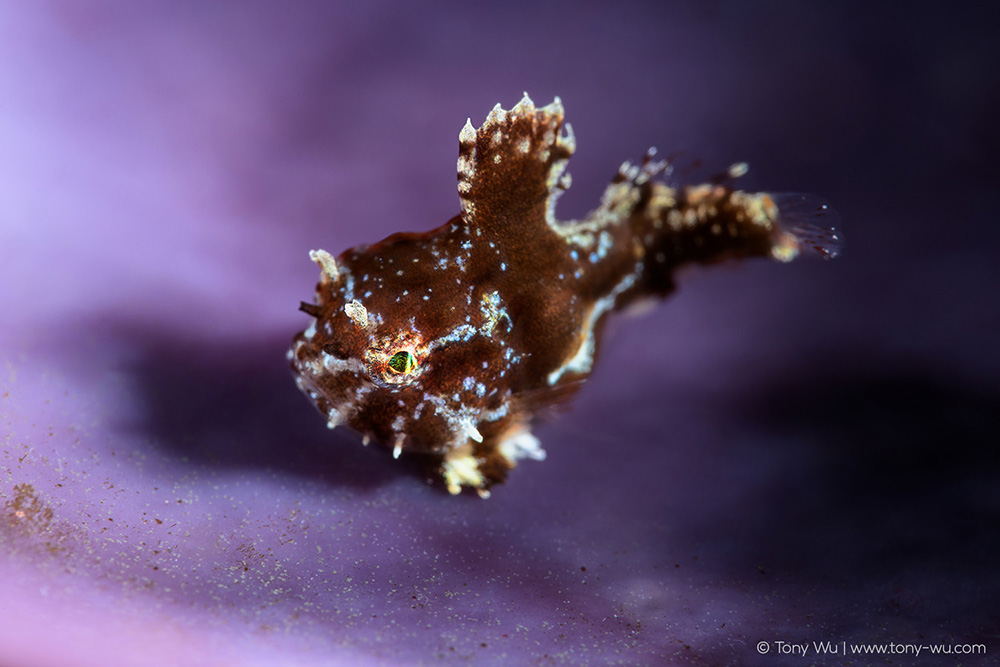
fighting scorpionfish

Whatever the case, it seems likely that things will get worse before they get better.

With email, Twitter and other online services…at least I can keep in touch with friends in Bangkok. Fortunately, everyone I know is ok. I really hope it stays that way.

Bummed About Bangkok

It’s been a while since I’ve posted. The beginning of this month was a holiday in Japan (where I am now) so I decided to take a break. I had pretty much been on the road nonstop since August 2009.

To get back into the swing of things, I was looking forward to attending the Thailand Travel & Dive Expo (TDEX), which was scheduled for this coming weekend.

In fact, I spent quite a bit of time putting together a talk/ presentation titled “The End of Photography”, which I was really looking forward to giving at the show.

TDEX has been postponed.

In case you don’t already know, Bangkok is sort of a war zone right now. That’s a bit of an exaggeration, but the situation in certain parts of the city is…let’s say, “unstable”…with tires burning, shots being fired, and general mayhem being the order of the day.

I am not Thai, but I lived for many years in Thailand, and I’ve spent a lot of time in Bangkok. I have many close friends there, and it’s one of the places I consider home. Bangkok is one of the few cities I actually enjoy spending time in.

…which is why I’ve been in a bummed-out, depressed mood for the past couple of days…unable to get motivated enough to do much.

Bangkok is in the midst of the worst civil disturbance in memory, worse even than the shootings in 1992. I was there in 1992, and it was nowhere near as bad as now.

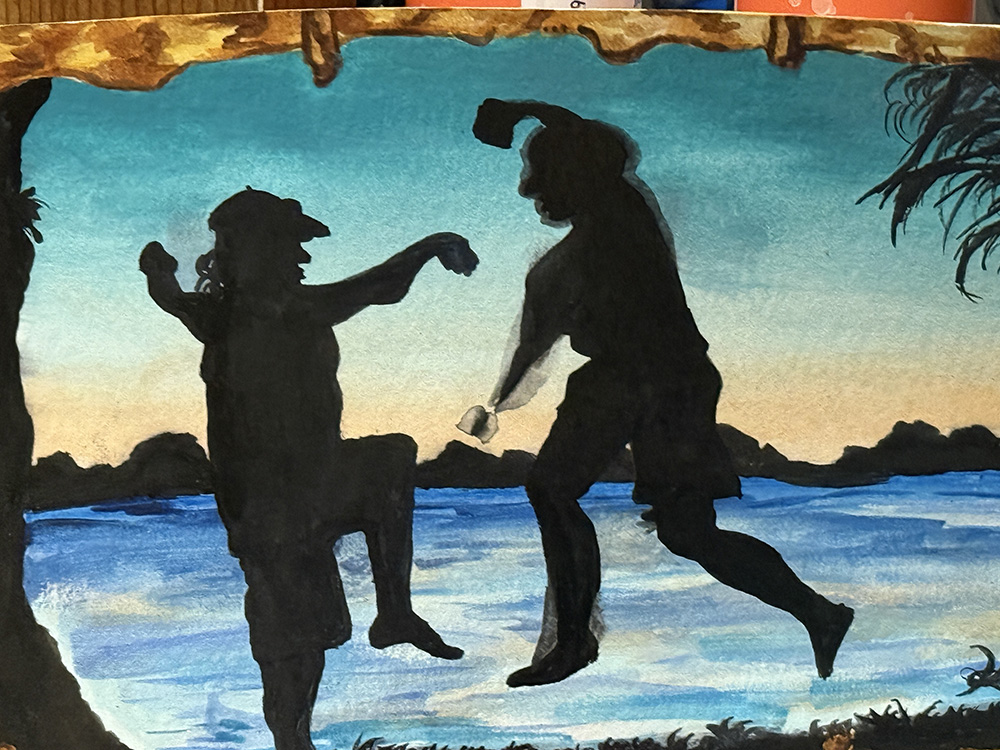
Things are sort of like this:

fighting sea lions

Not such a good way to be, especially when people and life in Thailand tend to be more like this normally:

sea lions holding hands

There are obviously a number of deep-rooted issues that need to be worked out, but I really hope that some semblance of sanity emerges soon. Too many people have died already, and it’s going to take a long, long time to heal the wounds that have been opened.

Peace.